
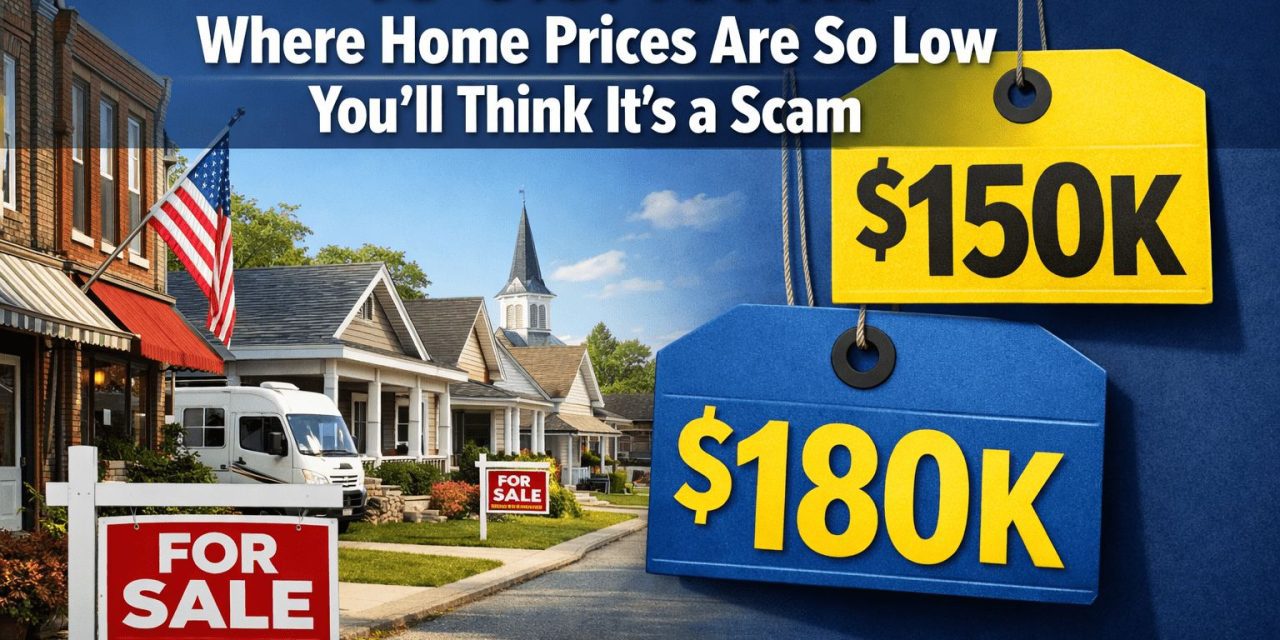
Imagine finding a charming three-bedroom home with a yard, garage, and tree-lined street for less than the price of a luxury RV. That’s the reality in several U.S. towns right now, where home prices are so affordable they seem too good to be true. These 10 U.S Towns Where Home Prices Are So Low You’ll Think It’s a Scam offer RV enthusiasts the perfect opportunity to establish a home base without breaking the bank, leaving more money for adventures on the road.
Key Takeaways
- Pittsburgh leads affordability rankings with monthly mortgage payments around $2,020 and only 22.2% of income needed for housing costs[3]
- Multiple cities offer median home prices under $200,000 with mortgage payments below $1,700 per month[3]
- 22 of the largest 100 U.S. cities are projected to see home price declines in 2026, creating buyer advantages[2]
- These affordable markets allow RV owners to maintain a permanent address while keeping travel budgets intact
- Most affordable cities feature RV-friendly zoning, storage options, and lower property taxes than coastal markets
Quick Answer
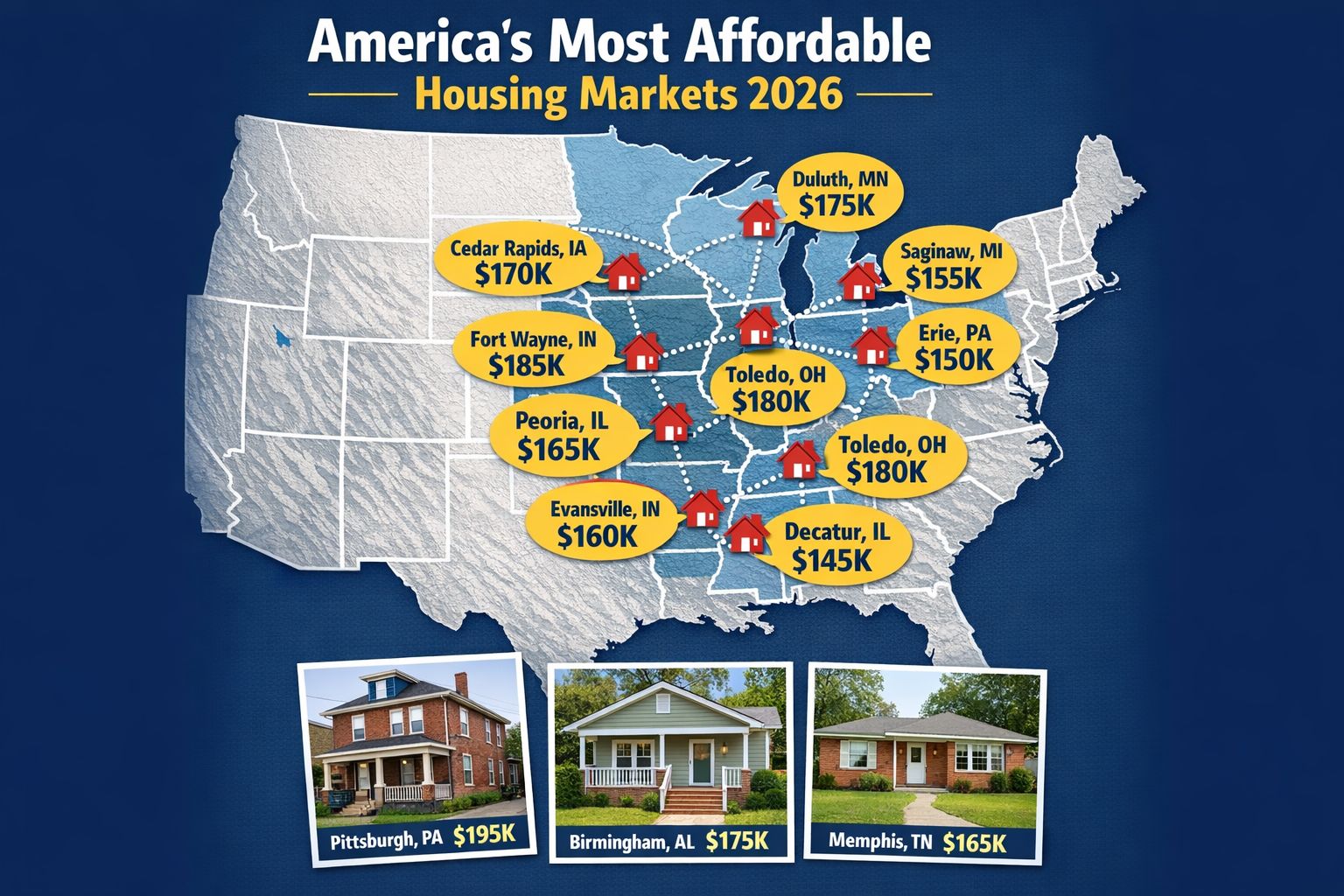
The 10 U.S Towns Where Home Prices Are So Low You’ll Think It’s a Scam include Pittsburgh (PA), Birmingham (AL), Memphis (TN), Cleveland (OH), Buffalo (NY), Louisville (KY), Toledo (OH), St. Louis (MO), Oklahoma City (OK), and Wichita (KS)[1][3]. These cities offer median monthly mortgage payments between $1,590 and $2,020, requiring only 22-28% of median household income for homeownership compared to 50%+ in expensive coastal markets[3]. For RV enthusiasts seeking an affordable home base, these markets provide exceptional value with room for RV parking and lower overall living costs.
Why Are Home Prices So Low in These U.S. Towns?
Home prices in these ten towns remain remarkably low due to a combination of regional economic factors, population trends, and housing supply. Unlike coastal markets where demand far exceeds supply, these cities have maintained stable or growing housing inventories while experiencing slower population growth.
Key factors driving affordability:
- Regional price differences: The cost of living in Midwest and Southern states is significantly lower than coastal regions, with housing costs reflecting local wage levels and economic conditions[4]
- Legacy housing stock: Many of these cities feature older, well-maintained homes built during industrial boom periods, providing solid construction at lower price points
- Lower land costs: Unlike land-constrained coastal cities, these markets have ample buildable land, preventing artificial scarcity
- Economic transitions: Former manufacturing hubs have diversified their economies, creating stable job markets without the explosive growth that drives housing speculation
- Property tax structures: Many of these states offer lower property tax rates, reducing the total cost of homeownership beyond the purchase price[7]
Common mistake to avoid: Don’t assume low prices mean declining neighborhoods. Many of these cities have invested heavily in downtown revitalization, parks, and infrastructure improvements that make them attractive for long-term homeownership.
The 2026 housing market is particularly favorable for buyers in these regions. With 22 of the largest 100 U.S. cities projected to see price declines this year, buyers have more negotiating power and inventory choices than they’ve had in years[2].
What Makes These Towns Perfect for RV Enthusiasts Looking for Affordable Homes?
RV owners have unique housing needs that these affordable markets satisfy exceptionally well. Beyond low purchase prices, these towns offer practical advantages for maintaining both a home base and a mobile lifestyle.
RV-friendly features in affordable markets:
- Generous lot sizes: Unlike cramped urban properties, homes in these markets typically include driveways and yards large enough for RV parking
- Relaxed zoning regulations: Most of these cities have residential zoning that permits RV storage on private property without expensive special permits
- Lower total housing costs: With mortgage payments under $2,000 monthly, RV owners can afford homeownership while maintaining travel budgets
- Strategic geographic locations: Cities like Pittsburgh, Cleveland, and St. Louis offer central access to multiple regions, maki