
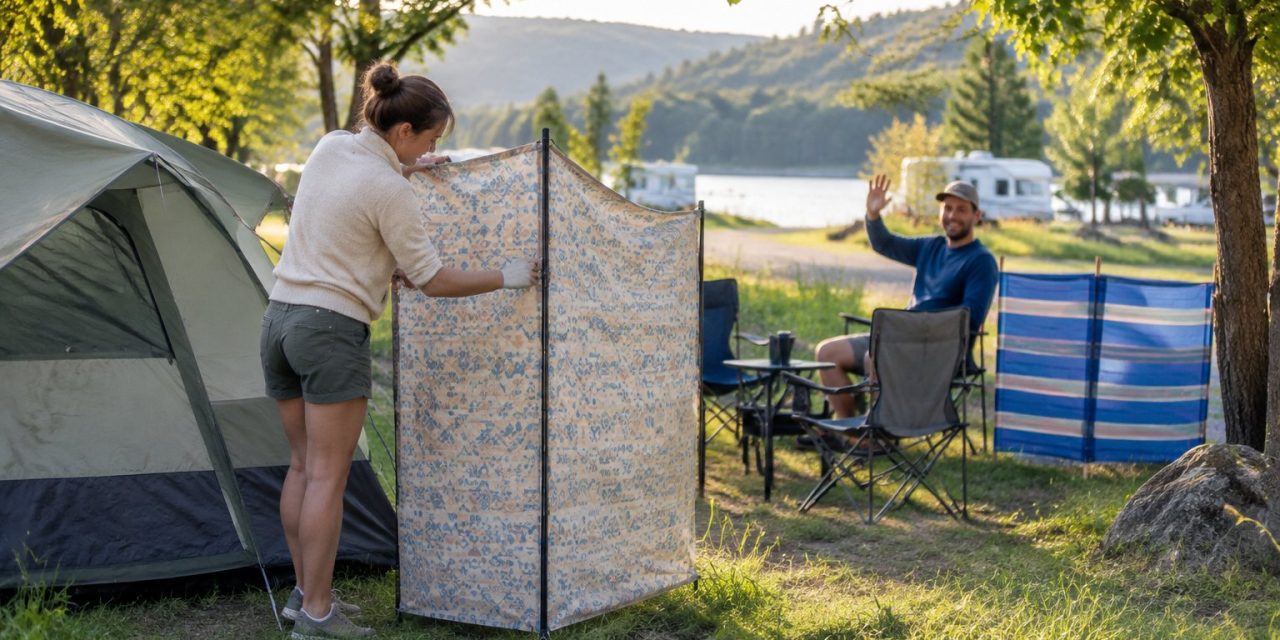
Privacy at a crowded campground rarely comes from a tall screen or a thick tarp. It comes from paying attention to sightlines, light, and sound, and making small adjustments before you ever unzip a tent bag. The campers who feel most tucked away usually did almost nothing that cost money.
That’s good news if you’d rather spend your gear budget on something other than fabric walls. Most of the fixes below take five minutes, use what you already packed, and read as thoughtful rather than standoffish to the people camped nearby.
1) Reserve an End Site with Only One Neighbor
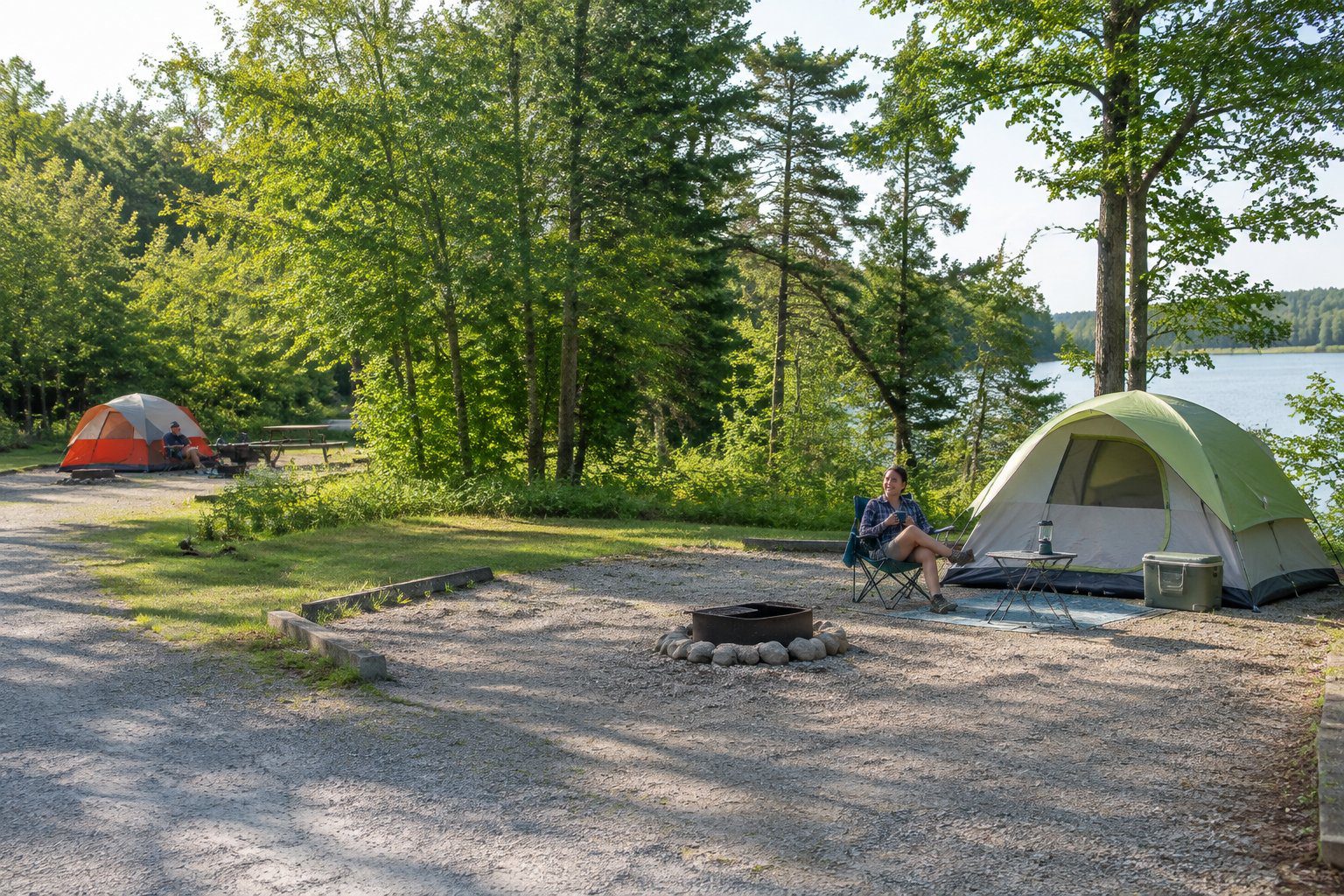
Booking the last site in a loop cuts your potential neighbors in half before you’ve pitched anything. End sites typically back onto a tree line, a fence, or unused ground instead of another campsite, so you’re only managing sightlines on one side instead of two or three.
Pull up the campground map when you reserve and look for sites numbered at the tail end of a row or loop. Satellite view on a mapping app often shows which “end” sites actually back onto open space versus a service road.
This works especially well for RV travelers who want a buffer zone without asking a host for anything unusual. If you’re often hunting for that kind of breathing room, 20 RV travel hacks for introverts who hate crowded campgrounds covers more booking strategies worth trying.
2) Choose a Site Away from Restrooms and Main Paths
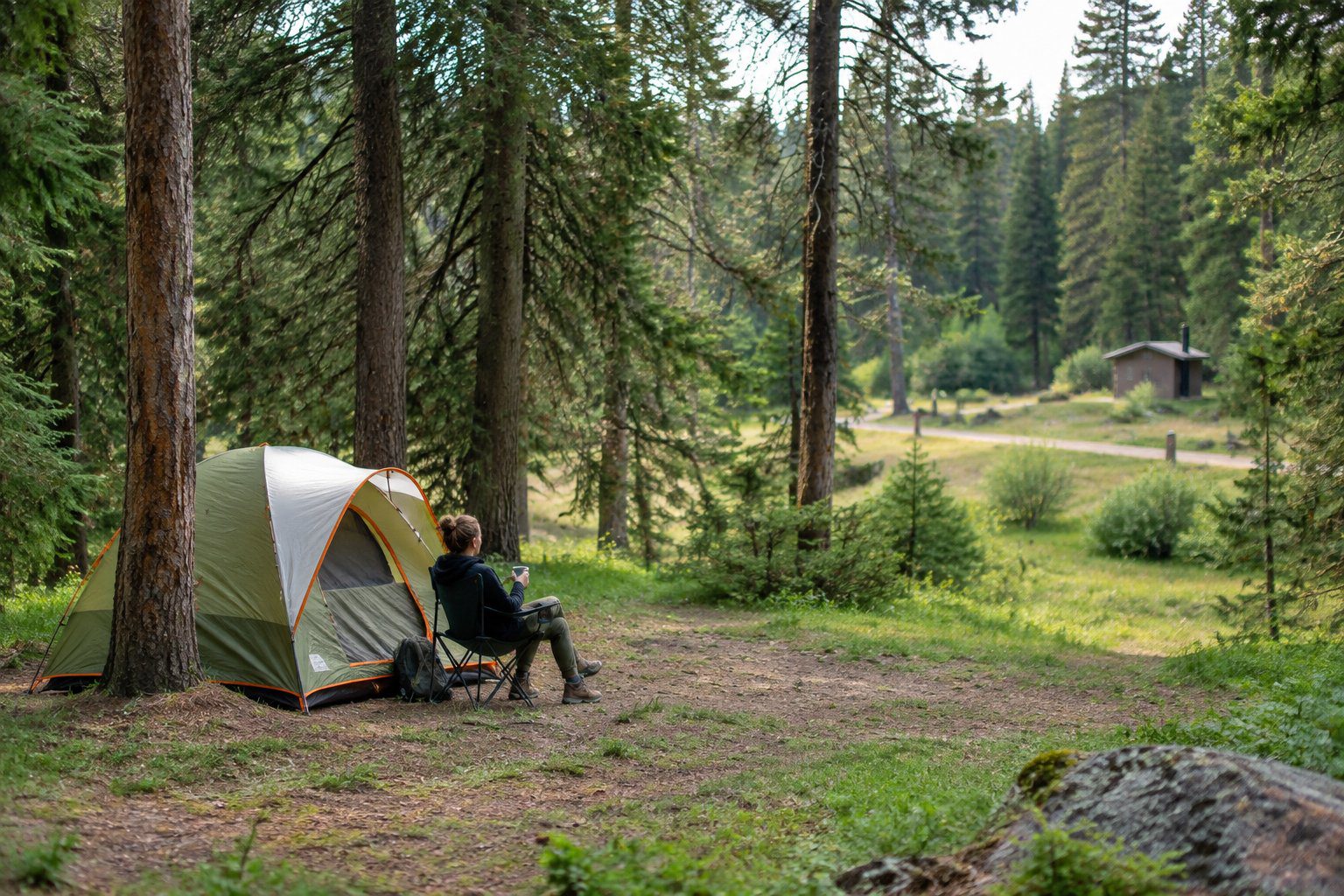
Sites near bathhouses and main walkways see the most foot traffic of anywhere in a campground, which means more eyes passing your site all day. Convenience comes at a real cost here: every camper heading to the restroom at 7 a.m. walks right past your picnic table.
A site set back from the main path, even by one row, drops that traffic dramatically. You’ll walk a little farther at night, but your campsite stops being a thoroughfare.
Checking campground maps and recent guest photos before booking helps you spot which sites sit along busy routes versus quieter corners, a detail worth weighing alongside the view when choosing a campsite.
3) Camp Midweek or During the Shoulder Season
Fewer campers around you is the simplest privacy trick there is, and timing delivers it without any setup at all. Most camping trips cluster around Friday and Saturday nights, so sites booked Tuesday through Thursday see noticeably less activity.
Shoulder season, the weeks just before or after peak summer, works the same way. Campgrounds that feel packed in July often have entire loops sitting empty in late September or early June.
Planning trips to land midweek rather than on summer weekends also means your pick of end sites and quieter corners, since the best spots haven’t been claimed yet. If flexible timing fits your routine, where RVers go during off-peak season has more on stretching that advantage further.
4) Point Your Tent Door Away from Neighboring Sites
Orienting your tent entrance toward trees, a rock face, or empty space keeps your sleeping area and gear out of view every time you unzip the door. Neighbors walking past won’t catch a glimpse inside each time you come and go.
Before staking anything down, stand where your neighbors’ seating areas face and picture your tent door from their angle. If it opens straight toward their campfire circle, rotate the whole tent, even a few feet of adjustment changes what’s visible.
This costs nothing and takes effect the moment you finish setup, which makes it one of the easiest fixes on this list to actually remember.
5) Park Your Vehicle Between Your Seating Area and the Next Site
Your car or truck already blocks sightlines better than most purchased screens, and using it that way reads as practical rather than pointed. Position it along the property line facing your neighbor’s site, and your camp chairs, cooler, and cooking area sit in its shadow line of sight.
This works best when you scope the site layout before unpacking. Check where the adjacent site’s main gathering spot is, then park accordingly instead of just pulling into the first open spot.
RVers have an even bigger version of this trick available: angling the rig itself so its solid side, not the slide-out or windows, faces the neighboring site.
6) Move Your Chairs Behind the Tent
Shifting your seating area to the side of the tent away from the road or neighboring site instantly removes you from view without touching a single stake. People relaxing in camp chairs are usually the most visible part of any site, simply because sitting still for hours makes you easy to notice.
Walk your site’s perimeter and note where passersby naturally