Every year, more than 11 million households in the U.S. own an RV, and the savviest among them have figured out a secret that no travel blog fully captures: the most unforgettable meals on the road rarely come from restaurants on the main strip. The 17 surprising places RVers find the best local food are hiding in plain sight, tucked behind gas pumps, inside church fellowship halls, and at the end of hand-painted signs on county roads.

This guide digs into exactly where road-trippers are discovering authentic, mouthwatering local eats, and how to find them on any route, any budget.


Key Takeaways

  • 🚐 The best local food on an RV trip is almost never found at chain restaurants near the highway.
  • 🥧 Unexpected spots like church potlucks, feed stores, and bait shops often serve the most authentic regional food.
  • 📍 Apps, campground neighbors, and hand-painted roadside signs are a traveler’s best food-finding tools.
  • 🌽 Seasonal timing matters, farmers markets, farm stands, and festivals peak at different times of year.
  • 🗺️ Building a “food stop” habit into every travel day transforms an RV trip from a road trip into a genuine cultural experience.

Why RVers Are the Ultimate Local Food Hunters

RV travelers spend more time in small towns and rural areas than almost any other type of tourist. That puts them within arm’s reach of food traditions that visitors flying into major cities will never taste. Unlike hotel guests who rely on concierge recommendations, RVers park in neighborhoods, chat with locals at dump stations, and notice the smoke rising from a backyard BBQ pit.

The 17 surprising places RVers find the best local food aren’t exotic, they’re just overlooked. Once a traveler knows where to look, every new town becomes a culinary adventure.

Why RVers Are the Ultimate Local Food Hunters

Would you like to save this article?

We'll email this post to you, so you can come back to it later to read!


The Full List: 17 Surprising Places RVers Find the Best Local Food

1. 🏪 Small-Town Gas Stations

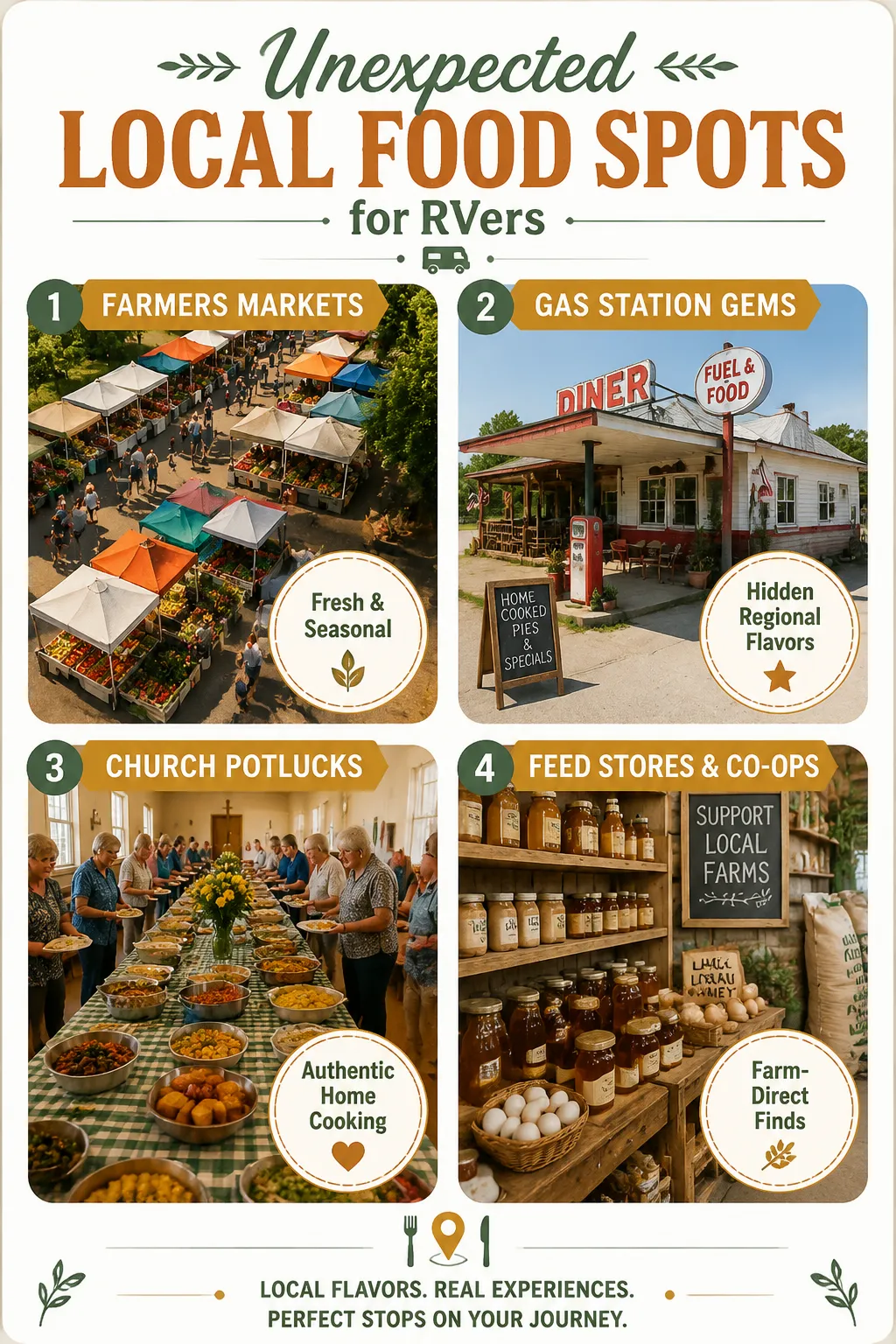
This one surprises almost everyone the first time. In the South especially, rural gas stations double as legendary lunch counters. Look for hand-lettered signs, a packed parking lot of local trucks, and the smell of frying chicken or boudin. If locals are eating there, it’s worth stopping.

Pro tip: Gas stations in Louisiana, Texas, and the Carolinas are famous for fried chicken, cracklins, and homemade sandwiches that rival any sit-down restaurant.


2. 🌽 Roadside Farm Stands

Farm stands sell more than produce. Many offer homemade jams, pickles, local honey, fresh-baked pies, and smoked meats. They’re usually cash-only, always seasonal, and almost always delicious. Slow down when a hand-painted plywood sign appears on the side of the road.

3. ⛪ Church Potlucks and Suppers

Many rural churches host Friday fish fries, Saturday barbecues, or Sunday potluck dinners that are open to the public (or at least welcoming to friendly strangers). These events feature generations-old recipes cooked in bulk by people who genuinely love to feed others. Ask at the campground or check community bulletin boards.


4. 🎪 County and State Fairs

Fairs aren’t just funnel cake. Regional fairs showcase local agriculture, heritage recipes, and food vendors who only appear once a year. Smoked meats, regional pies, Native American frybread, and specialty crops all show up at county fairs in ways that no restaurant replicates.


5. 🐟 Bait Shops with a Grill

In fishing communities from the Florida Panhandle to the Great Lakes, bait shops often run a small grill or deli counter. Fried catfish sandwiches, smoked fish dip, and fresh shrimp baskets are common finds. The clientele is entirely local, and the prices are always fair.


6. 🌮 Food Trucks at Unexpected Locations

Forget the trendy food truck parks in big cities. The real finds are food trucks parked outside lumber yards, at rural crossroads, or next to a feed store on a Tuesday afternoon. These operators serve working people on tight lunch breaks, meaning portions are big, prices are low, and the food is real.


7. 🏪 Feed Stores and Farm Co-ops

Farm supply stores in agricultural communities often stock locally made products: artisan cheeses, raw honey, regional hot sauces, smoked sausages, and canned goods made by neighboring farms. Some even have a small deli counter. It’s one of the most overlooked stops on any rural RV route.


8. 🎣 Fishing Piers and Boat Launches

Wherever people fish, someone is selling food nearby. Shrimp boats in coastal towns often sell directly off the dock. Pier bait shops sell boiled peanuts, smoked fish, and cold drinks. The freshness level at a working boat launch beats any seafood restaurant in the same zip code.


9. 🌾 Farmers Markets (Beyond the Obvious Ones)

Most RVers know about farmers markets, but the best ones aren’t always in the biggest towns. Small-town Saturday markets in communities of 2,000-10,000 people often feature more authentic local producers, less tourist markup, and vendors who are genuinely excited to talk about their food.

🗓️ Timing Tip:

Most small-town farmers markets run from May through October, Saturday mornings only. Search “farmers market near [town name]” the night before to confirm hours and location.


10. 🏕️ Campground Neighbors

Fellow RVers are an underrated food intelligence network. The couple in the next site just drove through the town ahead, they know which taco truck is worth the detour and which diner has been coasting on its reputation for a decade. A five-minute conversation at the fire ring can redirect an entire food day.


11. 🏫 VFW Halls and American Legion Posts

Veterans’ organizations frequently host public dinners, fish fries, and breakfasts that are open to the community. The food is hearty, affordable, and deeply regional. A VFW fish fry in Wisconsin tastes completely different from one in Mississippi, and both are worth experiencing.


12. 🛒 Ethnic Grocery Stores

In towns with significant immigrant communities, ethnic grocery stores often run a small hot food counter or bakery. Mexican carnicerias, Vietnamese grocery stores, and Somali markets in unexpected Midwestern towns are producing some of the most vibrant, authentic food in America. These spots rarely show up on food apps.


13. 🍖 BBQ Joints with No Signage

The most legendary BBQ spots in the South often have minimal signage, no website, and hours that depend entirely on when the pit master feels like opening. They’re found by asking locals, following smoke, or spotting a line of cars parked on a gravel shoulder. Worth every detour.

13. 🍖 BBQ Joints with No Signage

14. 🏪 Dollar Stores and Discount Grocers in Rural Areas

This one is less about prepared food and more about stocking the RV kitchen. Regional discount grocers and local grocery chains carry products that national chains don’t, regional hot sauces, local dairy brands, regional snack foods, and seasonal produce at prices that make RV cooking genuinely exciting.


15. 🎉 Community Festivals and Heritage Events

Every region celebrates something: garlic festivals, crawfish boils, apple butter festivals, tamale festivals, clam bakes. These events are built around food and are attended almost entirely by locals. A quick search of “[state] food festivals [month]” before any trip leg reveals a calendar full of opportunities.


16. 📻 Local Radio Station Recommendations

Old-school but effective. Local AM/FM radio stations in small markets often mention community events, local restaurant specials, and food-related news that no algorithm surfaces. Tune in while driving through a new area, it’s a direct line into the community’s daily life.


17. 🏪 Truck Stop Restaurants (The Real Ones)

Not the national chain attached to a Pilot or Love’s, the independent truck stop restaurant that’s been feeding long-haul drivers for 40 years. These places serve enormous portions of regional comfort food at prices that haven’t changed much since the 1990s. Chicken-fried steak in Texas, biscuits and gravy in the Midwest, and clam chowder in New England are all better at a trucker’s diner than almost anywhere else.


How to Find These Spots Before You Arrive

Knowing the list is one thing. Finding these places in real time on a moving RV trip requires a small toolkit.

Best Apps and Tools for RV Food Discovery

Tool Best For
Yelp (filter by “Local” & low price) Gas station diners, no-sign BBQ
iOverlander Community-sourced food tips at stops
Roadtrippers Planning food stops along a route
Facebook Groups (RV-specific) Real-time tips from fellow travelers
Google Maps “Explore” Spotting ethnic grocery stores nearby
State Tourism Websites Festival calendars, farm stand directories

Questions to Ask at Every Campground

  • “Where do the locals actually eat around here?”
  • “Is there a farmers market this week?”
  • “Any church dinners or community events coming up?”
  • “What’s the one thing I can’t leave this area without trying?”

These four questions, asked consistently, will fill a travel journal with food memories that no guidebook could provide.

Questions to Ask at Every Campground

Seasonal Guide to the Best Local Food Finds

Different times of year unlock different food experiences. Here’s a quick seasonal breakdown:

🌸 Spring (March, May)

  • Morel mushroom festivals in the Midwest
  • Crawfish season in Louisiana
  • Strawberry u-pick farms open across the South

☀️ Summer (June, August)

  • Peak farmers market season everywhere
  • Corn, tomatoes, and stone fruit at farm stands
  • County fair season (July, August)

🍂 Fall (September, November)

  • Apple orchards with cider and donuts
  • Pumpkin farms with baked goods
  • Harvest festivals and chili cook-offs

❄️ Winter (December, February)

  • Gulf Coast oyster season
  • Citrus stands in Florida, Texas, and Arizona
  • Tamale season in the Southwest

What Makes These Spots Better Than Restaurants

It comes down to three things:

  1. Authenticity, The food reflects a real community’s actual eating habits, not a chef’s interpretation of regional cuisine for tourists.
  2. Freshness, Farm stands, fishing piers, and co-ops sell food that was grown or caught within miles of where it’s being sold.
  3. Connection, Buying a jar of honey from the beekeeper who made it, or eating a fish fry cooked by the same family for 30 years, creates a memory that a restaurant meal rarely does.

“The best meal of our entire cross-country trip was a paper plate of smoked brisket from a guy cooking out of a trailer in a church parking lot in central Texas. No sign, no menu, no website. Just smoke and a line of pickup trucks.”, Common story in every RV community forum


Conclusion

The 17 surprising places RVers find the best local food aren’t secrets, they’re just waiting for travelers who are curious enough to slow down and look. Every gas station, every hand-painted sign, every campground neighbor is a potential lead on the most memorable meal of the trip.

Actionable next steps for every RV traveler:

  • ✅ Save the app toolkit (Yelp, iOverlander, Roadtrippers) before the next trip
  • ✅ Build “food stop” time into every daily route, not just drive time
  • ✅ Ask the four campground questions at every new site
  • ✅ Check the state tourism website for festival calendars before each trip leg
  • ✅ Keep $20 in cash for farm stands and church dinners that don’t take cards
  • ✅ Follow smoke, follow pickup trucks, and follow hand-painted signs

The road is full of extraordinary food. The only requirement is being willing to pull over.


References

  • Kampgrounds of America. (2023). North American Camping & Outdoor Hospitality Report. KOA.
  • RV Industry Association. (2023). RV Owner Demographic Profile. RVIA.
  • Severson, K. (2021). The secret life of gas station food. The New York Times.
  • Leff, J. (2012). Eat your way through America: A guide to regional food traditions. Rodale Press.
  • USDA Agricultural Marketing Service. (2022). National Farmers Market Directory. United States Department of Agriculture.