
Your RV is parked for the season, and you feel good about it. The gate locks, the lot has cameras, and your rig looks just like everyone else’s. That sense of security is exactly what thieves count on.
RV theft climbs every year, and most of it happens because of small, fixable gaps in how owners store their rigs rather than some elaborate heist. Once you know where those gaps are, closing them takes a weekend and a few hundred dollars, not a complete overhaul of your storage plan.
This article walks through the five mistakes that make RVs an easy target, and what to do instead. Some fixes cost nothing but a few minutes of your time. Others are cheap gear you can buy this week. All of them come from the same idea: a thief wants a fast, quiet job, and your rig doesn’t have to give them one.
1) Choosing an RV Storage Lot Based Only on a Gate and Cameras
A locked gate and a few cameras don’t stop a determined thief, and leaning on those two features alone leaves real gaps in your rig’s security. Plenty of storage lots advertise “secure” parking, but security means more than a keypad at the entrance.
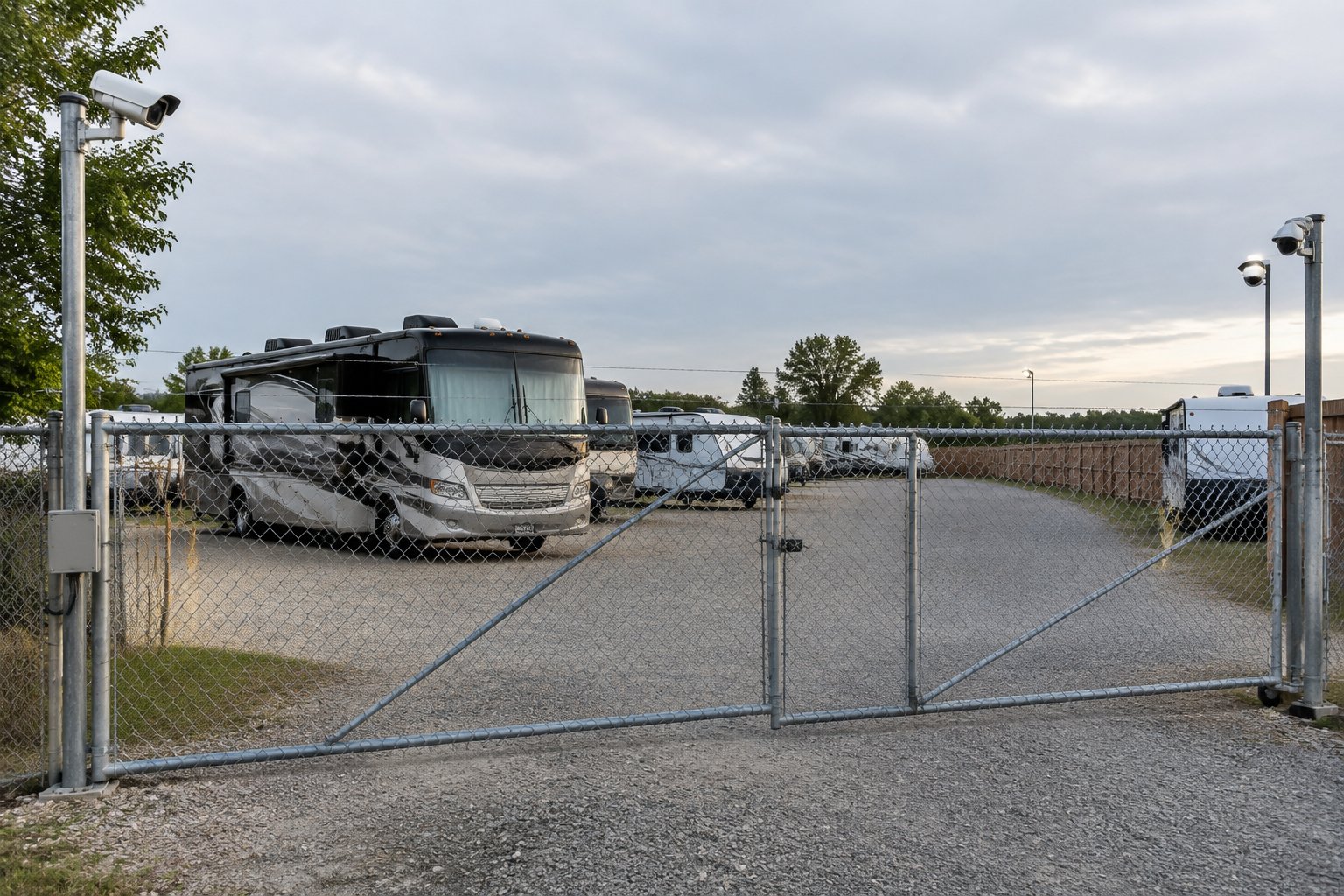
Cameras record footage, but they rarely stop a crime while it happens. If no one watches the feed live, a thief can back up to your trailer, hitch it, and drive off long before anyone reviews the tape. A gate helps, but tailgating is common.
Someone can simply follow another vehicle through right after the code is entered.
Before you sign a storage contract, ask the lot manager a few direct questions:
- Is the lot staffed, or does someone patrol it after hours?
- How bright is the lighting across the entire lot, not just near the office?
- Are individual spaces fenced off, or is it one open area?
- How far apart are the rigs parked, and is there room for a thief to work unseen?
A lot with wide-open sightlines, good lighting on every row, and spacing between rigs makes your RV harder to approach without being noticed. Indoor or covered storage with individual locking units offers even better protection, since it hides your rig from view entirely and limits who can get close to it in the first place.
2) Leaving a Trailer Coupler or Motorhome Wheels Without Theft-Resistant Locks
An unlocked coupler or unprotected wheel turns your RV into a five-minute job for anyone with a hitch and a truck. This is the single easiest fix on this list, and it’s also the mistake most owners skip because they assume the storage lot itself is protection enough.
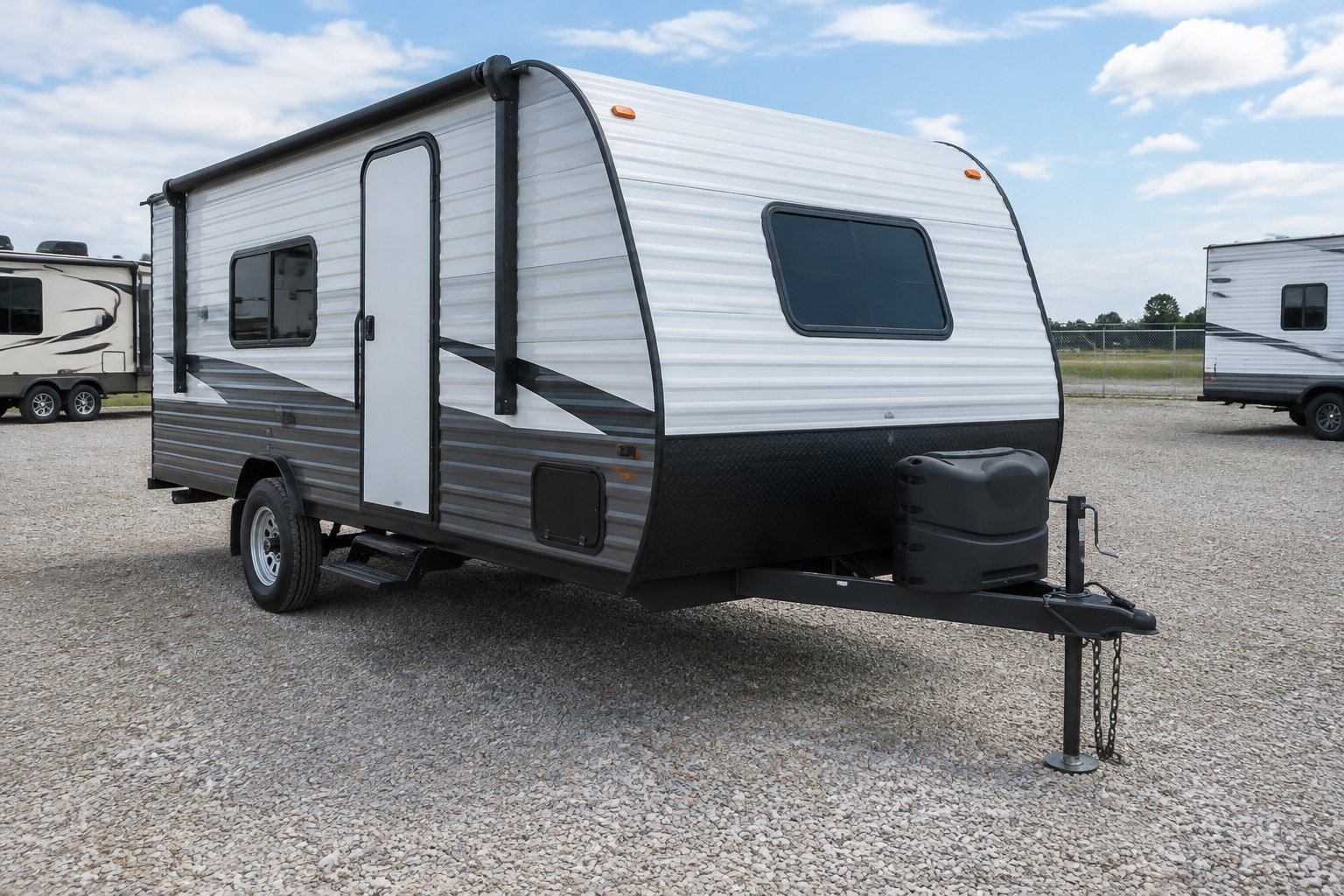
A coupler lock covers the hitch ball socket on your trailer so no one can attach it to another vehicle. These run cheap and take seconds to install, yet a trailer without one can be hooked up and towed away in under a minute.
If you own a motorhome instead of a towable, a wheel lock (sometimes called a wheel boot) serves the same purpose. It clamps onto the tire and makes driving the rig impossible without cutting it off first, which draws attention and takes time most thieves don’t want to spend.
For the best protection, pair the two:
- A coupler lock on every towable trailer, every time it’s parked
- A wheel lock on at least one wheel of any motorhome
- A hitch pin lock if your tow setup includes a removable ball mount
None of these locks are unbreakable. A thief with bolt cutters and enough time can get through most of them. The point is removing the easy option. Thieves scanning a storage lot look for the rig that takes the least effort, and a locked coupler sends them to the next row.
3) Trusting Factory Compartment Locks and Leaving Spare Keys on the Rig
Factory locks on RV storage compartments and entry doors use the same simple key patterns across entire model lines, which means one key can open hundreds of different rigs. This surprises a lot of owners who assume their RV key is unique to their unit.
Manufacturers often use a limited number of lock and key combinations across their product lines to keep production costs down. A thief who collects or buys a set of common RV keys can walk a storage lot and try doors until one opens. Compartment locks that hold your generator, tools, or tanks are frequently even weaker than the entry door lock.
A few habits close this gap fast:
- Replace factory compartment locks with upgraded, high-security versions where possible