(As an amazon associate, we may earn a small commission with the links below)
Setting up camp used to mean a lot of guesswork: eyeballing your rig to see if it’s level, wondering if a tire is losing air somewhere down the highway, or squinting at a dash cam app that never quite works right. Technology has quietly fixed a lot of these headaches, and the upgrades that matter most aren’t flashy gadgets. They’re the small tools that save you time at the campsite and keep you safer on the road.
Each of the tech gear below solves a specific problem that RV owners run into again and again, whether you’re parking for a weekend or living on the road full time. A few, like the leveling system and TPMS, tackle the same general job (keeping your rig safe and steady) but go about it in different ways worth understanding before you buy.
Before picking any gadget, think about how it fits your setup. Do you want phone control, a standalone screen, or both? Does it need to survive months of sun and rain? Is it something you’ll install once and forget, or check daily? Those answers will point you toward the right pick faster than any spec sheet.
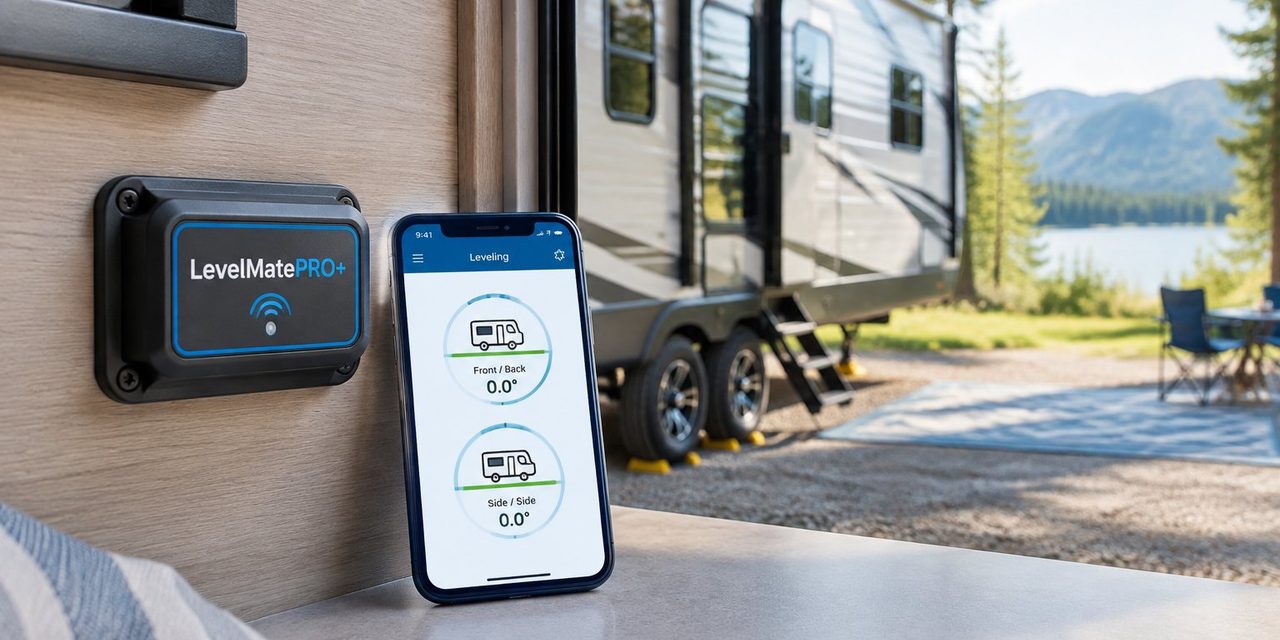
Best for phone and Apple Watch leveling: LevelMatePRO+ Wireless RV Leveling System
Best for solar-powered tire monitoring: ATVEE RV Tire Pressure Monitoring System
Best for quick campsite cleanup: Bullseye Blower Cordless Leaf Blower
Best for smart climate control: Cielo Breez Max Smart WiFi Thermostat
Best for space-saving AC with heat: TURBRO Inverter Under Bench RV Air Conditioner
Best for flood prevention: U.S. Solid Water Leak Detector with Auto Shut-Off Valve
Best for front, rear, and cabin recording: 70mai 4K T800 3 Channel Dash Cam
1. LevelMatePRO+ Wireless RV Leveling System

This leveler is a smart buy for anyone who wants to level their RV using just a phone or Apple Watch, without walking around the rig to check bubble levels.
Pros
- Shows side-to-side and front-to-back leveling on one screen
- Saves hitch height for quick, repeatable reconnections
- Works in low light since you’re reading a phone screen, not a tiny level
Cons
- Requires a phone or watch nearby to view readings
- Setup means mounting a device inside the RV
The LevelMatePRO+ mounts inside your rig and pairs with a free app, giving you real-time guidance on which corner needs raising or lowering. For travel trailers and fifth wheels, the hitch-height memory feature is a genuine time-saver on repeat trips to the same campground. Drivable RV owners get a helpful top-down view that shows every corner at once. It’s made in the USA and hand-calibrated, which adds confidence for frequent travelers who level often.
2. ATVEE RV Tire Pressure Monitoring System

This TPMS suits RVers who want a dedicated screen and solar backup power instead of relying on a phone app for tire safety.
Pros
- Six sensors cover RVs with dual rear tires or trailers in tow
- Solar panel plus USB charging keeps the display powered
- Five alarm types cover pressure, temperature, and fast leaks
Cons
- Sensors mount externally on each valve stem
- Signal range tops out around 115 feet
Unlike the LevelMatePRO+, this system puts information on its own color LCD screen instead of a phone. That’s a plus for drivers who’d rather glance at a dedicated display mounted near the dash than dig out a phone while driving. The six included sensors are built for larger setups: dually trucks, trailers, or tow vehicles with extra tires. Solar charging means less worry about battery swaps on long trips, and the auto-adjusting backlight helps visibility at night.
3. Bullseye Blower Cordless Leaf Blower

This compact blower is a smart grab for campers who want a fast way to clear debris or dry off the rig after a wash.
Pros
- Two batteries included for extended runtime
- Lightweight design reduces arm fatigue
- Doubles as a car-drying tool for mirrors and seams
Cons
- Smaller than full-size yard blowers
- Best for light cleanup, not heavy leaf piles
With a 350-watt motor and speeds up to 24,000 RPM, this handheld blower clears dirt, leaves, and water from tight spots around your campsite or rig. The two rechargeable batteries mean you can finish a cleanup job without stopping to recharge mid-task. It’s especially handy for blasting water out of door seams and wheel wells after a rinse, keeping towels (and scratches) away from your paint.
4. Cielo Breez Max Smart WiFi Thermostat

This thermostat makes sense for RVers who already have a mini-split, window, or portable AC with a remote and want app-based control added on.
Pros
- Works with over 20,000 AC models using auto-detection
- Weekly scheduling keeps running even without internet
- Compatible with Alexa, Google Assistant, and Siri Shortcuts
Cons
- Needs a 2.4 GHz WiFi connection to control remotely
- Works best within 6 to 12 feet of the AC unit, in its line of sight
The Breez Max turns a basic remote-control AC into a connected, schedulable unit. Its Comfy Max mode is designed to prevent overcooling, which helps manage power use when you’re running on limited campground electricity or a generator. Multi-zone support is a nice touch for bigger rigs running more than one indoor unit, since it helps keep all of them synced to the same mode.
5. TURBRO Inverter Under Bench RV Air Conditioner
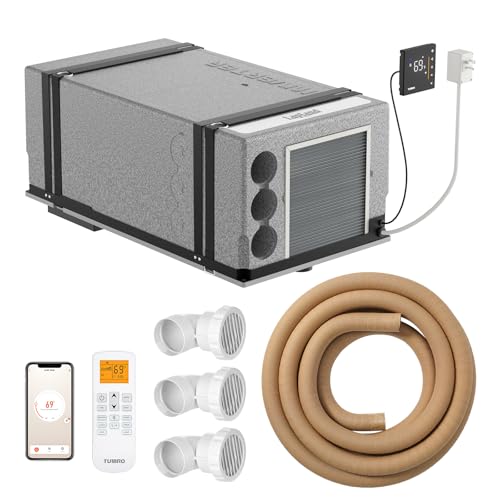
This unit fits owners who want rooftop-free cooling and heating tucked under a bench, bed, or cabinet instead.
Pros
- Inverter compressor cuts energy use compared to standard units
- Built-in heat pump adds cold-weather comfort
- Frees up roof space for solar panels or storage
Cons
- Heavier than portable units at 77 pounds
- Requires under-bench or cabinet space for installation
Instead of mounting on the roof, this AC hides beneath furniture, which keeps your RV’s profile low and leaves the roof open for solar gear. The inverter compressor avoids the power surges of a typical start-stop compressor, easing the load on your electrical system. App and remote control add flexibility, and the heat pump function makes it a useful pick for shoulder-season trips when nights get cold.
6. U.S. Solid Water Leak Detector with Auto Shut-Off Valve

This system is worth adding for anyone who wants automatic protection against water damage, not just a warning alarm.
Pros
- Motorized valve shuts off water automatically when a leak is found
- NSF-certified stainless steel construction resists rust
- Three sensors with long cables cover multiple risk spots
Cons
- Installation involves plumbing work on a 1-inch line
- Best suited for fixed water connections, not every RV setup
Rather than just sounding an alarm, this system physically closes the water valve the moment a sensor detects moisture. That kind of automatic response matters most when you’re away from the rig and can’t respond to an alert right away. The three included sensors, each with a 20-foot cable, give you flexibility to monitor a water heater, washer connection, or under-sink plumbing at the same time.
7. 70mai 4K T800 3 Channel Dash Cam

This dash cam suits RV drivers who want front, rear, and interior coverage recorded in sharp detail on long road trips.
Pros
- Dual 4K front and rear cameras plus a 1080p interior lens
- Parking mode with collision detection and 4G alerts
- Fast WiFi 6 transfer speeds for pulling footage to your phone
Cons
- Full parking mode features need a separate hardwire or 4G kit
- Three camera feeds mean more wiring during installation
The 70mai T800 covers the road ahead, behind, and inside the cabin, which is useful for documenting incidents or just keeping an eye on passengers. Night vision from the Sony STARVIS 2 sensors helps with clarity after dark, a common challenge on remote highways. The included 256GB card means you’re ready to record right out of the box, and loop recording keeps storage from filling up on longer trips.