
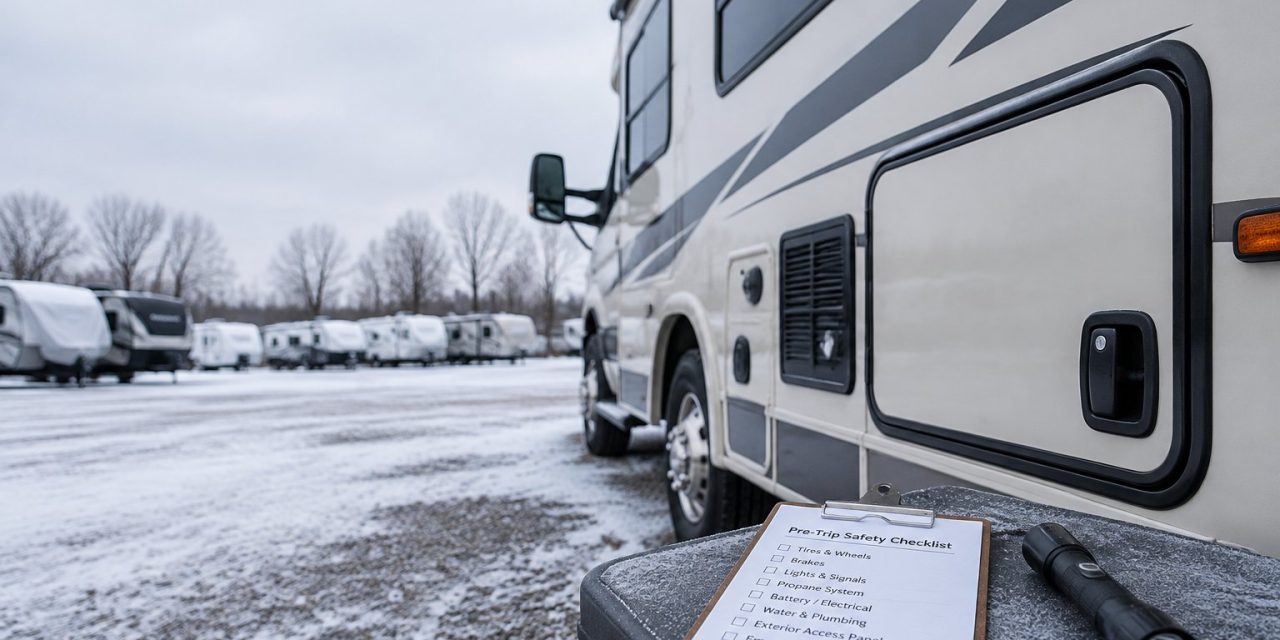
Every winter, RVs catch fire in driveways, storage lots, and campgrounds while nobody is even watching. Most RV fires are preventable, yet many owners skip the exact checks that stop them [5]. Cold weather adds extra danger because heaters, propane, and tight-sealed campers all mix together in risky ways. This guide covers 6 Winter RV Fire Risks Nobody Checks, so you can catch the problems before they turn into a disaster. These are not rare freak accidents. They are common mistakes that happen every single winter, often in rigs owned by careful, experienced RVers [6].
1. Space Heaters Plugged Into the Wrong Outlet
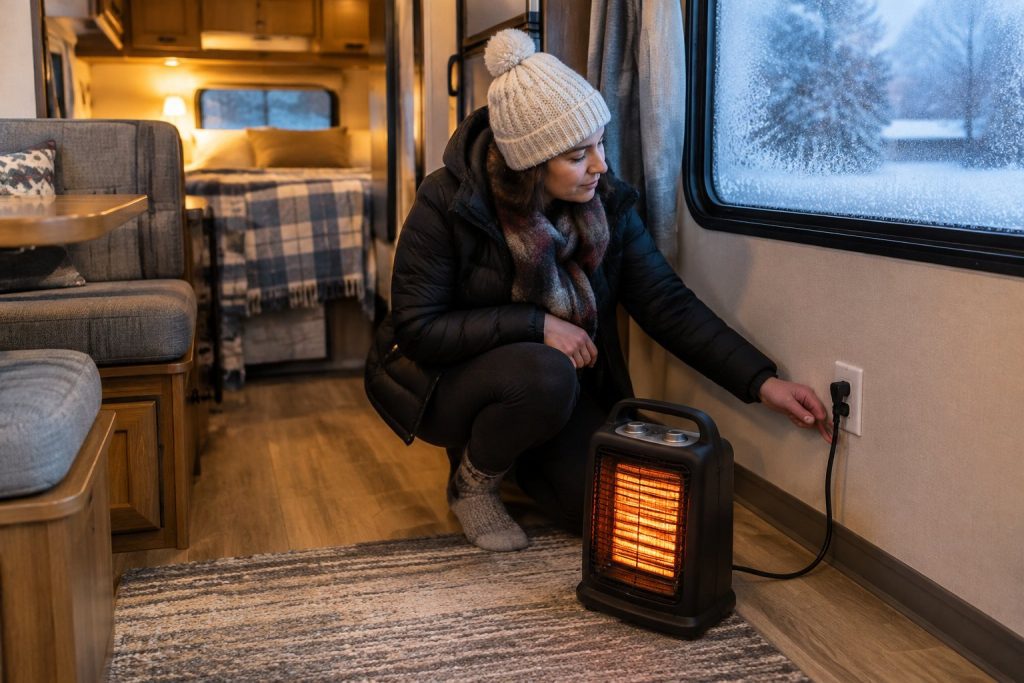
Space heaters are the quiet hero of winter camping. They are also one of the biggest fire starters inside an RV. Most portable heaters pull a lot of power, and RV outlets and extension cords are not always built to handle that load for hours at a time [2].
Picture a travel trailer parked for a long weekend. The owner runs a space heater on a cheap extension cord, plugged into a power strip, plugged into another extension cord that snakes to the pedestal. Each connection adds resistance. Resistance creates heat. That heat builds up inside the cord, hidden under a rug or behind furniture, long before anyone smells smoke [3].
Check the wattage on the heater and compare it to the outlet and cord rating before plugging in. Use a single heavy-duty cord rated for the heater’s full wattage, and never stack outlets with other high-draw items like electric blankets or coffee makers on the same circuit [2]. Keep the heater at least three feet from bedding, curtains, and upholstery, and never leave it running while sleeping or stepping away, even for a quick trip to the bathhouse [4].
2. Thawing Frozen Pipes and Skirting With the Wrong Tools
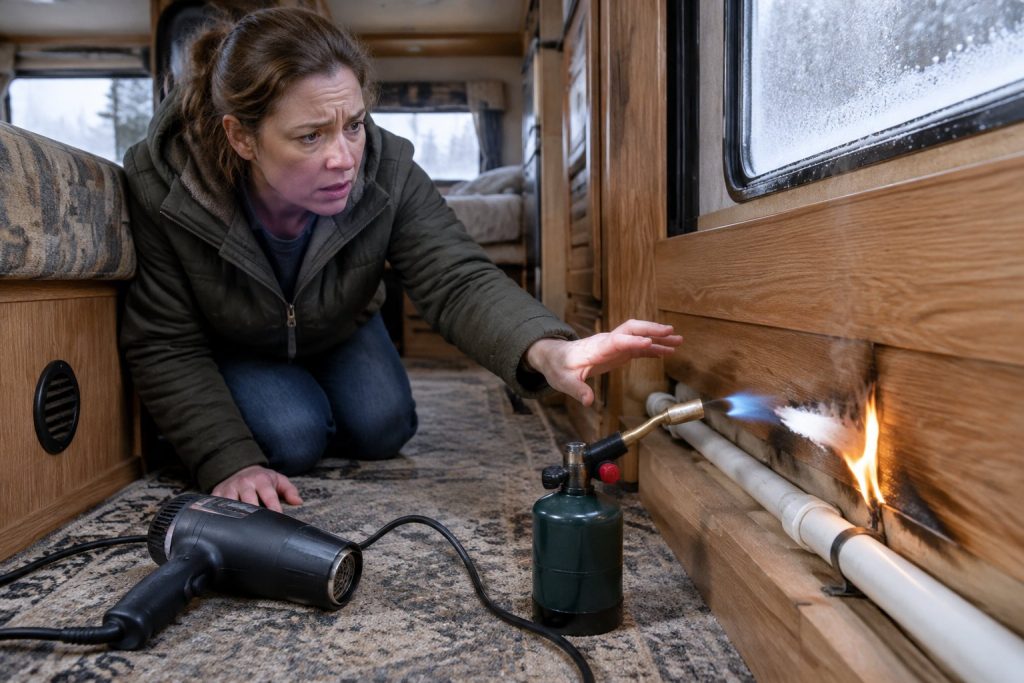
Frozen pipes feel like an emergency, and emergencies push people toward fast fixes. That is exactly how fires start. Propane torches, heat guns held too close, or hair dryers left running unattended near plastic pipes and wood skirting have all caused serious RV fires in winter [6].
Imagine an RV parked for the season with skirting built from plywood or foam board to block wind. A frozen water line runs along the underbelly, right behind that skirting. Someone grabs a torch to speed up the thaw, steps away for one minute, and the skirting material catches before they even notice smoke [6]. Combustible skirting sitting close to any open flame or high heat source turns a simple thawing job into a structure fire.
Use safer methods instead: heat tape designed for RV plumbing, a space heater placed well away from walls and skirting, or simply running water slightly to keep it moving. Never leave any heat source unattended near skirting, and inspect skirting material regularly for gaps or buildup that trap heat against the RV’s underside [4][6].
3. Propane Systems Nobody Pressure-Tests Before Cold Weather Hits
Propane keeps furnaces, water heaters, and stoves running all winter, but cold weather changes how propane systems behave. Low fuel levels in a tank can cause pressure drops and incomplete combustion, while cold temperatures make small leaks at fittings and hoses more likely to show up right when demand is highest [3][9].
Think about a fifth wheel owner who last checked their propane lines during a summer trip. Months later, in freezing temperatures, a hairline crack in an old hose connector finally lets gas seep out near the furnace compartment. The smell is faint, masked by cold air and a closed-up rig, until the furnace cycles on and ignites it [9].
Before winter trips, have propane lines, regulators, and connections inspected, and do a simple soap-and-water bubble test on fittings to catch leaks early [3]. Keep tanks above the recommended minimum fill level, since very low propane can cause irregular burning in appliances. Never store or use portable propane heaters not rated for indoor RV use, and always crack a window slightly when running propane appliances for ventilation [9].
4. Generators Running Too Close to the RV or Its Vents
Generators feel like a lifeline when shore power is not an option, but exhaust and placement cause real winter fire and carbon monoxide risks. Generators create carbon monoxide and heat, and in cold weather, owners tend to tuck them closer to the RV to shield them from wind and snow [1][5].
Consider a boondocker running a portable generator tucked against the side of the rig to block wind, sitting just below a window that is cracked open for fresh air. Exhaust heat and sparks sit close to the RV’s siding, and carbon monoxide drifts straight into the cabin through that same window [1]. This combination has caused both fires and carbon monoxide poisoning in parked RVs.
Keep generators at least several feet away from the RV, doors, and windows, and never run them under awnings, in enclosed spaces, or near dry grass or stored supplies [1][4]. Point exhaust away from the RV and any nearby combustibles like firewood stacks or propane tanks. Che