
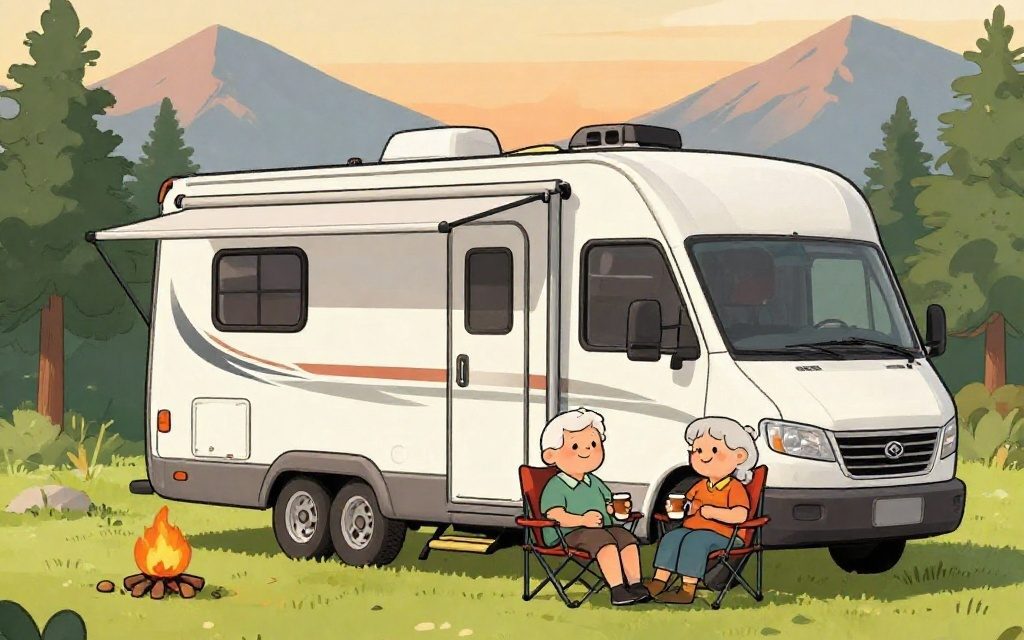
You’ve been planning your RV retirement for years, dreaming of the day you’d finally hit the open road and check off every destination on your bucket list. But what if the constant movement and frantic pace you’ve been imagining isn’t actually the dream life you’re chasing?
Experienced RVers Jamie and Linda from Roaming with Rosie spent years trying to see everything, do everything, and maximize every single moment of their retirement travel—until they realized they were doing it all wrong.
In their honest video confession, this couple reveals why slowing down, staying longer, and ditching the pressure to “make retirement count” actually creates more joy than racing from one famous landmark to the next.
Would you like to save this article?
1. The “Maximize Every Moment” Mindset Is Quietly Stealing Your Joy
When you enter RV retirement, there’s this invisible pressure weighing on your shoulders. You’ve worked hard your entire life, and now you feel like you must make every single day count. You start thinking about how many healthy years you have left to hike at 10,000 feet or explore the Bighorn Mountains.
This pressure doesn’t just come from within—it’s everywhere. Social media feeds overflow with RVers visiting stunning destinations, and suddenly you’re mentally building a checklist of places you “should” see before it’s too late.
But here’s the catch: that pressure transforms your dream retirement into an exhausting race against time. Instead of savoring experiences, you’re constantly stressed about the next reservation, the next drive, and whether you’re squeezing enough value out of every moment.
The Reality Check You Didn’t Ask For (But Need)
You might think you’re living the dream when you’re racing from Zion to Mount Rushmore to Custer State Park in a matter of weeks. But if you’re barely unpacking your camping chair because your schedule is so jam-packed, are you really experiencing these places—or just collecting them like trading cards? Your retirement shouldn’t feel like a competitive sport where the person who visits the most national parks wins. Spoiler alert: there’s no trophy, just exhaustion and a nagging feeling that you missed something important along the way.
| Traditional Retirement RV Mindset | Healthier Approach |
|---|---|
| See as many places as possible | Experience fewer places deeply |
| Tight schedules and pre-planned itineraries | Flexible plans with room for spontaneity |
| Constant movement equals freedom | Stillness and presence create joy |
| Fear of missing out drives decisions | Personal preferences guide choices |
2. Your “Vacation Mode” Has an Expiration Date (Usually Around Week 3)
When you first hit the road, RV travel feels like one long, glorious vacation. Every sunrise is an adventure. Every new campground is exciting. You’re finally free from the daily grind, and it’s absolutely exhilarating.
But somewhere around week three or four of constant travel, something shifts. The vacation glow fades, and suddenly you’re back to doing laundry, grocery shopping, cleaning your RV, scheduling doctor’s appointments, and managing a budget. Real life catches up with you—it just happens in different zip codes.
According to research from the Journal of Travel Research, extended travel experiences often transition from “hedonic consumption” (pleasure-seeking) to “eudaimonic well-being” (meaning-seeking) after about 21-30 days. Your brain literally adjusts to the new normal.
Here’s the Uncomfortable Truth Nobody Tells You
You thought escaping your daily routine would mean no more routine, but guess what? You still need to eat, sleep, pay bills, and keep your living space from turning into a disaster zone. The only difference is now you’re doing it in 300 square feet while trying to find a laundromat in an unfamiliar town. And if you’re moving every two days like Jamie and Linda did during their Pacific Northwest trip, you’ll spend more energy packing, unpacking, and navigating than actually enjoying the scenery. At that point, you’re not living the RV dream—you’re just relocating your stress to prettier zip codes.
3. Constant Decision-Making Will Drain Your Brain Faster Than a Bad House Battery
Think RV retirement is all about freedom and relaxation? Think again. Every single day presents you with an overwhelming avalanche of decisions:
- Where are we going next?
- How far should we drive?
- Can we even get reservations?
- Will it be too crowded when we arrive?
- What’s the best time of year to visit?
- Is the fuel cost worth this particular detour?
- How many days should we stay?
- What if we hate it—can we leave early without losing money?
This phenomenon is called decision fatigue, and it’s a real psychological drain. A study published in Social Science & Medicine found that excessive decision-making depletes mental resources and leads to poorer choices over time.
When you’re constantly planning, researching YouTube videos for visual intel, and juggling campground reservations, your brain never gets a break. The mental load becomes just as exhausting as any physical activity.
The Plot Twist You Didn’t See Coming
You retired so you could stop managing schedules, reports, and endless logistics. But now you’ve essentially become the CEO of your own travel company, and surprise—the job comes with zero vacation days. Every morning you wake up, you’re not just deciding what to have for breakfast; you’re calculating mileage, checking weather patterns, researching backup campgrounds, and wondering if that sketchy review about narrow roads was exaggerated or a legitimate warning. Meanwhile, all you wanted was to sit by a campfire and watch the sunset without planning the next five sunsets in advance.
4. Moving Fast Doesn’t Equal Freedom—It’s Just Moving Fast
Many retirees confuse constant motion with freedom. The ability to go anywhere, anytime sounds liberating on paper. But Jamie and Linda discovered something counterintuitive: the faster they moved, the less free they actually felt.
During their six-week Pacific Northwest coast trip, they spent so much time in transit that they rarely even set up their camping chairs. They were technically “free” to go wherever they wanted, but they felt trapped by their own aggressive schedule.
True freedom isn’t about how many places you can visit—it’s about having the flexibility to slow down, change plans, and genuinely absorb where you are without rushing to the next checkpoint.
A 2023 study from Cornell University’s School of Hotel Administration found that travelers who spent longer periods in fewer destinations reported 34% higher satisfaction levels than those who visited multiple locations in the same timeframe.
What Your Packed Schedule Really Says About You
If your RV calendar looks like a military operation with no breathing room, you’re not embracing freedom—you’re just swapping your office cubicle for a moving one. When you’re so busy driving, setting up, tearing down, and racing to the next “must-see” attraction that you can’t remember the last time you actually sat outside and did nothing, you’ve missed the entire point. Real freedom is waking up and deciding you don’t need to go anywhere today because where you are is already perfect. But you can’t discover that if you’re always 200 miles away from here.
5. The Most Memorable Experiences Are the Ones You Never Planned
Here’s a fascinating pattern that emerged from Jamie and Linda’s story: their favorite trips were all accidents. The best places they discovered were completely unplanned. Not the result of meticulous research or rigid itineraries—but spontaneous detours and flexible scheduling.
Examples from their journey:
- South Texas coast exploration – Started with one destination (Port Aransas) but discovered Mustang Island State Park and North Padre National Seashore because they had time to wander
- Snow Canyon near St. George, Utah – Not as famous as Zion or Bryce, but incredibly beautiful and meaningful because it connected to Jamie’s love of classic films
- Zion in February – An emergency visit after Linda’s fall turned into their most peaceful Zion experience ever, far from the Disneyland-like crowds of October
Research from the Journal of Consumer Psychology supports this: unplanned positive experiences generate stronger emotional responses and longer-lasting memories than scheduled activities.
The Irony of Your Perfectly Researched Itinerary
You spent hours watching YouTube videos, reading blog posts, and creating color-coded spreadsheets of the “top 10 must-see” spots in every region. But the moment you’ll remember five years from now? It’ll be that random roadside attraction you stumbled upon because you took a wrong turn. Or that quiet state park nobody talks about where you finally felt like you could breathe. Your perfectly curated bucket list is great for Instagram captions, but your spontaneous wrong-turn discoveries are what’ll make you smile when you’re 80. The universe has a sense of humor like that.
6. Work Camping Isn’t About Money—It’s About Belonging Somewhere
When Jamie and Linda first observed seniors work camping in exchange for just a campground spot, they couldn’t understand it. Why would retirees who don’t need the money volunteer their time?
Then they visited their friends Jim and Michelle at Kartchner Caverns State Park in Arizona, where the couple was work camping for several months. The answer became crystal clear: work camping provides purpose, community, and deep connection to a place.
Jim and Michelle weren’t just earning a free campsite—they were:
- Forming meaningful relationships with other work campers and rangers
- Becoming genuine experts about the area
- Finding a sense of purpose through helping visitors
- Experiencing the joy of truly “living” somewhere rather than just passing through
According to the Workamper News 2024 Annual Survey, 73% of work campers cite “sense of community” and “feeling useful” as their primary motivations—well above financial benefits.
The Secret Nobody Mentions About Endless Travel
Constantly moving means you’re perpetually the outsider, the tourist, the person who doesn’t know where the good grocery store is or which hiking trail to avoid during midday heat. But when you work camp or stay longer in one spot, something magical happens: locals start recognizing you at the coffee shop, you know which days the farmer’s market is open, and you finally understand why everyone avoids Main Street on Friday nights. You stop being a visitor passing through and start feeling like you belong somewhere—even if it’s temporary. And that feeling? It’s worth more than a thousand check-marked bucket list items.
| Quick RV Travel | Slow/Work Camping Travel |
|---|---|
| Always an outsider | Become part of the community |
| Surface-level tourism | Deep local knowledge |
| Transactional experiences | Meaningful relationships |
| Constant uncertainty | Sense of stability and routine |
7. Flexibility Is the Real Secret Ingredient to RV Happiness
The most powerful lesson from Jamie and Linda’s journey: flexibility matters more than the destination.
During Sturgis Motorcycle Rally in South Dakota’s Black Hills, the crowds and exhaust fumes made their carefully planned visit miserable. Motorcycles wouldn’t stop at trailhead crossings. Mount Rushmore was fogged in during their first visit. It could have ruined their entire trip.
But because they had built flexibility into their schedule—only two pre-booked dates in 2.5 months—they could adapt. They explored lesser-known towns around Hot Springs. They returned to Custer State Park after the motorcycle crowds left. They got a second chance at Mount Rushmore in clear weather.
That flexibility turned a potentially disappointing trip into one of their most cherished experiences. They discovered the Mammoth Site, enjoyed peaceful hikes, and experienced the Black Hills the way they actually wanted to—not the way their rigid schedule demanded.
Why Your Backup Plan Deserves More Love Than Your Main Plan
You’ve got your dream itinerary printed out, laminated, and probably framed on your RV wall. But what happens when that Instagram-famous overlook is swarmed with 500 other RVers who had the same brilliant idea? Or when weather turns your scenic drive into a white-knuckle nightmare? Or when you arrive at your “must-see” destination and realize… you just don’t care? Flexibility means you can pivot, explore that weird roadside museum instead, and potentially discover something way better than your original plan. The couples who build wiggle room into their schedules are the ones still smiling after six months on the road—while the rigid planners are burned out by month two, wondering why their perfect plan feels like a prison sentence.
Statistics & Supporting Facts
RV Travel & Retirement Statistics:
- According to the RV Industry Association’s 2024 report, there are approximately 11.2 million RV-owning households in the United States
- A 2023 AARP study found that 68% of retirees who travel extensively report experiencing “travel fatigue” within the first year
- The average RV retiree spends 4-6 months per year traveling, with full-timers representing about 1 million people
- Research from Cornell University’s 2023 study shows travelers spending longer periods in fewer destinations report 34% higher satisfaction
Decision Fatigue Research:
- Studies published in Social Science & Medicine demonstrate that excessive decision-making depletes mental resources by up to 40%
- The average person makes approximately 35,000 decisions per day, with travel adding an estimated 200+ additional daily decisions
Work Camping Trends:
- Workamper News 2024 Survey: 73% cite “sense of community” and “feeling useful” as primary motivations
- The work camping industry has grown 45% since 2020, with over 150,000 active work campers in North America
Travel Psychology:
- Journal of Consumer Psychology: Unplanned positive experiences generate 2.3x stronger emotional responses than scheduled activities
- Journal of Travel Research: Extended travel transitions from “hedonic” to “eudaimonic” experiences around day 21-30
SOURCES
- Roaming with Rosie YouTube Channel: https://www.youtube.com/@RoamingWithRosie
- RV Industry Association 2024 Annual Report: https://www.rvia.org
- AARP Travel Research Studies: https://www.aarp.org/research/topics/life/info-2023/travel-trends.html
- Cornell University School of Hotel Administration Travel Studies: https://sha.cornell.edu
- Journal of Consumer Psychology – Unplanned Experience Research: https://myscp.onlinelibrary.wiley.com/journal/15327663
- Journal of Travel Research – Extended Travel Studies: https://journals.sagepub.com/home/jtr
- Social Science & Medicine – Decision Fatigue Research: https://www.sciencedirect.com/journal/social-science-and-medicine
- Workamper News 2024 Annual Survey: https://www.workamper.com
- Stressless Camping: https://www.stresslesscamping.com
- Grand Adventure RV YouTube Channel: https://www.youtube.com/@GrandAdventure
- Airstreamer YouTube Channel: https://www.youtube.com/@airstreamer


