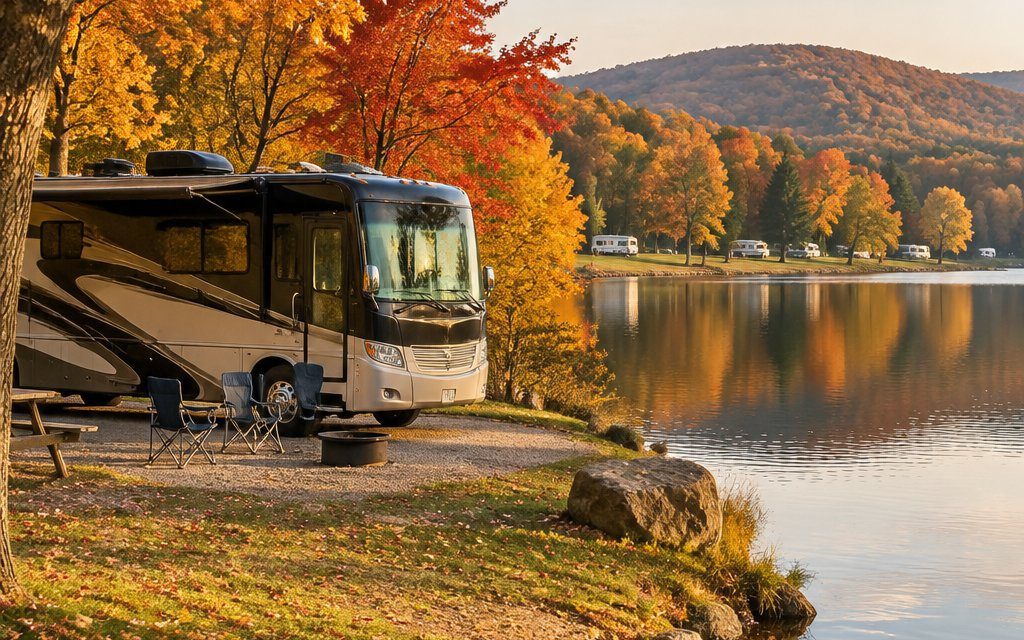
For your fall RV trip, choose Seven Points for wooded Raystown Lake scenery, Douthat for mountain trails beside the water, or Lake Havasu for warm-weather desert camping. You also have strong options in Tennessee, Missouri, Arkansas, and Wisconsin, with settings ranging from quiet inland lakes to the broad waters of Green Bay.
Your timing deserves as much attention as your campsite. By October 25, 2026, northern foliage trips are late-season outings, while southern destinations still offer opportunities for autumn color. A lakeside address also leaves plenty of room for differences in shore access and hookups.
Quick picks:
- Mountain hiking: Lakeside Campground at Douthat State Park, with trails around a compact lake.
- Family activities: Thousand Trails Natchez Trace, with fishing and campground recreation.
- Door County exploring: Peninsula State Park, with shoreline drives and nearby villages.
- Warmer days: Lake Havasu State Park, with beaches and desert scenery.
1) Seven Points Campground, Raystown Lake, Pennsylvania
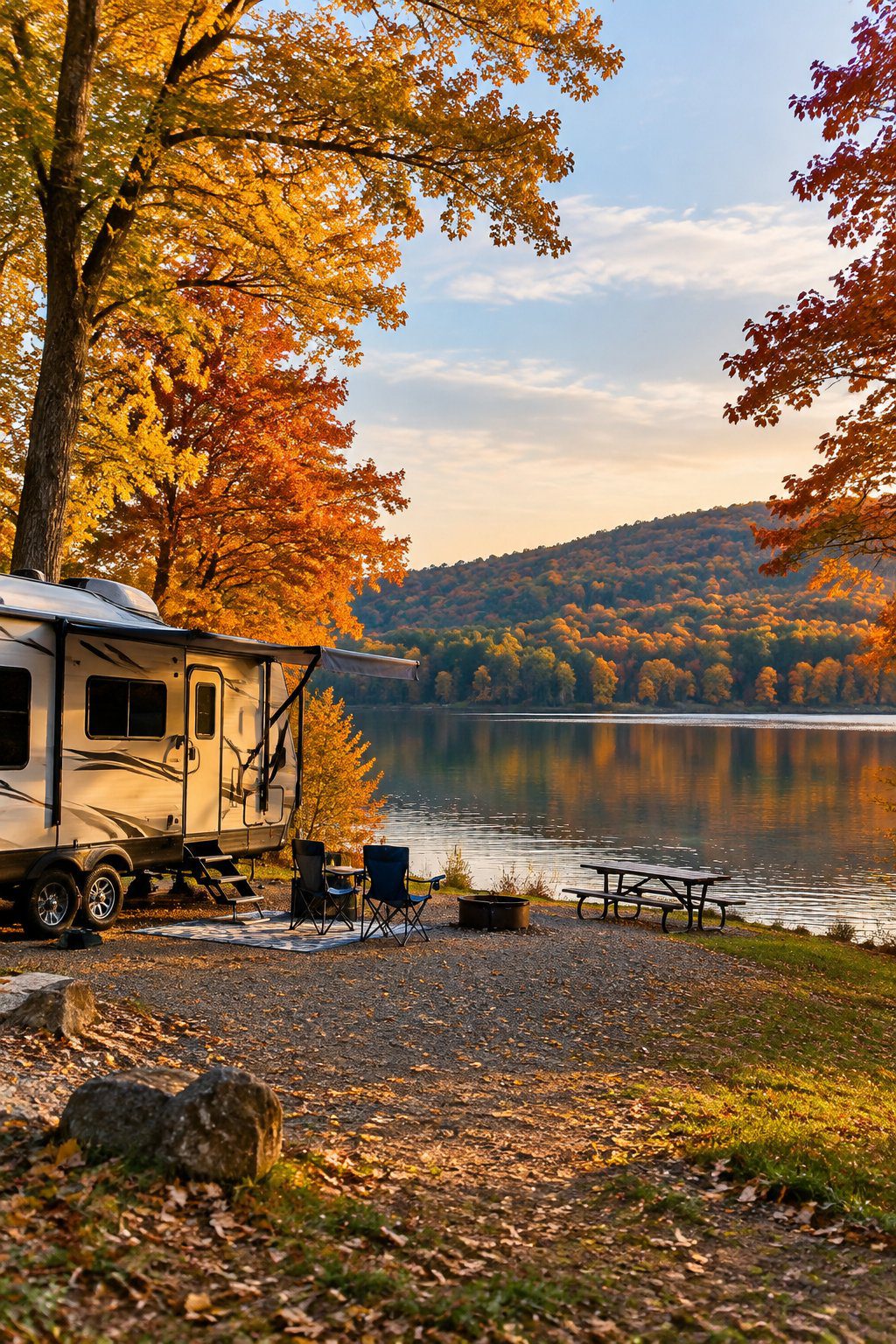
At Seven Points, you get a wooded base for exploring Raystown Lake and the surrounding Pennsylvania ridges. Your fall payoff comes from the mix of forested slopes, sheltered coves, and shoreline views.
You’ll find multiple camping loops within this U.S. Army Corps of Engineers recreation area. Electric campsites support RV stays, with drinking-water access and dump facilities serving the campground. Read your individual site description before booking, especially if you want a clear view across the lake.
For an easy outing, bring your walking shoes for the Greenside Pathway. If mountain biking is part of your trip, the nearby Allegrippis Trails give you another reason to stay several nights.
Your main planning hurdle is the seasonal schedule. For a late-October visit, check the operating dates for your exact loop before building a route around Seven Points.
2) Lakeside Campground at Douthat State Park, Virginia
Choose Lakeside Campground at Douthat State Park when you want lake views paired with mountain hiking. You’ll camp in Virginia’s Allegheny Mountains, where wooded slopes frame the park’s 50-acre lake.
Your RV setup centers on water-and-electric campsites, with a dump station available in the park. Check driveway length and grade carefully: a mountain campground calls for closer attention to your approach and backing space.
You have an extensive trail network for exploring beyond the shoreline. Build your day around a hike, then return to the lake for fishing or an unhurried walk before sunset.
If trout fishing is on your agenda, review Virginia’s fishing license requirements and Douthat’s special fishing rules. Check fall stocking information and any additional permit requirements before you pack your tackle.
3) Thousand Trails Natchez Trace, Hohenwald, Tennessee
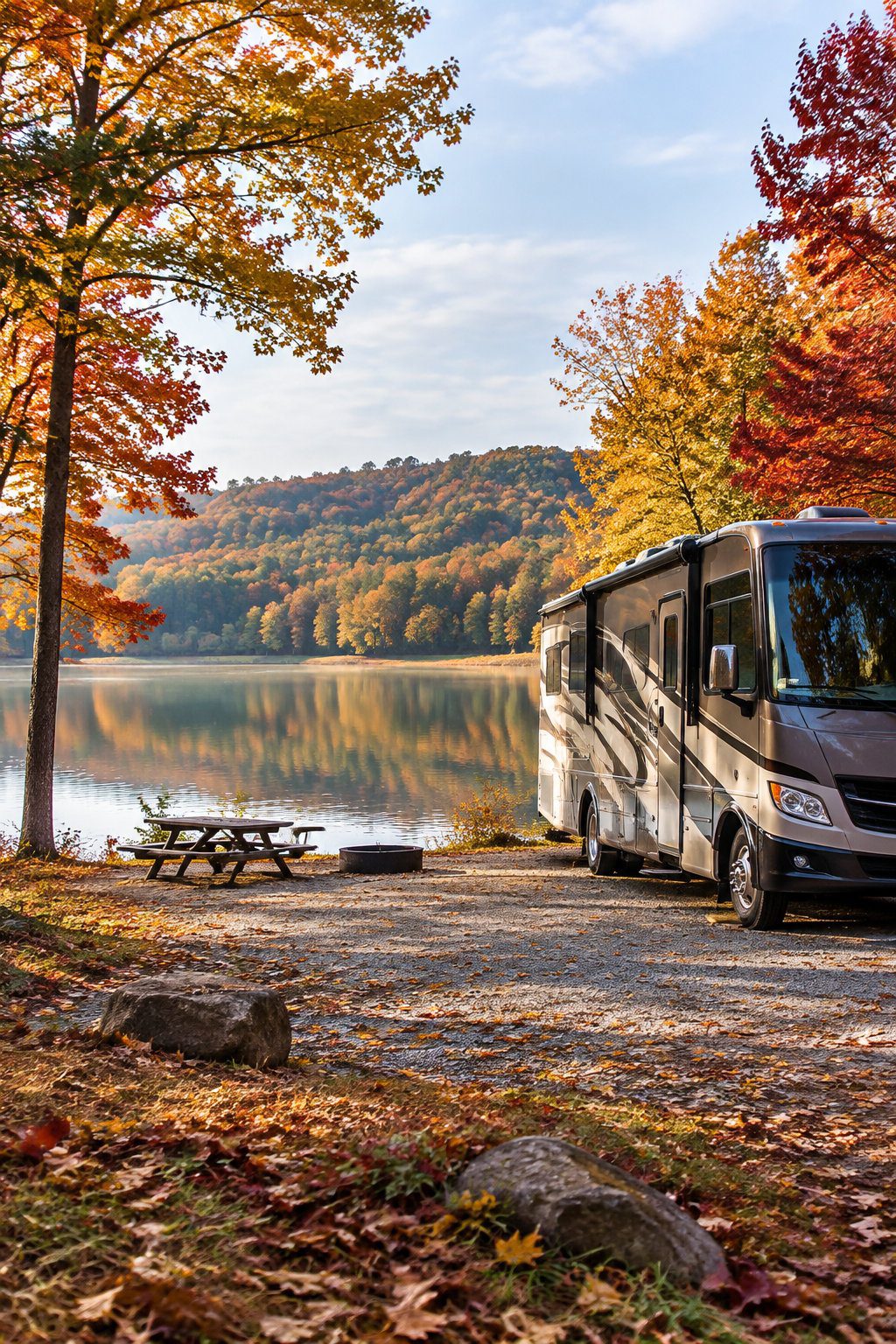
You’ll have plenty to do around camp at Thousand Trails Natchez Trace, thanks to its lake and range of outdoor activities. The property covers about 830 wooded acres, giving your fall stay a forest setting near the Natchez Trace Parkway.
You can fish for bass or crappie, use the boat ramp, or spend time on the walking trails. Mini golf and horseshoes add options when your group wants a break from the water. Ask which recreation facilities remain available during your dates.
For your RV, compare the listed hookup categories and request the setup your rig requires. If you’re booking through a Thousand Trails membership, review your membership’s stay limits and booking window before choosing dates.
Save part of a day for a scenic drive along the Natchez Trace Parkway. Keep your speed relaxed and watch for cyclists along the route.
4) Table Rock State Park, Branson, Missouri
At Table Rock State Park, you can combine Ozark lake scenery with easy access to Branson. That gives you a flexible fall trip, with outdoor time on clear days and nearby entertainment when the weather turns wet.
Your campsite choices include basic, electric, and sewer/electric/water options across the park’s camping areas. Check the individual listing for service level and usable pad length. A full-hookup reservation is useful if you plan an extended stay.
For a low-key outing, walk or bike the paved Table Rock Lakeshore Trail. You’ll get shoreline views without committing to a rugged hike, and the State Park Marina gives you access to boating services.
If you bring a boat, check launch conditions and the marina’s autumn hours. Plan your return to the dock well before darkness, especially when you’re unfamiliar with the lake.
5) Lake Ouachita State Park, Mountain Pine, Arkansas
For a wooded lake getaway with room to explore by boat, put Lake Ouachita State Park on your list. You’ll camp beside a large reservoir surrounded by the Ouachita National Forest, with coves and islands shaping the view.
You have full-hookup RV options among the park’s campsite categories. Study the campground map and site photographs before booking, because your distance from the shoreline changes by site.
On land, consider the Caddo Bend Trail for lake views from the peninsula. Bring sturdy shoes and leave enough daylight for the return walk over uneven ground.
You’re also within driving distance of Hot Springs if you want a town day. Before heading onto Lake Ouachita, check the forecast for the full outing; wind across open water deserves extra attention even when your campsite feels sheltered.
6) Peninsula State Park, Fish Creek, Wisconsin
Your Peninsula State Park stay puts you beside Green Bay, part of Lake Michigan, with Door County’s villages close by. Choose it for shoreline scenery, cycling, and access to Fish Creek and Ephraim.
You’ll find several campground areas with different layouts and electrical availability. Electric sites are available, while water access and dump-station use require separate planning. Compare the campground locations before choosing your base, especially if you want convenient access to Nicolet Bay or a particular trail.
Bring your bike for the Sunset Bike Route, or explore the park’s overlooks and Eagle Bluff Lighthouse area. For a break from camp cooking, you have restaurants and seasonal orchard stops nearby.
By late October, your trip needs a cold-weather plan. Confirm which camping areas remain open and whether showers, flush toilets, and drinking-water services are operating for your stay.
7) Lake Havasu State Park, Lake Havasu City, Arizona
Choose Lake Havasu State Park when your fall wish list starts with comfortable daytime temperatures and beach access. You’ll trade a forest canopy for desert mountains and open-water views.
Your developed campsite includes water and electric hookups, with a dump station serving RV campers. Review the site map if lake frontage is important to you, since a campground beside the beach still has different views from individual pads.
Spend your mornings walking the shoreline or exploring the Mohave Sunset Trail. You’re also close to Lake Havasu City’s shops and restaurants, which makes grocery runs straightforward.
Pack shade gear and drinking water even for an autumn visit. If paddling is part of your plan, check wind forecasts and watch for motorboat traffic around launch areas.
How to Choose Your Fall Lakeside RV Stay
Choose your park by matching its campsite services and setting to the way you travel. Use this comparison to narrow your options, then check the exact site listing before reserving.
| Park | Water Setting | RV Hookups | Activities |
|---|---|---|---|
| Seven Points | Raystown Lake coves | Electric sites | Hiking, mountain biking |
| Douthat Lakeside | Small mountain lake | Water and electric | Hiking, trout fishing |
| Thousand Trails Natchez Trace | Wooded inland lake | Full-hookup options | Fishing, campground games |
| Table Rock State Park | Ozark reservoir | Basic through full hookups | Boating, paved trail |
| Lake Ouachita State Park | Forested reservoir | Full-hookup options | Boating, hiking |
| Peninsula State Park | Green Bay shoreline | Select electric sites | Cycling, sightseeing |
| Lake Havasu State Park | Desert reservoir | Water and electric | Beach walks, boating |
Is Your Campsite Waterfront, Lake-View, or Just Near the Water?
Treat these labels as different booking categories. With a waterfront site, your pad borders the shore area, though access still depends on the bank and park rules. A lake-view site gives you a sightline that trees or terrain might partly block.
Check the site photos against the campground map. Look for a shoreline path, steep slope, or public gathering area between your pad and the water. If you plan to launch a kayak from camp, ask whether your specific site has permitted, practical shore access.
Which Hookups and Site Dimensions Does Your RV Need?
Match your reservation to your electrical needs and total parked length. Full hookups mean water, sewer, and electricity; an electric site leaves fresh-water filling and wastewater disposal as separate tasks. Check whether your pedestal provides the amperage your rig needs.
Measure your RV and account for your tow vehicle, slide-outs, and awning space. Read notes about pad slope and backing angles, especially at wooded sites. For a long trailer or motorhome, ask about tight turns on the campground approach as well as the campsite itself.
What Reservation Rules and Fees Apply?
Review the total booking cost before you pay. Look for reservation charges, vehicle admission requirements, cancellation penalties, and fees for extra vehicles. At Peninsula State Park, include Wisconsin’s vehicle admission requirements in your planning.
Check the arrival deadline and late-check-in procedure, then save your confirmation offline. If you’re using a campground membership, read the rules for that booking. Keep the campground’s phone number handy in case traffic pushes your arrival past office hours.
When to Go and What to Check Before Departure
For a fall 2026 trip departing after October 25, give southern lake destinations and Lake Havasu close attention while checking northern campground closures first. Your final go-or-stay decision should use current foliage reports, operating notices, and the weather forecast.
When Does Fall Color Usually Peak in Each Region?
Use these broad windows as planning guides, then check current local reports close to departure. Rainfall, elevation, and autumn temperatures shift the timing each year.
- Door County, Wisconsin: Aim for early to mid-October for your strongest foliage prospects.
- Raystown Lake, Pennsylvania: Look at early to mid-October, with timing varying across elevations.
- Douthat, Virginia: Target mid- to late October, checking mountain conditions before travel.
- Hohenwald, Tennessee: Consider late October into early November.
- Table Rock Lake, Missouri: Plan around mid- to late October.
- Lake Ouachita, Arkansas: Look at late October into early November.
- Lake Havasu, Arizona: Plan around comfortable weather and lake activities; desert scenery is your main draw.
If you’re leaving in late October, look at recent photographs from your destination before committing to a long foliage-focused drive.
Which Campground Loops and Water Services Stay Open?
Check the operating calendar for your exact camping area. A park’s year-round entrance schedule does not establish that every campground loop or comfort station stays open. Read seasonal notices attached to your reservation.
Call before departure to ask about drinking-water availability, dump stations, showers, and winterized facilities. Ask separately about boat ramps and marina hours if you’re bringing watercraft. Fill your fresh-water tank before arrival when the campground directs you to travel self-contained, while staying within your RV’s weight limits.
How Should You Prepare for Cold Nights and Changing Lake Conditions?
Check overnight lows and wind forecasts for the lake itself. Pack warm bedding and rain layers, then test your furnace before leaving home. Bring enough propane for your planned stay and check your battery condition.
Protect your water system according to your RV manufacturer’s instructions when freezing weather is forecast. Test your smoke and carbon monoxide alarms, and keep outdoor combustion equipment outside, clear of doors and windows.
For boating or paddling, wear a properly fitted life jacket and dress for the water temperature. Set a firm turnaround time before launch, carry a waterproof communication device, and cancel the outing when conditions exceed your equipment or experience.