
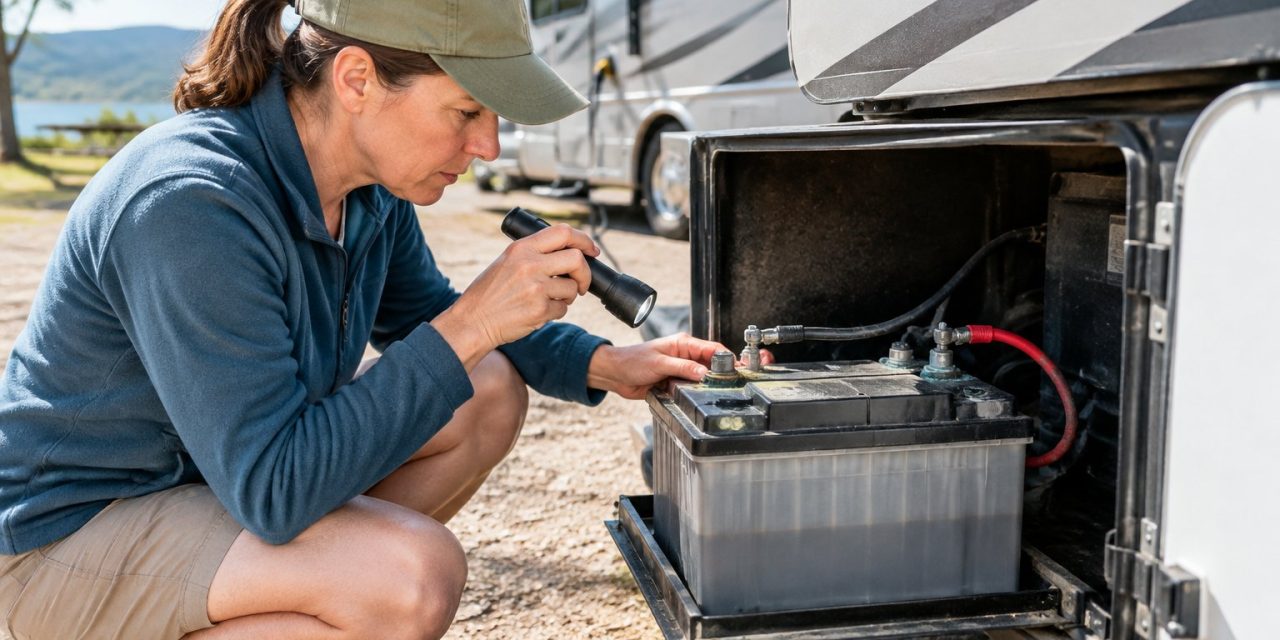
A dead house battery can end a camping trip before the first campfire. Most early battery deaths trace back to a handful of habits, and each one is easy to fix once you spot it. Lead-acid batteries typically last 3 to 5 years, while lithium batteries run 8 to 12 years, so the way you treat your bank decides which end of that range you land on.
The seven mistakes that kill RV batteries early are repeated deep discharges, mismatched charging, parasitic drains in storage, dirty or loose connections, dry flooded cells, temperature extremes, and using a starting battery for house loads. Fixing them costs little: a battery monitor, a chemistry-matched charger, a disconnect switch, and a few minutes of checks each month will protect most banks. Work through the list and you will know which habit to change first.
1) Repeatedly Draining Lead-Acid Batteries Below 50% Charge
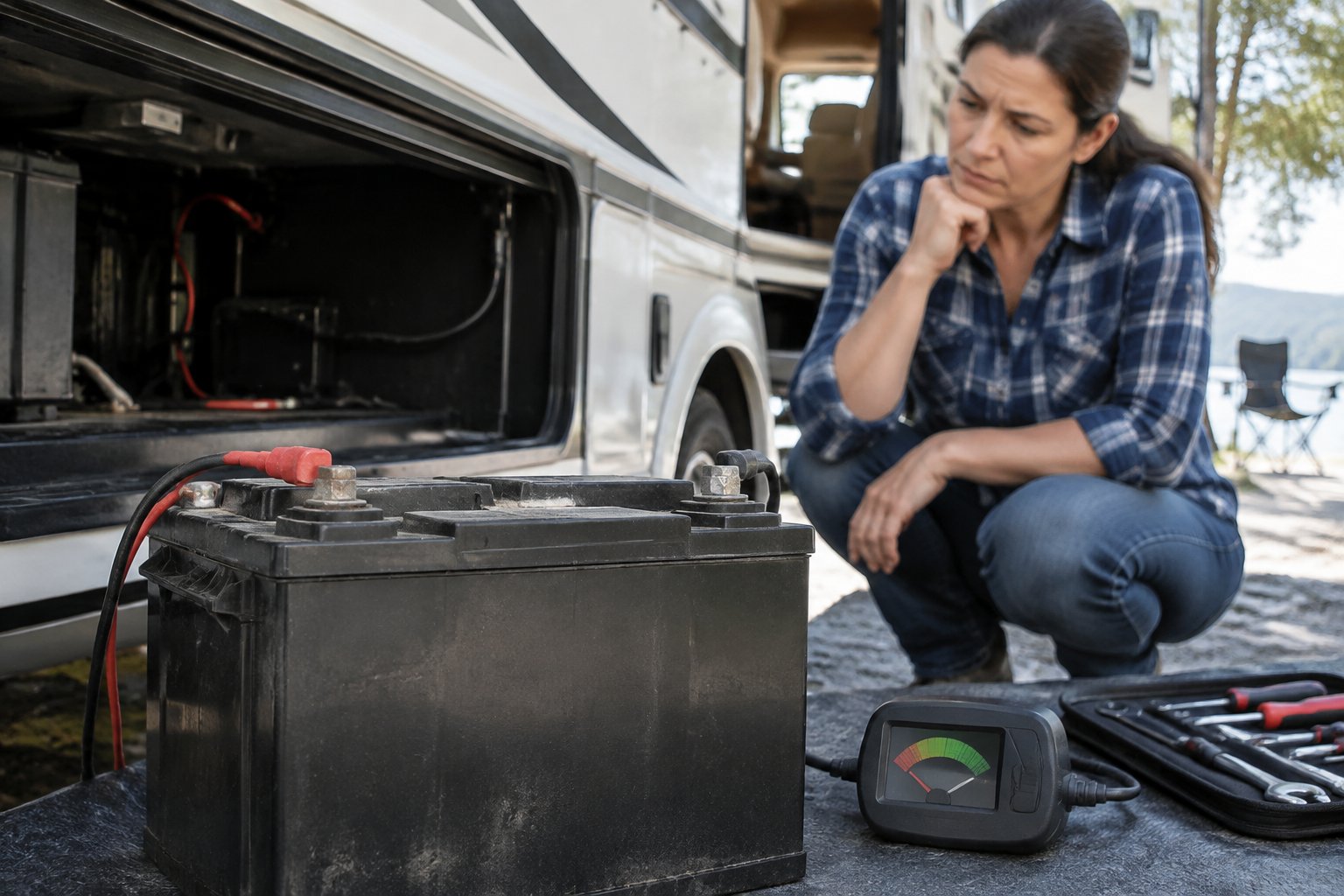
Pulling a lead-acid battery below 50% on a regular basis is the fastest way to shorten its life. A discharge that deep leads to sulfation, a buildup on the plates that permanently reduces storage capacity. A resting reading of about 12.1 volts marks that line.
The lights staying on is no sign of health. Many owners assume a deep discharge is harmless because the system still works, while the bank quietly loses capacity. Lithium handles 80 to 90% discharge, which is why habits that work for lithium wreck lead-acid.
Install a battery monitor so you see a percentage instead of guessing. Plan to recharge lead-acid at 50%, run the generator or lean on solar before you get there, and trim the small loads (water pump, fans, router) that drain a bank overnight.
2) Using Charger Settings That Don’t Match Your Battery Chemistry
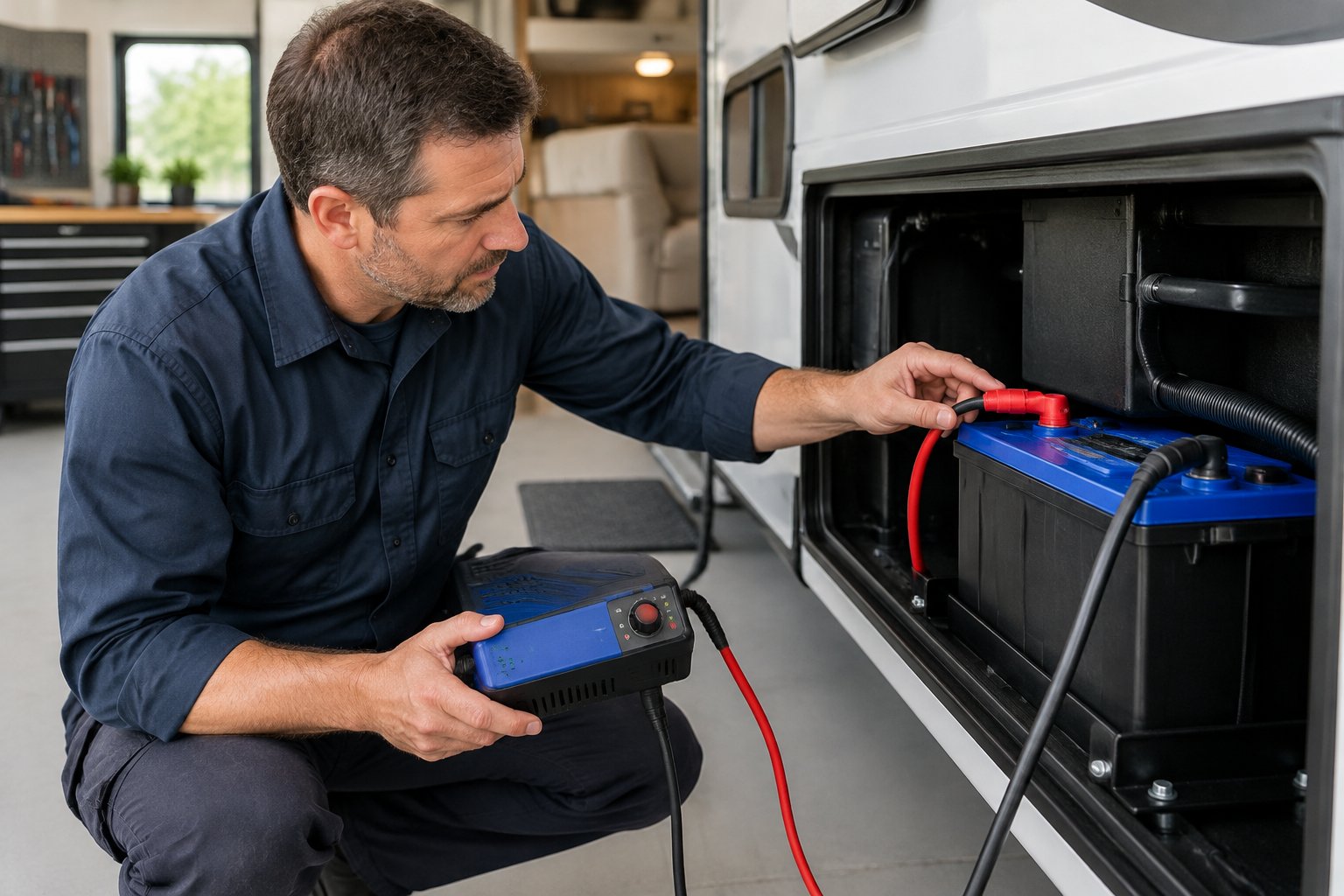
A charger profile built for the wrong chemistry will either undercharge or overcook your bank. Charging a lithium bank with a lead-acid profile, or the reverse, can ruin your batteries. The same goes for mixing old and new batteries, which undermines charging efficiency and reduces usable capacity.
Check every source that feeds the bank: the shore-power converter, solar charge controller, alternator or DC-to-DC charger, and generator. Each one has its own settings, and an older converter often ships with a lead-acid profile only.
Pick a three-stage smart charger (bulk, absorption, float) and confirm the profile matches your chemistry: flooded, AGM, or lithium. Undersized wiring and wrong fuses add voltage drop and heat, so inspect those too.
3) Storing Your RV With Parasitic Loads Still Connected
Small drains left connected during storage can flatten a bank in weeks. Propane detectors, stereo memory, and control boards sip power around the clock, and a battery that sits discharged sulfates quickly.
Charge the bank fully before parking the RV. Then cut the loads: open the battery disconnect switch or pull the negative cable. A maintenance charger is the alternative; it compensates for small parasitic loads, but only after the battery is fully charged.
Aim for a cool, dry spot, ideally 50 to 80°F. Lithium stores best near 50% charge for long layups. Check voltage monthly with a multimeter so you catch slow drift early.
4) Ignoring Corroded Terminals and Loose Battery Connections
Corrosion and loose lugs add resistance that starves your battery of charge and your appliances of power. Corroded terminals prevent efficient charging and delivery, and loose connectors can spark or interrupt power.
Inspect every one to two months, since road vibration works hardware loose. Wear gloves and goggles, disconnect the battery, and scrub with a baking soda and water mix (about a tablespoon per cup). Let it foam for five minutes, rinse, dry fully, and add a light coat of anti-corrosion grease.
While you are in there, look for swelling, cracks, or leaks. A bulging case means replacement, not cleaning.
5) Letting Flooded Lead-Acid Battery Plates Run Dry
Plates exposed to air in a flooded battery sulfate and lose capacity for good. Cells lose water during charging, and heat speeds the loss. Low water levels in lead-acid batteries cause damage that no charger can reverse.
Check levels monthly, and more often in summer or after long drives. Use distilled water only, since tap water brings minerals that harm the cells. Fill to about half an inch above the plates, and top off after charging so the fluid does not overflow.
Keep the compartment ventilated, and skip the checks only if you own sealed AGM or lithium, which need no watering.
6) Charging Lithium Batteries Below Freezing or Exposing Batteries to Excessive Heat
Temperature extremes damage every chemistry, and lithium adds a freezing rule: do not charge it when the cells are below 32°F. Check your manufacturer’s specs, since many lithium packs include a low-temperature cutoff in the BMS, and others rely on heated models.
Heat is the quieter killer. Extreme heat speeds up chemical breakdown, an