
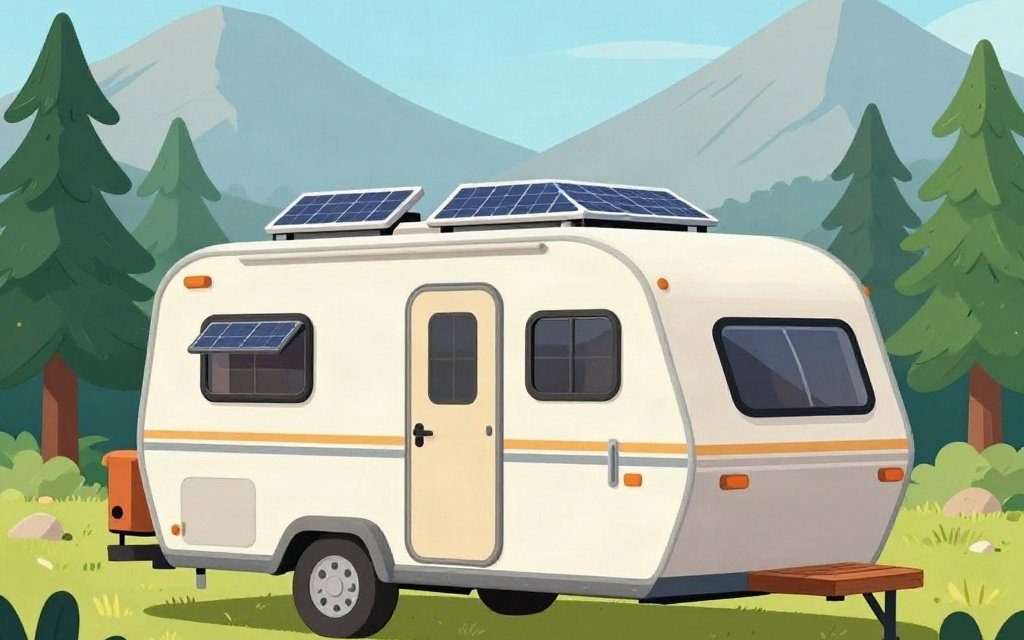
You might think you’ve seen every RV out there, but wait until you step inside this Peak Mountain Camps X38. More RV enthusiasts are waving goodbye to traditional campers and saying hello to trailers built like actual homes.

And honestly, once you see what’s inside this 37-foot beauty, you’ll understand why the shift is happening faster than you can say “boondocking.”

These aren’t your typical weekend warrior rigs. We’re talking about trailers designed for serious four-season use, extended stays, and adventures that take you way off the beaten path. With 82.4 million campers hitting the trails in 2026, more adventurers are seeking rigs that can actually handle the demands of real camping life.

Would you like to save this article?

We'll email this post to you, so you can come back to it later to read!

1. Real Wood Cabinetry That Won’t Fall Apart After Two Trips

Forget those flimsy particle board cabinets that disintegrate faster than your camping plans in a rainstorm.

The X38 features solid knotty alder wood throughout, with residential-style construction that includes soft-close hinges and dovetail drawers.

Traditional RVs use particle board and plastic connections that fail within months. But this rig? It’s built with the same quality you’d expect in your home kitchen. Every cabinet, every drawer, every shelf is crafted from genuine hardwood and finished in stunning colors like Brazil Wood or Antique Bourbon Pine.

According to industry reports, poor construction quality remains one of the biggest complaints in the RV world. Issues like delamination, electrical failures, and water intrusion plague cheaper builds. When you’re spending your hard-earned money, you deserve cabinets that’ll still be working decades from now, not falling off their hinges after your first bumpy road.

You’ll find pull-out pantries, tip-out drawers, and storage compartments everywhere you look.

And those soft-close hinges? They’re not just fancy—they keep your dishes from crashing out when you’re bouncing down forest service roads.

2. A Real Wood-Burning Stove for Actual Warmth (Not Just Looks)

Yes, it’s a genuine wood-burning stove, not some decorative prop. And it’s an absolute game-changer for winter camping.

Traditional RVs force you to rely solely on propane furnaces that drain your tanks faster than a teenager drains their phone battery. But the X38’s wood stove creates radiant heat that keeps you toasty for hours. Plus, there’s a recirculation fan that pulls heat from the stove and distributes it throughout the trailer AND into the insulated tank enclosure.

Here’s where it gets clever: you can set your propane furnace as a backup.

If you’re out hunting or running errands and the fire dies down, the furnace kicks in automatically to maintain your set temperature. Options, people. Options.

The fresh air intake pulls combustion air from outside the trailer, so you’re not depleting oxygen inside. And that exterior wood box? Load your firewood from outside, access it from inside. No more tracking bark and dirt through your living space.

Studies show that RV wood stoves efficiently heat small spaces while adding that cozy ambiance that propane heat just can’t match. When you’re parked in the mountains watching snow fall, nothing beats the crackle of a real fire.

3. Four-Season Insulation That Actually Works in Real Winter

Let’s talk about what “four-season” really means—because most RVs claiming that title are lying to you.

The X38 features dual-pane windows throughout, residential-grade insulation in walls and floors, and an insulated tank enclosure with multiple heating options. You’ve got electric heating blankets on your black and gray tanks, ductwork from the furnace pumping heat into the tank bay, and that recirculation fan from the wood stove.

Compare that to typical RVs where owners living full-time go through their 14-gallon propane tanks twice weekly in winter. X38 owners? They’re filling up maybe once a month. That’s not just impressive—that’s life-changing when you’re boondocking in remote areas.

The North America RV market is projected to grow from $23.57 billion in 2026 to $35.03 billion by 2031, with much of that growth driven by people seeking genuine off-grid capability. They’re tired of “four-season” labels slapped on three-season trailers.

Every water line runs through insulated, accessible space.

All connections are brass—not cheap plastic that cracks in freezing temps. The doors feature double bulb seals that you can adjust as they wear. This isn’t marketing fluff; it’s engineering that works when you’re camped at 9,000 feet in January.

4. Engineered Weight Distribution That Tows Like a Dream

Here’s something you won’t hear from most RV dealers: tongue weight matters, and most trailers get it wrong.

Peak Mountain Camps custom-engineers the frame for each specific layout. That means whether this X38 has an ATV loaded on the front deck or sits empty, it tows smoothly without needing fancy equalizer hitches or weight distribution systems.

You know why you needed that weight-distribution hitch on your last trailer? Because the manufacturer didn’t balance it properly. They slapped different floor plans on the same generic frame and called it good enough.

The X38 sits on an 8-inch frame rail (versus the typical 6-inch), rides on triple axles with 7,200-lb capacity each, and features 16-inch wheels with 14-ply tires. Six sets of brakes keep you in control. And with 32 inches of ground clearance to the frame, you can actually take this beast places traditional RVs fear to tread.

The adjustable heavy-duty Bulldog jack with electric motor makes leveling easy.

Your safety chains have hooks to keep them out of snow and mud. Everything about this trailer’s foundation screams “we thought this through.”

5. Metal-Lined Wheel Wells That Save You Thousands

Picture this: you blow a tire on your traditional RV. The shredded rubber rips out gas lines, water lines, and destroys interior cabinetry. You’re looking at thousands in damage just from one flat.

The X38? Metal-encased wheel wells. Blow a tire, change it, keep going. End of story.

This might seem like a small detail, but it’s the kind of smart engineering that prevents catastrophic failures. When quality issues plague the RV industry—with complaints ranging from delamination to electrical failures—these metal wheel wells represent a builder who’s thinking five steps ahead.

The undercarriage also includes heated, insulated compartments for water tanks and plumbing. All propane lines and electrical runs are protected and accessible. No exposed lines rotting in the sun or freezing in winter.

You’ve got removable grates in the tongue area for storing tire chocks, stabilizer jack handles, and gear that can get dirty. Every cubic inch of space is utilized intelligently, not wasted.

6. Residential Appliances and Modern Conveniences (Yes, Including a Washer/Dryer)

Check out what’s standard in this X38:

  • Washer/dryer combo unit (vented, efficient, bulletproof reliability)
  • Convection oven with air fry feature (actual cooking, not sad RV meals)
  • GE stainless steel range with igniters (household-quality appliances)
  • Two-way fridge/freezer (runs on propane OR electric)
  • 32×32-inch porcelain tile shower (not a plastic coffin)
  • Residential Delta fixtures throughout
  • Fantastic Fan with variable speed and LED lighting

Traditional RVs are rushing to 12-volt fridges without providing adequate battery capacity, leaving owners frustrated when everything dies after a few hours. The X38’s two-way fridge gives you options: run it on propane when boondocking, switch to electric when you’re plugged in, or set it to auto and let it choose the most efficient option.

That washer/dryer combo? It’s been tested for years with minimal issues. When you’re living off-grid for extended periods, having clean clothes without a laundromat run changes everything.

The Furion Chill Cube air conditioner uses variable speed technology with a soft start, so you can run it off a small generator. It’s not constantly cycling on and off like traditional AC units, making it far more efficient.

7. Built to Last Decades, Not Just Until the Warranty Expires

Here’s the uncomfortable truth about the RV industry: many trailers are built to reach a price point, not a lifespan.

The record-breaking 2017 sales year saw over 500,000 units produced—and many owners experienced 20+ problems within two years. Delamination, roof leaks, electrical failures, and structural issues are so common that some buyers expect them.

Peak Mountain Camps builds differently. Every water connection is brass or braided stainless. Dovetail drawers use self-latching heavy-duty slides that won’t break. Cabinet hinges are household-grade soft-close. Doors are solid 1.5-inch thick wood. Even the diamond plate exterior and aluminum wheels are built to take abuse.

The global camping and caravanning market was valued at $69.3 billion in 2023 and continues growing as more people embrace the lifestyle. But within that growth, there’s a shift happening: experienced RVers are moving away from disposable trailers toward rigs built for longevity.

RV vacations are already 27-62% less expensive than other vacation types. When you invest in a trailer designed to serve you for 20+ years instead of 5, the economics become even more compelling.

You’re not buying something to trade in when the latest model arrives.

You’re buying a home on wheels that’ll still be solid when you’re ready to pass it down to your kids.


Comparison: Traditional RV vs. Peak Mountain Camp X38

FeatureTraditional RVPeak Mountain Camp X38
CabinetryParticle board, plastic connectionsSolid knotty alder, residential hinges
HeatingPropane furnace onlyWood stove + furnace + options
InsulationSingle-pane windows, minimalDual-pane windows, full insulation
Propane Use (Winter)14 gallons every 3-4 days14 gallons monthly
Wheel WellsPlastic liningMetal-encased protection
AppliancesRV-grade plasticResidential GE, Delta, etc.
Water LinesPlastic fittingsBrass connections, braided hoses
Expected Lifespan5-10 years20+ years
Tank ProtectionExposed to elementsHeated, insulated enclosure

The Bottom Line: Is This the Future of RVing?

The Peak Mountain Camp X38 represents a fundamental shift in how serious RVers think about their rigs. As more people embrace extended boondocking stays and genuine off-grid living—with 82.4 million campers in 2025 seeking authentic outdoor experiences—the demand for trailers built like homes instead of disposable vacation boxes continues growing.

Traditional RVs serve weekend warriors perfectly fine.

But if you’re planning to spend weeks in the backcountry, winter camp in the Rockies, or simply want a trailer that’ll outlive your truck, this is what the future looks like.

You can customize everything from layout to colors to hardware. Want that deck on the front for hauling toys? Done. Prefer different pantry configurations? No problem. Every X38 is custom-built to the owner’s specifications.

With towable RVs projected to reach $51.1 billion by 2035, manufacturers who prioritize quality and longevity over lowest-price bidding wars will capture an increasingly educated market. And trailers like the X38 prove that people will pay for quality when they know they’re getting genuine value.

So, would you make the switch from a traditional RV to something like this? After seeing what’s possible when builders focus on longevity instead of price points, the question might be: why wouldn’t you?


SOURCES

Consumer Affairs – RV Industry Statistics

Mordor Intelligence – North America RV Market

The Dyrt – Camping Report

GM Insights – Recreational Vehicles Market

Roamly – RV Brands to Avoid

RV Life – Wood Stove for RVs

RV Travel – RV Wood Burning Stove

RVIA – Reports & Trends

Peak Mountain Camps – Wood Burning Stoves

YouTube – Peak Mountain Camps X38 Tour