
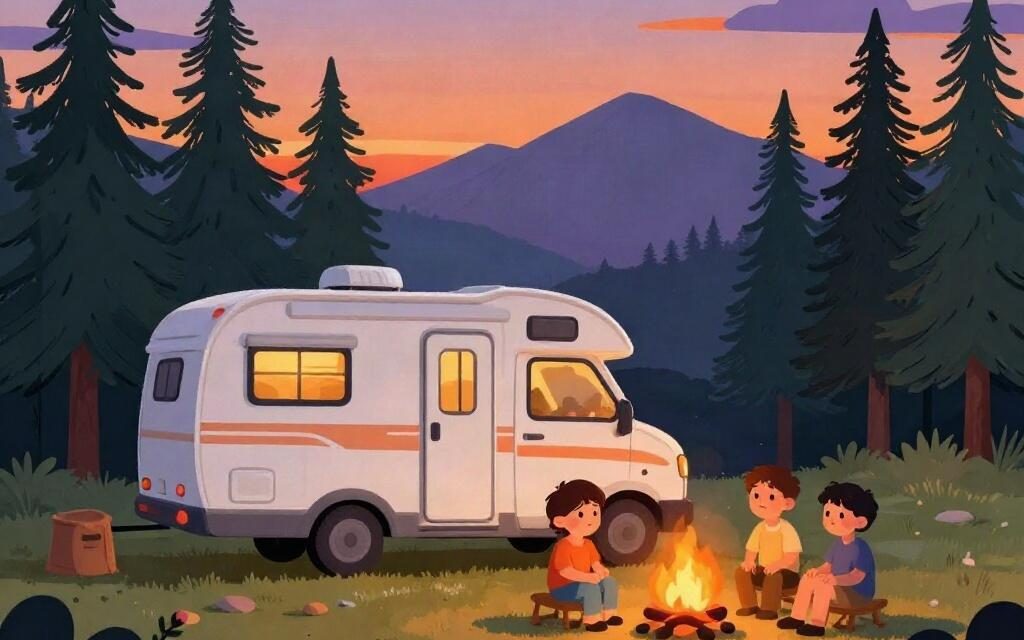
When you pack up the RV for a relaxing family camping trip, the last thing on your mind is a terrifying encounter that’ll have you questioning every sound in the darkness. But that’s exactly what happened to one family during their adventure in California’s Sierra National Forest.
This story from Base Camp Chris will make you think twice about where you pitch camp—and what might be watching from the trees.
The Sierra National Forest spans 1.3 million acres of stunning wilderness, but with all that beauty comes real danger. From unexplained sounds to unsettling encounters, this family experienced something they’ll never forget. Let’s dive into the most heart-pounding moments from their trip.
Would you like to save this article?
1. The Isolation Factor: When Remote Becomes Too Remote
Sierra National Forest offers hundreds of dispersed camping sites where you can park your RV far from civilization. That sounds perfect until night falls and you realize you’re truly alone.
This family discovered that being miles from help changes everything when something goes wrong.
The forest’s remote locations mean no cell service, no nearby rangers, and no quick escape route. While solitude is part of the appeal, it becomes a liability when you’re facing the unknown. Your RV might feel like a safe metal cocoon, but thin walls don’t provide much comfort when danger lurks outside.
Here’s the reality: remote camping means you’re on your own. You better hope your instincts are sharp and your emergency supplies are stocked, because nobody’s coming to save you quickly out there.
2. Strange Sounds That Don’t Belong
Every experienced camper knows forest sounds—wind through pines, owl hoots, the occasional branch snap. But when you hear something that doesn’t fit, your brain goes into high alert.
This family heard sounds that had no natural explanation.
According to the US Forest Service, Sierra National Forest is home to black bears, mountain lions, coyotes, and countless other creatures. But what happens when the sounds you’re hearing don’t match any of those animals? The family described noises that felt intentional, calculated, and disturbingly close to their RV.
Here’s the kicker: when your “safe camping trip” soundtrack includes unexplained vocalizations and heavy footsteps circling your rig at 2 AM, you start questioning whether that forest is as empty as you thought. Sweet dreams, right?
| Common Wildlife Sounds | Unexplained Sounds |
|---|---|
| Owl hoots | Wood knocking |
| Coyote howls | Heavy bipedal footsteps |
| Bear grunts | Guttural vocalizations |
| Deer movement | Circling patterns |
3. The Feeling of Being Watched
You know that prickly sensation on the back of your neck when someone’s staring at you? Now imagine that feeling intensified in pitch darkness while you’re miles from help.
This family couldn’t shake the overwhelming sense that they were being observed.
Situational awareness is one of the top safety recommendations from the National Forests Foundation. But what good is awareness when you know something’s out there watching, but you can’t see it? The family reported feeling eyes on them whenever they stepped outside their RV.
Reality check: trust your gut. That primal instinct that kept our ancestors alive doesn’t just vanish because you’ve got an RV and a smartphone. When every fiber of your being screams “danger,” maybe it’s time to pack up and roll out, vacation plans be damned.
4. Equipment Failures at the Worst Possible Moment
Murphy’s Law loves camping trips. Your flashlight dies, your RV battery weakens, or your generator quits—always when you need them most.
This family experienced technical difficulties that left them vulnerable during their frightening encounter.
The Sierra National Forest safety guidelines emphasize bringing emergency supplies including flashlights, backup batteries, and whistles. But having gear means nothing if it fails when you need it. Imagine trying to defend your family or make a quick exit when your equipment betrays you.
The uncomfortable truth: you can prepare all you want, but sometimes the universe decides to test you. Dead batteries in the middle of a crisis? That’s when you find out what you’re really made of—and whether your backup plan has a backup plan.
5. Wildlife Behavior That Breaks the Rulebook
Black bears are common in Sierra National Forest, and proper food storage is mandatory. But what happens when an animal—or something—doesn’t behave like it should?
This family witnessed behavior that didn’t match any wildlife patterns they knew.
The California Department of Fish and Wildlife provides detailed information about mountain lion and bear behavior. Bears typically avoid humans unless food-motivated. Mountain lions are stealthy ambush predators. But when you encounter something that doesn’t follow these established patterns, your field guides become worthless.
Here’s the truth bomb: nature doesn’t always read the safety brochures. Whatever approached this family’s campsite that night operated by its own rules, and that’s what made it absolutely terrifying.
| Normal Bear Behavior | Abnormal Behavior |
|---|---|
| Avoids humans | Approaches deliberately |
| Active dawn/dusk | Active middle of night |
| Food-motivated | Interest beyond food |
| Predictable patterns | Strategic movements |
6. The Decision: Stay or Flee?
There comes a moment in every crisis when you must choose: hunker down or get out. This family faced that exact dilemma in the middle of the night, knowing that either choice carried serious risks.
National Forest camping regulations require following Leave No Trace principles, but what about when leaving your trace might save your life? Packing up an RV in darkness while potentially being stalked is no small feat. You’re exposed, vulnerable, and making noise that advertises your every move.
The brutal reality: sometimes there’s no good option. Stay put and hope your RV walls hold? Or fire up that diesel engine and navigate treacherous forest roads in pitch darkness with something potentially following you? Pick your nightmare.
7. The Aftermath: When “Safe at Home” Doesn’t Feel Safe Enough
The encounter didn’t end when they left the forest. This family, like many who experience something unexplainable in the wilderness, found that the psychological impact lingered long after they returned to civilization.
Post-traumatic stress from wilderness encounters is real, though rarely discussed in RV communities. The Sierra National Forest sees millions of visitors annually, and while most have uneventful trips, those who don’t often struggle to process what happened.
Final uncomfortable truth: you can escape the forest, but the forest doesn’t always let you go. That moment of terror becomes a permanent resident in your memory, popping up every time you hear a branch snap or see shadows move where they shouldn’t.
Safety Statistics You Should Know
| Safety Factor | Data |
|---|---|
| Sierra National Forest Size | 1.3 million acres |
| Black Bear Population | High density in oak/riparian areas |
| Mountain Lion Encounters | Rare but potentially deadly |
| Rattlesnake Presence | Common in warm months |
| Cell Service Coverage | Limited to nonexistent |
| Average Emergency Response Time | 30+ minutes in remote areas |
Essential RV Safety Tips for National Forest Camping
Before you swear off wilderness RVing forever, here are proven safety strategies from the US Forest Service and National Forests Foundation:
Preparation:
- Pack a comprehensive first aid kit with snake bite supplies
- Bring emergency supplies: map, compass, flashlight with extra batteries, whistle, and waterproof fire starter
- Check weather reports and carry a compact weather radio
- Inform someone of your exact location and expected return time
Campsite Selection:
- Arrive early enough to inspect your site thoroughly in daylight
- Check for hazards: glass, sharp objects, ant beds, poison oak, bees
- Avoid low-lying areas that could flood
- Position your RV with multiple exit routes in mind
Wildlife Protocols:
- Use bear-proof lockers when available
- Never store food, coolers, or scented items in your RV overnight
- Keep a clean campsite with no food debris
- Make noise to warn animals away, but give them space to retreat
- Carry bear spray and know how to use it
Situational Awareness:
- Use flashlights at night—many animals are nocturnal
- Trust your instincts if something feels wrong
- Establish check-in times with someone outside the forest
- Keep your RV keys in a waterproof container and always accessible
Emergency Response:
- Know the ABC’s of treating injuries
- Have a whistle for signaling (three blasts = distress)
- Keep your vehicle fueled and ready to move
- Learn to identify poisonous plants and dangerous wildlife before your trip
The Big Picture: Is Sierra National Forest Dangerous?
Let’s be clear: Sierra National Forest isn’t inherently more dangerous than other wilderness areas. With proper preparation, most visitors have safe, enjoyable experiences. The forest offers incredible RV camping opportunities with stunning views and abundant recreation.
However, complacency kills. The wilderness demands respect, preparation, and constant vigilance. Whether this family encountered a bear, mountain lion, or something unexplained, their experience serves as a powerful reminder that nature is unpredictable.
Final Thoughts
Should you cancel your Sierra National Forest RV trip? Absolutely not. Should you prepare like your life depends on it? Absolutely yes.
The wilderness offers experiences you’ll never find in developed campgrounds. The solitude, the star-filled skies, the connection to nature—these are worth the calculated risks. Just remember that calculated risks require actual calculation.
This family’s terrifying encounter didn’t happen because they were reckless. It happened because they ventured into a place where humans aren’t the dominant species. That’s both the appeal and the danger of true wilderness RVing.
So pack your emergency kit, charge your flashlights, study your wildlife guides, and head out for adventure. Just don’t forget that out there, you’re not at the top of the food chain anymore. And sometimes, when the sun sets and strange sounds echo through the pines, you might encounter something that reminds you of that fact in the most unforgettable way.
Stay safe, stay prepared, and happy camping—if you dare.
Sources:
- US Forest Service Sierra National Forest Safety and Ethics
- US Forest Service Sierra National Forest Wildlife Safety
- National Forests Foundation: 6 Ways to Stay Safe at National Forest Campgrounds
- Sierra National Forest Wilderness Regulations
- California Department of Fish and Wildlife – Mountain Lion Safety
- Base Camp Chris YouTube Channel
- Sierra National Forest Official Website
- Encyclopedia Britannica: Sierra National Forest Wildlife


