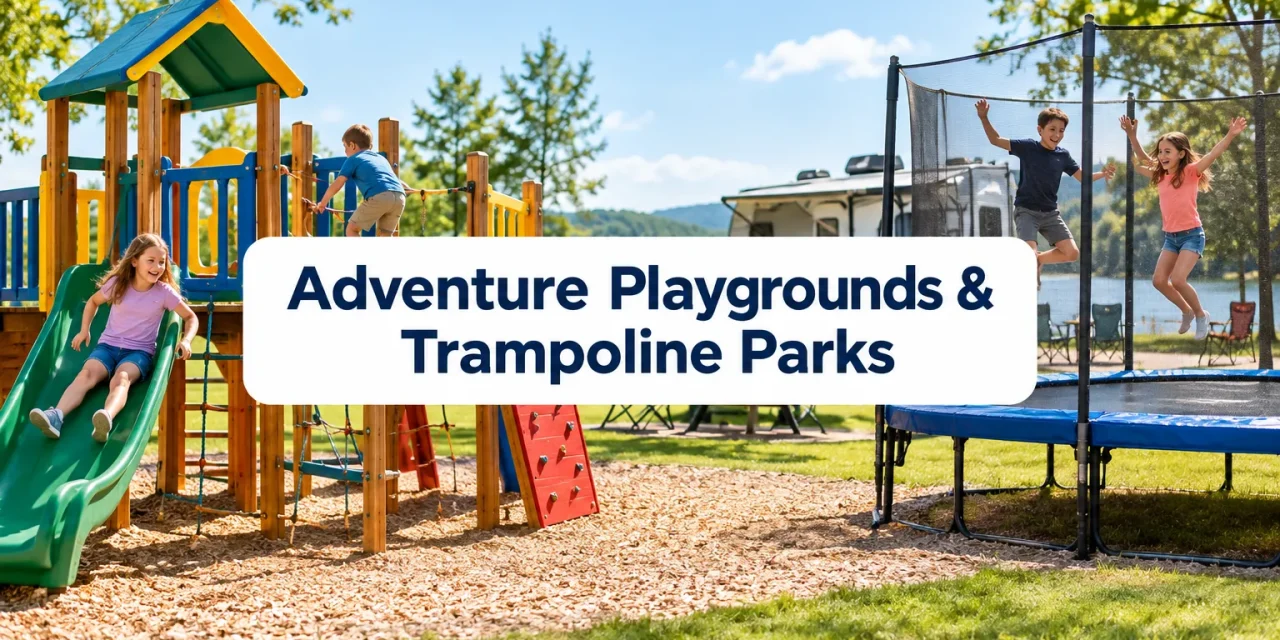
A rainy forecast used to mean canceled camping plans and cranky kids stuck under an awning. Not anymore. Across the country, campgrounds are adding jumping pillows, splash pads, and aerial courses right on-site, while indoor trampoline chains like Sky Zone and Urban Air sit just a few exits away for backup fun. Finding adventure playgrounds & trampoline parks near campgrounds: keeping kids active has become one of the smartest strategies for families who want happy kids no matter what the sky decides to do.
This guide breaks down what’s actually changing at campgrounds nationwide, how to scout nearby indoor options before you ever hitch up, and how to build a trip plan that keeps everyone moving, rain or shine.
Key Takeaways
- 🏕️ Campgrounds increasingly build in-house play zones (jumping pillows, splash pads, themed playgrounds) instead of relying only on basic swing sets.
- ⛈️ Indoor trampoline parks like Sky Zone are best treated as a rainy-day backup plan, not the main attraction.
- 📍 Scout nearby parks and adventure courses before you book your site, not after you arrive.
- 🎟️ Many KOA and Jellystone resorts now bundle active-play amenities as a core selling point, not an afterthought.
- 👨👩👧 A mix of outdoor campground play and one indoor backup gives families a weather-proof activity plan.
Why Adventure Playgrounds & Trampoline Parks Near Campgrounds Matter for Family Trips
Kids burn energy fast. Anyone who has spent six hours in a truck cab with a seven-year-old knows that the first stop at a new campground needs to involve running, jumping, or climbing, immediately. That’s exactly why campground operators are investing real money into play infrastructure instead of treating it as an afterthought.
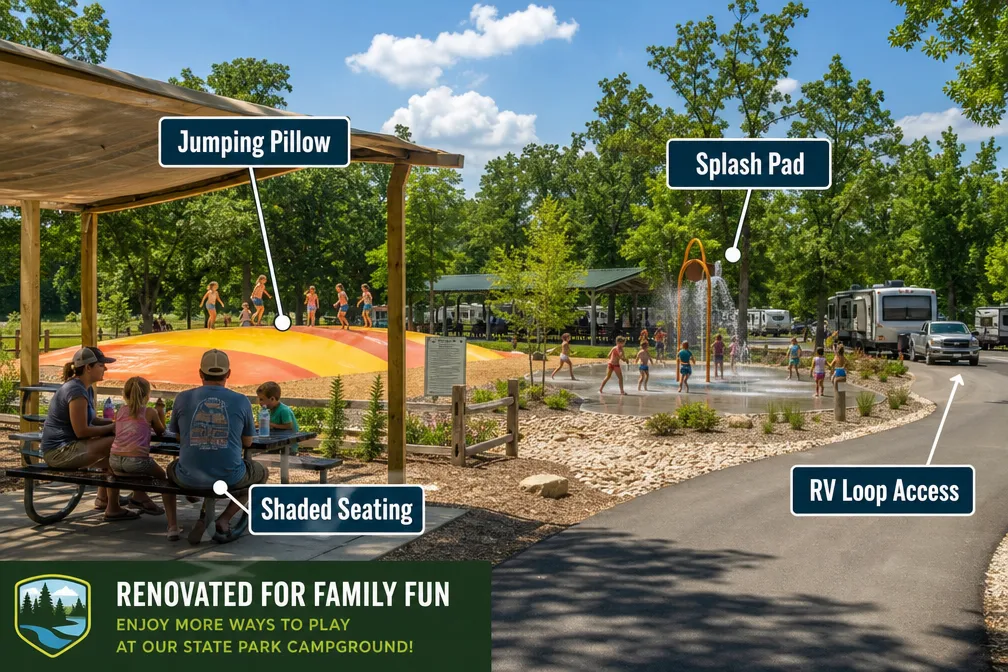
Gulf State Park in Alabama recently opened what’s considered the largest state-park RV campground in the state, and it didn’t skip the fun factor, the expansion added a playground and splash amenities designed to keep families entertained without ever leaving the property [1]. Lake Lurleen followed a similar path, investing in a multi-faceted playground renovation built right near the campground loop, giving kids a reason to stay close instead of wandering off [2].
Private operators have caught on too. Thousand Trails has rolled out campground improvement programs that specifically call out upgraded play areas as part of its amenity strategy [3], and RV on the Go has done the same with targeted property improvements aimed at families [4]. These aren’t small tweaks, they’re a signal that adventure playgrounds & trampoline parks near campgrounds: keeping kids active is now a top factor families use to choose where to park for the week.
If you’re still comparing where to book, it’s worth weighing these upgraded resort-style parks against smaller, independently owned options. Sometimes a mom-and-pop campground offers a simpler but more personal play area, while big-brand resorts lean harder into flashy amenities.
On-Site Play: What Today’s Campgrounds Are Building
Gone are the days of a rusty swing set and a single slide. Modern campground design treats the play area as a destination in itself.
Jumping Pillows and Bounce Zones
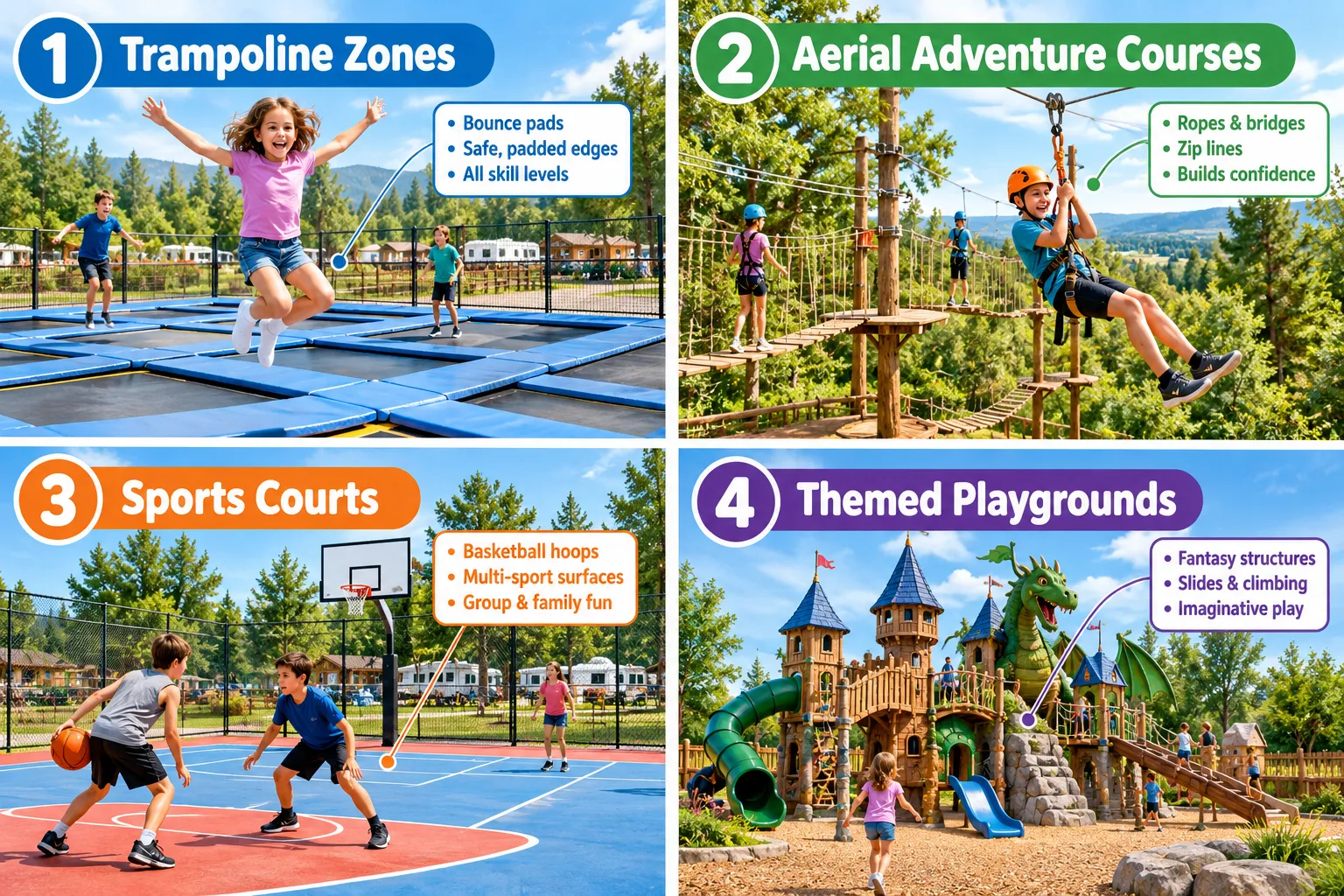
Jumping pillows are the current darling of campground upgrades. Jellystone Park’s newly redeveloped camp-resort in Williamsburg, Virginia made jumping pillows and active play a central feature of its redevelopment, not a side amenity [5]. The appeal is simple: a giant inflatable surface where kids can bounce safely, burn energy, and make friends with other campers within minutes of arrival.
Splash Pads and Water Play
Pairing bounce zones with splash pads has become a common formula, especially in warm-weather regions. The Gulf State Park expansion leaned into this combo directly, giving families both dry and wet active-play options steps from their RV site [1].
Themed and Fantasy Playgrounds
Some properties are going even further with immersive design. Southwoods in New York has built what’s described as “fantasy play” experiences, themed structures that turn an ordinary playground into something closer to a mini amusement park [6]. It’s a clever differentiator in a crowded camping market where every resort claims to be “family-friendly.”
Sports Courts and Structured Programs
Not every kid wants to bounce, some want to shoot hoops or join an organized activity. The Las Cruces KOA earned a Holiday designation after adding sports-focused amenities alongside its playground upgrades, proving that structured recreation matters just as much as free play [7]. Meanwhile, Sacramento-area adventure playgrounds run seasonal day-camp programs that complement nearby campgrounds, giving parents a scheduled block of supervised activity [8].
For travelers chasing bigger thrills, the Adventure Park at Long Island combines an aerial ropes course with kid-specific playground zones inside the same campground footprint, proof that “playground” increasingly means zip lines and ladders, not just slides [9].
If you’re mapping out a Southeast swing with kids in tow, pair campground research with a look at RV-friendly beach towns that often have both coastal play and nearby indoor backups.
Planning Rainy-Day Stopovers Near Indoor Adventure Hubs
Here’s the scenario every camping parent dreads: three days of steady rain, a packed RV, and kids with zero outlets for their energy. This is where indoor trampoline parks earn their keep.
Chains like Sky Zone and Urban Air are not typically built inside campgrounds, they remain primarily off-site attractions [research]. But that’s actually fine, because they’re marketed specifically as the complementary piece to a camping trip, not a replacement for it. The smart move is treating them as your weather insurance policy.
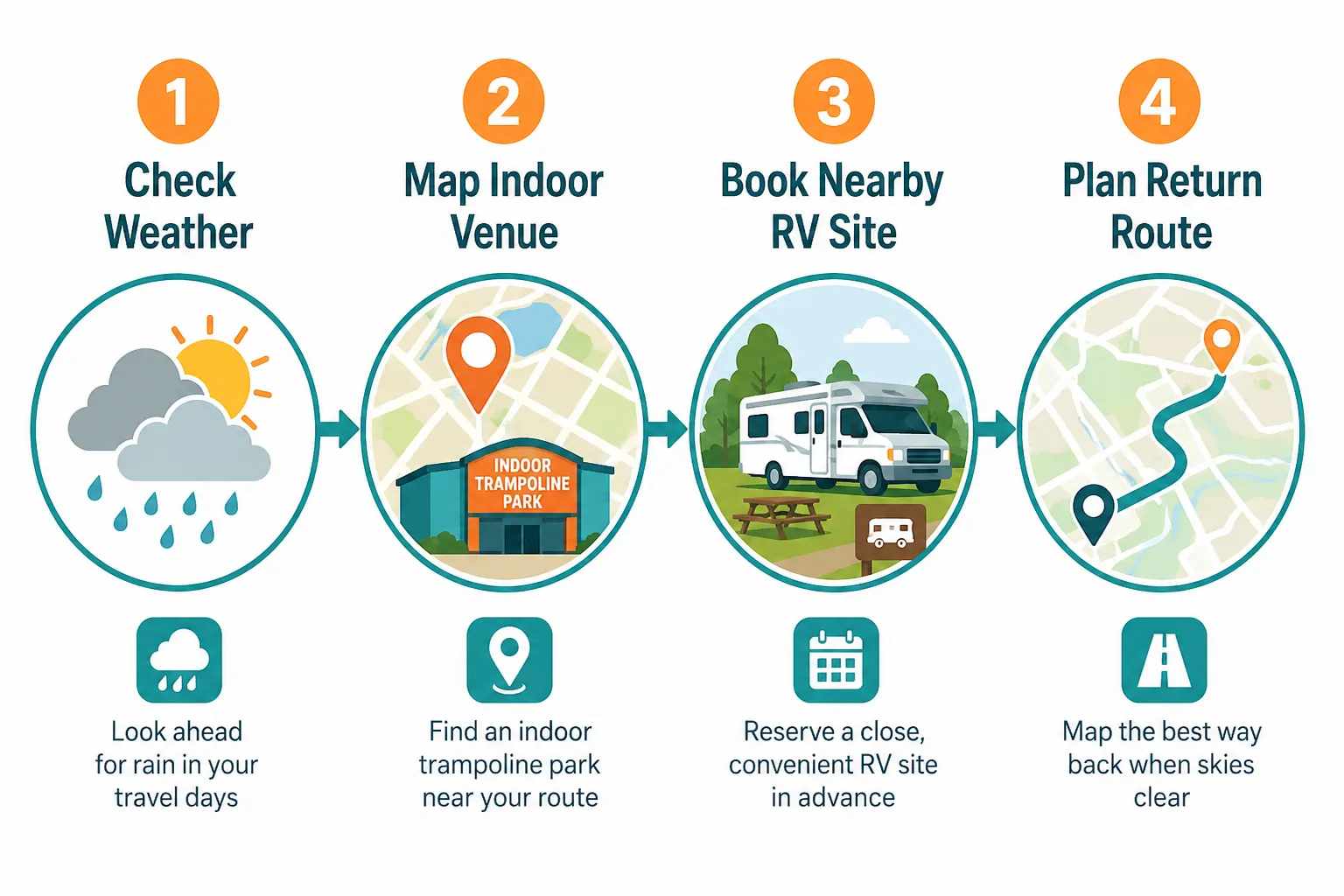
A Simple 4-Step Rainy-Day Plan
- Check the extended forecast before booking. If rain is likely for more than one day of your stay, search for trampoline parks or indoor play centers within a 20-30 minute drive of your campground.
- Map the route in advance. Towing a trailer through unfamiliar backroads in a downpour isn’t fun. Know your turns before the storm hits.
- Book a campsite with easy access to main roads. Sites tucked deep in a park can add 15-20 minutes to any off-site trip. A pull-through near the entrance saves time when weather turns.
- Reserve indoor park tickets online. Many trampoline parks require timed entry slots, especially on rainy weekends when every camping family nearby has the same idea.
Why This Combo Works
National rankings of the best places to camp with kids consistently highlight a mix of on-site playgrounds, bounce attractions, and water play as the top factors parents search for [2]. Pairing a campground that already has strong outdoor amenities with a nearby indoor venue covers both good-weather and bad-weather days without requiring a second trip or a change in plans.
It also solves a logistics problem RV families know well: once you’re set up with hookups, nobody wants to break camp just because of rain. Keeping the indoor backup within a short drive means you can leave the rig parked and just take the tow vehicle or daily driver.
If you’re road-tripping with kids across state lines, it’s also worth reviewing tips every RVer should know for handling detours and unexpected weather changes without derailing the whole itinerary.
Choosing Campgrounds Built Around Active Play
Not every campground markets its amenities the same way, so it helps to know what to look for when you’re comparing options.
Table: What to Check Before Booking a Family-Friendly Campground
| Feature to Check | Why It Matters |
|---|---|
| Playground age/condition | Newer builds often include jumping pillows or themed designs |
| Splash pad or pool access | Covers hot-weather active play without leaving the site |
| Distance to indoor trampoline parks | Your rainy-day backup plan |
| Organized kids’ programs | Structured fun for parents who need a break |
| Sports courts (basketball, pickleball) | Good for older kids and teens |
Casino-resort RV parks have also jumped into this space. Jackson Rancheria in California recently expanded its RV park with a brand-new children’s playground and active recreation space, showing that even non-traditional campground operators see play amenities as a draw for family bookings [research]. Private RV resorts across the industry are following the same logic, treating upgraded playground zones and sports courts as a key differentiator in a competitive booking market [research].
“Families don’t just pick a campsite anymore, they pick the whole experience, and the playground is often the deciding factor.”
When comparing resort-style parks to smaller operations, it can help to read up on how mom-and-pop campgrounds stack up against big corporate chains, since the amenity list isn’t always the full story on value or atmosphere.
Questions to Ask Before You Book
- Is the playground shaded, or will kids be stuck on hot plastic equipment at noon?
- Are jumping pillows or splash pads supervised, or is it parent-watch only?
- How far is the nearest indoor trampoline park if the weather turns?
- Does the campground run seasonal programs, similar to the day-camp model used near Sacramento [8]?
Where the Industry Is Headed
The trend line is clear: more campgrounds are integrating adventure and jumping amenities directly into their layouts instead of treating them as an afterthought [research]. Expect to see more aerial courses similar to the Adventure Park at Long Island [9], more jumping pillows following the Jellystone model [5], and more themed “fantasy play” zones like Southwoods [6] popping up at both state parks and private resorts.
For families, this means the research phase of trip planning now includes checking amenity lists the same way people used to check Wi-Fi availability. It’s worth building this step into your RV setup guide routine before every big family trip.
Conclusion
Keeping kids active on a camping trip no longer means crossing your fingers for good weather. Between campgrounds investing in jumping pillows, splash pads, and themed playgrounds, and indoor trampoline parks standing by for rainy-day backup, families have more tools than ever to keep the fun going.
Before the next trip, take 15 minutes to map out both the on-site amenities and the nearest indoor options. Book the site with easy road access, save a couple of trampoline park locations to the GPS, and check whether seasonal day-camp programs are running nearby. That small bit of prep turns a rained-out weekend into just another good day at camp.
References
- New Rv Resort Opens Gulf State Park. outdooralabama.com.
- Advanturing. goingplacesfarandnear.com.
- Campground Improvements. thousandtrails.com.
- Property Improvements. rvonthego.com.
- Northgate Resorts Opens Jellystone Park Camp Resort in Williamsburg Following Campground Redevelopment. moderncampground.com.
- Southwoods. abcamping.com.
- Las Cruces Koa Campground Adds Amenities Earns Holiday Designation. rv-pro.com.
- Summer Camp. sacadventureplay.wordpress.com.
- Nyny03. newyorklifestylesmagazine.com.