Every year, thousands of RV owners crank up their furnace on a cold night without a second thought, but a small number of those nights end in carbon monoxide emergencies, fires, or worse. So the big question is: are RV furnaces safe? The short answer is yes, when they are used correctly and maintained well. The longer answer is what this article is all about. 🔥
RV furnaces are built to keep travelers warm in all kinds of weather. But like any appliance that burns fuel, they come with real risks that every RV lover should understand. Knowing how they work, what can go wrong, and how to stay protected can make all the difference.
Key Takeaways
- ✅ Factory-installed, vented RV furnaces are generally safe when properly maintained and used as directed.
- ⚠️ Carbon monoxide (CO) is the biggest danger, always install working CO and smoke detectors in your RV.
- 🔧 Regular maintenance is not optional, dirty or damaged furnaces are a leading cause of RV fires and CO leaks.
- 🚫 Never use unvented propane heaters inside your RV, they produce deadly CO and moisture.
- 📋 Recalls happen, always check for active recalls on your RV’s furnace and heating system.
How RV Furnaces Actually Work
Before diving into safety, it helps to understand what an RV furnace actually does.
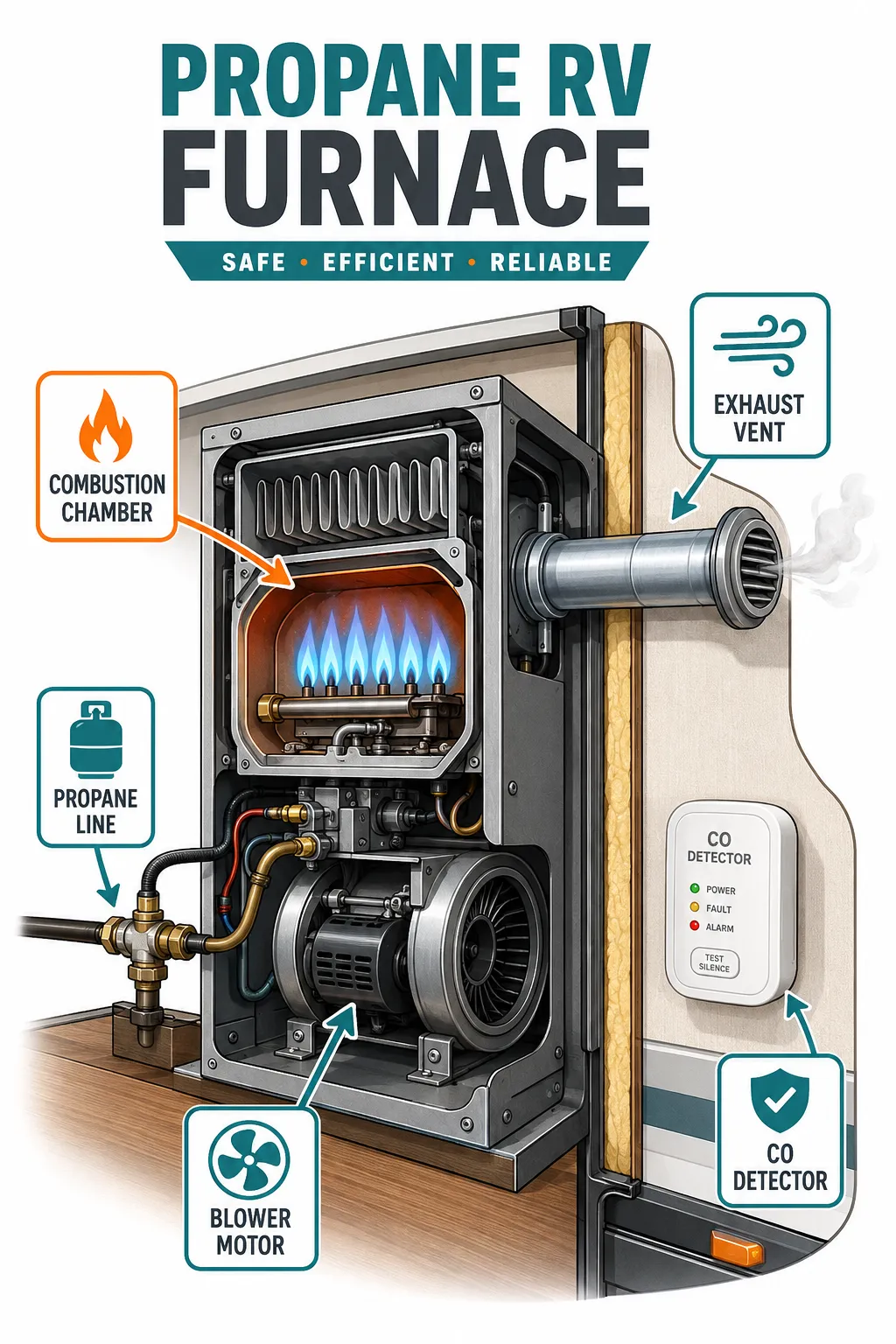
Most RV furnaces run on propane gas. They pull in air from outside, burn the propane in a sealed combustion chamber, and push warm air through ducts into the living space. The exhaust, including carbon monoxide, exits through a vent on the outside of the RV. [1]
This is very different from an unvented space heater. A vented furnace keeps the dangerous exhaust gases outside the RV. That’s what makes factory-installed RV furnaces much safer than portable propane heaters used indoors. [3]
Here’s a simple breakdown of the main parts:
| Part | What It Does |
|---|---|
| Burner | Burns propane to create heat |
| Combustion chamber | Keeps exhaust gases sealed away from living space |
| Exhaust vent | Sends CO and fumes outside |
| Blower motor | Pushes warm air through the RV |
| Thermostat | Controls when the furnace turns on and off |
💡 Pull Quote: “A properly vented RV furnace keeps combustion gases outside, that’s the key safety feature that sets it apart from indoor space heaters.”
Are RV Furnaces Safe? Understanding the Real Risks
So are RV furnaces safe in real-world use? Yes, but only when things are working as they should. Here are the main risks to know about.
1. Carbon Monoxide Poisoning
Carbon monoxide (CO) is colorless and odorless. You cannot see it or smell it. If the furnace venting system is blocked, cracked, or damaged, CO can leak into the living area. [5]
Symptoms of CO poisoning include:
- Headache
- Dizziness
- Nausea
- Confusion
- Loss of consciousness
CO poisoning can be fatal. This is why every RV must have a working CO detector. The New Jersey Division of Fire Safety strongly recommends CO detectors in all RVs. [10]
2. Propane Gas Leaks
Propane leaks can cause fires or explosions. Leaks often happen at:
- Loose fittings on the gas line
- Cracked or aging propane hoses
- Damaged regulator valves [9]
The smell of rotten eggs near your furnace is a warning sign. If you smell it, turn off the propane, open windows, and get everyone outside right away. [5]
3. RV Fires from Furnace Problems
Furnace-related fires can start when:
- Dust and debris build up inside the furnace
- Flammable items are stored too close to vents
- Wiring near the furnace wears out or gets damaged [2]
The Texas Department of Insurance notes that heating equipment is one of the top causes of RV fires. [7]
4. Blocked Exhaust Vents
Mud dauber wasps love to build nests inside RV furnace vents. A blocked vent traps CO inside the RV. This is one of the most common, and most dangerous, furnace problems RV owners face. [1]
Real Recalls: When RV Furnaces Have Failed
It’s not just about user error. Sometimes the equipment itself has problems. Recalls are issued when a defect puts people at risk.
In 2026, NHTSA issued a recall report related to RV heating systems that highlighted fire risk concerns. [4] In 2025, Transport Canada issued a recall for Winnebago Industries vehicles due to furnace-related safety concerns. [6]
These recalls show that even well-known brands can have furnace issues. Always check for open recalls on your RV at the NHTSA website or Transport Canada’s recall database.
Are RV Furnaces Safe Compared to Other Heating Options?
Let’s compare the most common RV heating options side by side.
| Heating Type | Vented? | CO Risk | Best For |
|---|---|---|---|
| Factory RV furnace (propane) | ✅ Yes | Low (if maintained) | Full-time or cold-weather camping |
| Portable propane heater (indoor) | ❌ No | Very High | ⚠️ Not recommended indoors |
| Electric space heater | ✅ N/A | None | Mild temps with shore power |
| Diesel air heater | ✅ Yes | Low (if maintained) | Cold-weather overlanding |
⚠️ Warning: Never use an unvented propane heater inside a closed RV. These heaters burn oxygen and release CO directly into your living space. [5]
Factory-installed, vented RV furnaces are the safest propane heating option for RV interiors. The key word is “vented.” [3]
10 Safety Tips to Keep Your RV Furnace Running Safely 🛡️
Here are the most important steps every RV owner should take.
Before Every Trip
- Check the exhaust vent, Look for wasp nests, mud, or debris blocking the outside vent. [1]
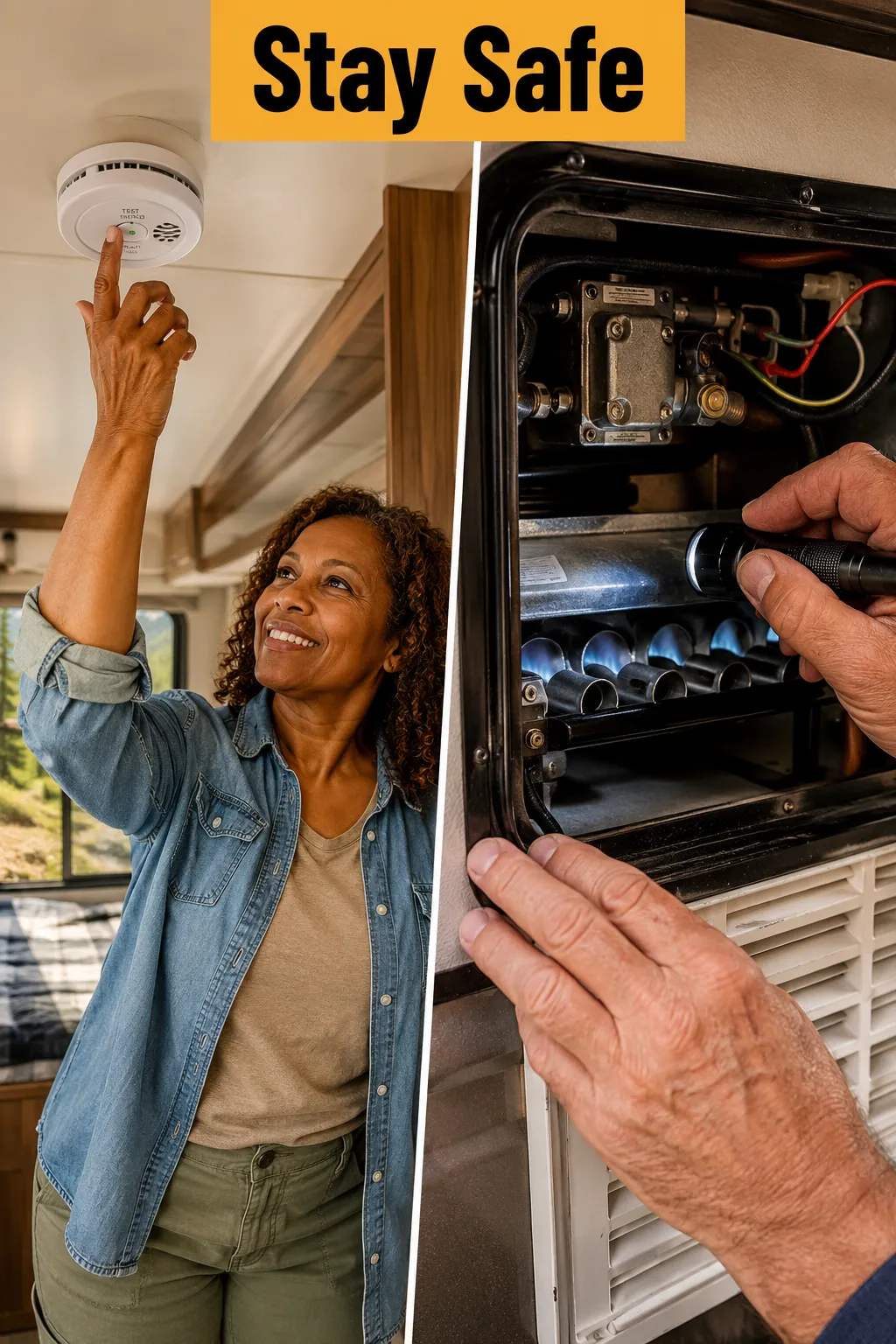
- Test your CO detector, Press the test button. Replace batteries if needed. [10]
- Test your smoke detector, RV fires can spread very fast. [7]
- Sniff for propane, A rotten egg smell means a possible leak. [5]
- Check propane hoses, Look for cracks, wear, or loose fittings. [9]
Every Season
- Get a professional furnace inspection, A certified RV technician can spot problems you might miss. [8]
- Clean the furnace filter, A clogged filter makes the furnace work harder and can cause overheating. [1]
- Check the wiring, Frayed or damaged wires near the furnace are a fire hazard. [2]
- Look for rust or corrosion, Rust on the combustion chamber can allow CO to leak. [3]
- Check for recalls, Visit NHTSA.gov or Transport Canada’s recall page regularly. [4] [6]
What to Do If Something Goes Wrong
Knowing what to do in an emergency can save lives.
If You Smell Propane
- Turn off the main propane valve immediately
- Do NOT flip any light switches (sparks can ignite gas)
- Open all windows and doors
- Get everyone outside
- Call for help before re-entering [5]
If Your CO Detector Goes Off
- Get everyone outside right away
- Do NOT go back inside until emergency services clear the RV
- Call 911 if anyone feels sick
- Have the furnace inspected before using it again [10]
If You See or Smell Smoke from the Furnace
- Turn off the furnace
- Do NOT use water on an electrical or propane fire
- Use a dry chemical fire extinguisher
- Get everyone out if the fire spreads [7]
🔥 Every RV should have at least one ABC-rated fire extinguisher mounted near the exit. Check it before every trip.
Choosing a Safe RV Furnace: What to Look For
If buying a new RV or replacing a furnace, here are features that matter for safety.
Look for These Safety Features
- Automatic shutoff, Shuts the furnace off if the flame goes out unexpectedly [3]
- High-limit switch, Turns off the furnace if it gets too hot [1]
- Sealed combustion chamber, Keeps exhaust gases completely separate from living space [9]
- CSA or UL certification, Means the unit has been tested to safety standards [3]
Brands to Know
Popular RV furnace brands include Atwood (now Dometic) and Suburban. Both make vented propane furnaces designed specifically for RV use. Always buy from a reputable brand and have a certified technician install or service the unit. [1] [9]
Common Myths About RV Furnace Safety
Let’s clear up a few things people often get wrong.
Myth 1: “If the furnace smells a little, it’s normal.”
❌ Not true. A burning smell could mean dust burning off at the start of the season, but a persistent smell means something is wrong. Get it checked. [8]
Myth 2: “A CO detector is optional if I crack a window.”
❌ Not true. Cracking a window does not guarantee safe CO levels. A detector is the only reliable way to know. [10]
Myth 3: “New RVs don’t have furnace problems.”
❌ Not true. Recalls on new RVs happen regularly. The 2026 NHTSA recall and the 2025 Winnebago recall are proof of this. [4] [6]
Myth 4: “Portable propane heaters are fine for one night.”
❌ Not true. CO poisoning can happen in minutes with an unvented heater in a closed space. [5]
Are RV Furnaces Safe for Families and Pets?
Families with kids and pets need to be extra careful. Children and animals are more sensitive to CO than healthy adults. They may show symptoms faster and more severely.
Extra steps for families:
- Place a CO detector at sleeping level, CO can settle lower in the RV
- Make sure kids know what the CO alarm sounds like and what to do
- Keep pets away from furnace vents, curious animals can block airflow
- Never leave the furnace running unattended for long periods without a working detector [10]
Maintenance Schedule: A Quick Reference
Use this simple schedule to stay on top of furnace safety all year.
| When | What to Do |
|---|---|
| Before every trip | Check vent, test detectors, sniff for gas |
| Start of camping season | Full furnace inspection, clean filter |
| Mid-season | Check hoses and fittings |
| End of season | Professional service, check for recalls |
| Anytime | Replace CO detector batteries when low |
Conclusion: Are RV Furnaces Safe? Yes, With the Right Care
So, are RV furnaces safe? The answer is a confident yes, as long as owners stay informed and take safety seriously. Factory-installed, vented propane furnaces are well-designed appliances. They are built to keep combustion gases outside and warm air inside. But no appliance is 100% foolproof without proper care.
Here are the actionable next steps to take right now:
- 🔍 Check for open recalls on your RV at NHTSA.gov or Transport Canada’s recall database
- 🛒 Buy or replace your CO and smoke detectors if they are more than 5 years old
- 📅 Schedule a professional furnace inspection before the next cold season
- 🕵️ Inspect your exterior furnace vent for nests or blockages today
- 📋 Create a quick safety checklist and run through it before every trip
RV life is one of the best adventures out there. A little preparation goes a long way toward keeping every trip warm, safe, and worry-free. 🏕️
References
[1] What Should I Know About Compact Rv Furnace – https://rvroadlog.com/camping-tips/what-should-i-know-about-compact-rv-furnace
[2] 9 Rv Fire Hazards And How To Avoid Them – https://rvingwithrex.com/2023/03/06/9-rv-fire-hazards-and-how-to-avoid-them/
[3] What Should I Know About Rv Electric Propane Furnace – https://rvroadlog.com/camping-tips/what-should-i-know-about-rv-electric-propane-furnace
[4] Rclrpt 26v264 2613 – https://static.nhtsa.gov/odi/rcl/2026/RCLRPT-26V264-2613.pdf
[5] Propane Heater Safety Tips – https://www.doityourselfrv.com/propane-heater-safety-tips/
[6] Transport Canada Recall 2025025 Winnebago Industries – https://recalls-rappels.canada.ca/en/alert-recall/transport-canada-recall-2025025-winnebago-industries
[7] Rv Fire Safety – https://www.tdi.texas.gov/tips/rv-fire-safety.html
[8] 10 Rv Fire Dangers And How To Avoid Them – https://rvingwithrex.com/2023/04/25/10-rv-fire-dangers-and-how-to-avoid-them/
[9] What Should I Know About Gas Trailer Furnace – https://rvroadlog.com/camping-tips/what-should-i-know-about-gas-trailer-furnace
[10] Rvsafety – https://www.nj.gov/dca/dfs/home/rvsafety.shtml