Fewer than half of America’s national parks even allow RV camping inside their boundaries [1]. That single fact changes everything about how someone should plan a rental. Choosing the wrong rig for Zion or Yosemite doesn’t just mean a cramped week, it can mean getting turned away at the gate.
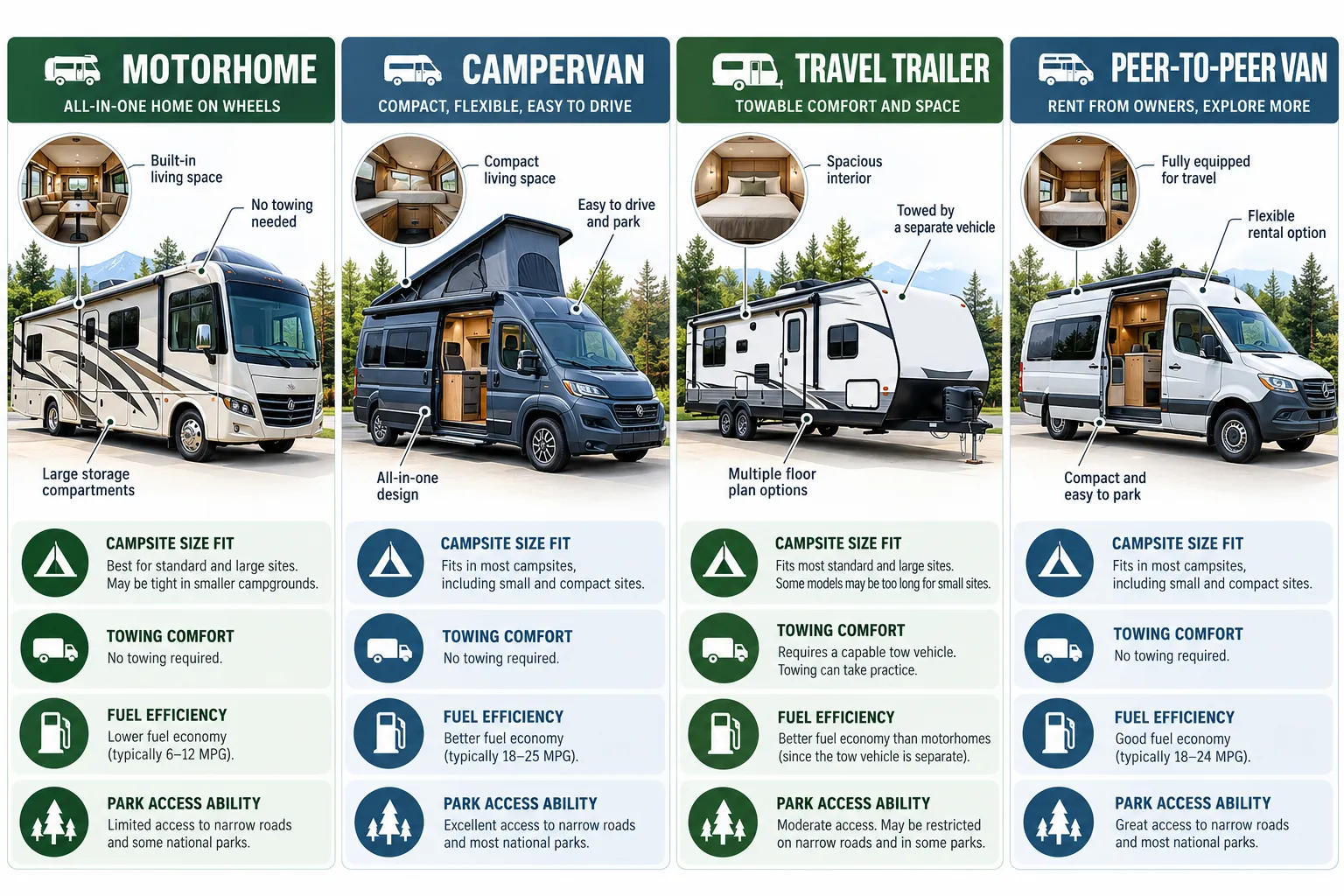
This guide breaks down the best RV rental options for national park trips: motorhome, campervan, travel trailer, and peer-to-peer comparison based on real park constraints, not just brochure specs. The goal is simple: match the rig to the road, the campsite, and the trip, so the vacation feels easy instead of stressful.
Key Takeaways
- Campsite size and access rules, not personal preference, should drive the rental decision for most national park trips [1][2].
- Campervans are the fastest-growing rental category, largely because they fit tight park roads and non-electric sites better than larger rigs [3][4].
- Peer-to-peer platforms now supply a huge share of available campervans and often beat traditional pricing, but insurance and support vary [3][4].
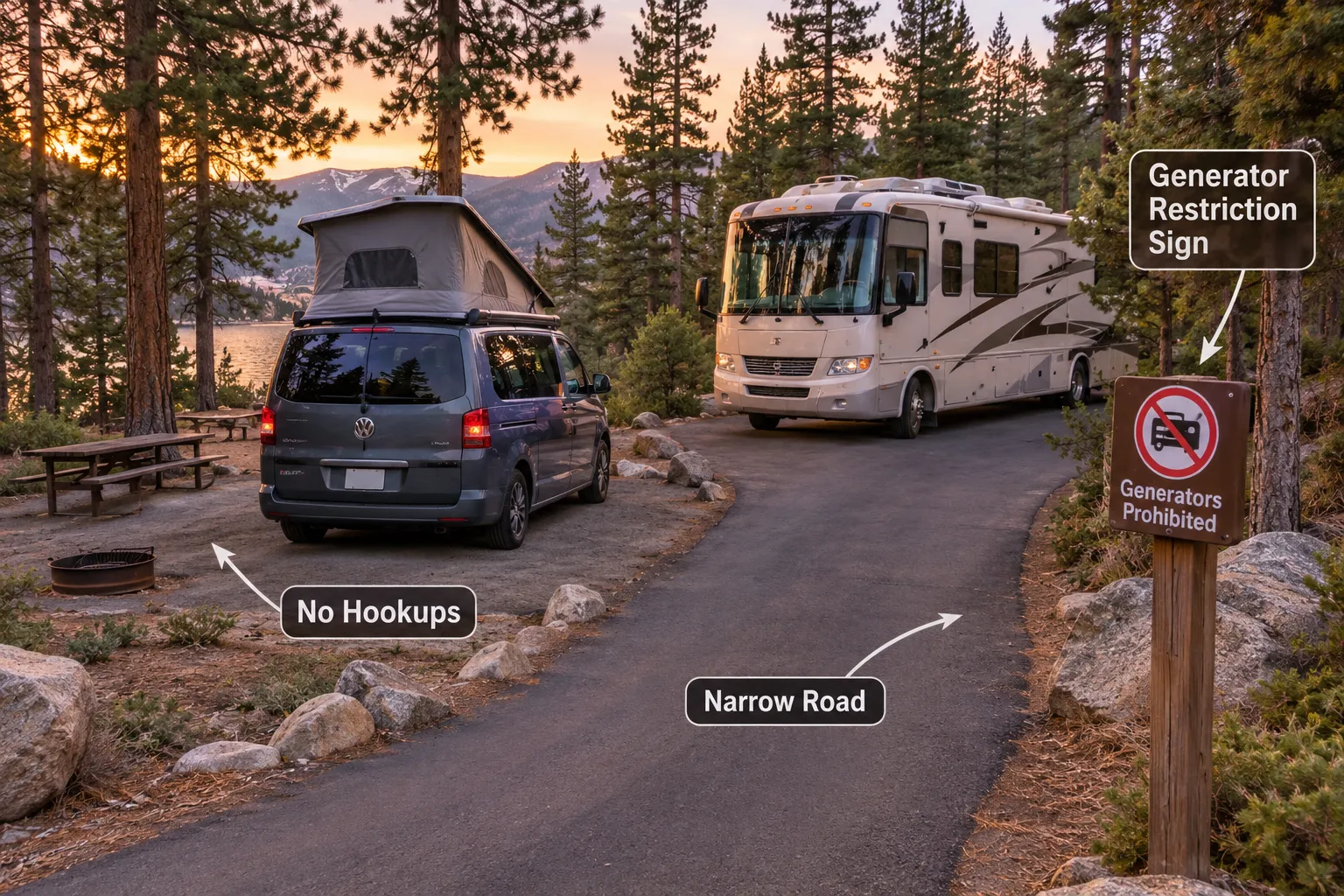
- Many park campgrounds have no hookups, so self-sufficient rigs with solar or strong battery systems have a real advantage [1][2].
- Trip length and towing comfort matter as much as nightly rate, a trailer that saves money can cost confidence on mountain switchbacks.
Matching RV Type to Park Rules: Why Size and Hookups Decide Everything
Grand Canyon’s main campgrounds cap RV length well below what many rental motorhomes offer, and generator hours are strictly limited [1]. Shenandoah’s campgrounds mix electric and non-electric loops, with some sites unable to fit anything over 30 feet [2]. These aren’t arbitrary rules, narrow, winding park roads built decades ago simply weren’t designed for 35-foot Class A coaches.
That’s why the “best” option isn’t the biggest or fanciest rig, it’s the one that physically fits the park’s infrastructure. Before booking anything, check the specific park’s campground page for length limits, hookup availability, and reservation requirements through official channels like [5] and [6], since both show real-time site specs and restrictions.
A quick rule of thumb:
- Under 25 feet → fits almost any park campground
- 25-32 feet → fits most, but check specific loops
- Over 32 feet → often restricted to a handful of larger sites, if any
Motorhome vs. Campervan vs. Travel Trailer vs. Peer-to-Peer: A Practical Comparison
Here’s how the four main rental formats stack up for actual national park use, not just highway driving.
Class C / Class A Motorhomes
- Best for: families who want built-in bathrooms and sleeping for 4-6
- Downside: harder to maneuver on switchbacks, higher fuel use, limited to larger sites
- Good fit for: Yellowstone, Great Smoky Mountains (wider main loops)
Campervans
- Best for: couples, solo travelers, or anyone prioritizing flexibility
- Upside: fits almost every park road and tight pull-through site, easier to boondock nearby
- This is the category growing fastest in the rental market right now, driven by demand for nimble, self-sufficient rigs that can handle narrow park access roads [3][4]