
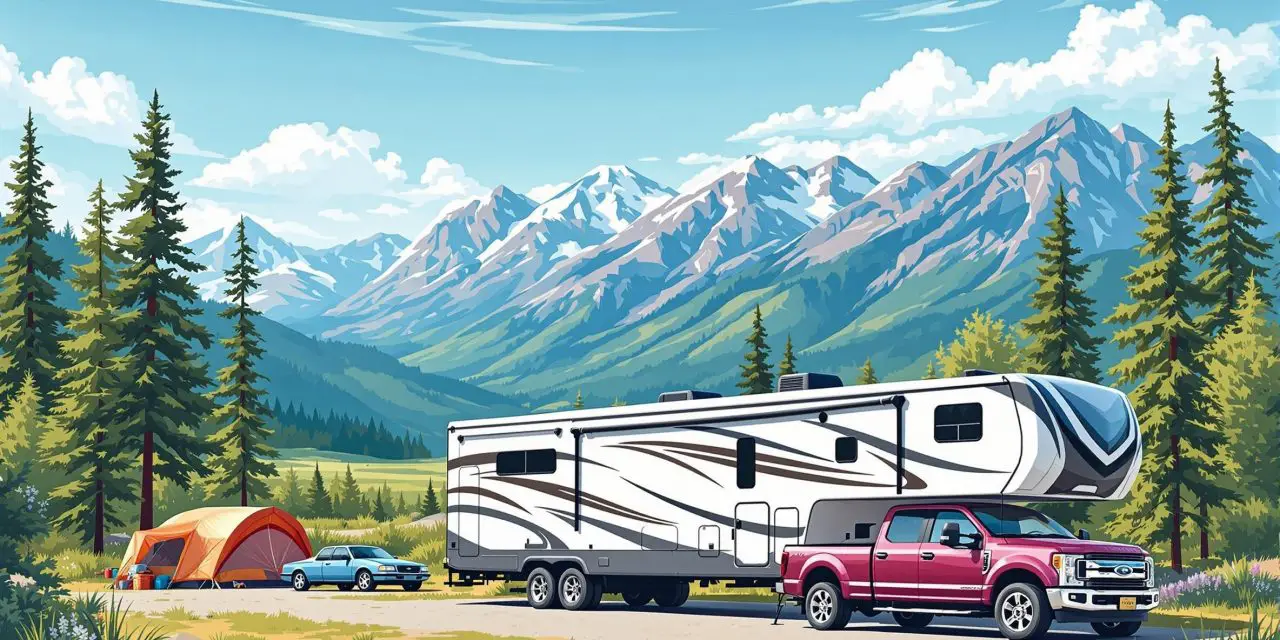
Are you dreaming of hitting the open road in a massive fifth wheel, convinced it’s your ticket to RV paradise? Hold up there, future road warrior! Before you sign on that dotted line, you need to hear some hard truths that most RV dealers conveniently forget to mention. The reality of fifth wheel living isn’t all Instagram-worthy sunsets and campfire stories—it’s a mixed bag of incredible highs and soul-crushing lows that’ll either make you fall head-over-heels in love or run screaming back to your stick-and-brick house.
In this eye-opening deep dive, we’re pulling back the curtain on what the RV Odd Couple discovered after years of full-time fifth wheel living. These aren’t your typical “pros and cons” lists you’ll find on manufacturer websites—these are the raw, unfiltered realities that come from actually living the dream (and nightmare) day after day. Whether you’re a weekend warrior considering the jump to something bigger or a full-timer weighing your options, you’re about to get the insider scoop that could save you from making a very expensive mistake.
Buckle up, because we’re about to shatter some myths and reveal what really happens when you choose the fifth wheel life. Trust me, after reading this, you’ll never look at those shiny RVs on the lot the same way again.
The Big Truck Love Affair (And Its Expensive Reality)
Let’s start with what many consider the crown jewel of fifth wheel ownership: that massive, powerful truck you’ll need to haul your home-on-wheels. There’s something undeniably American about commanding a dual-wheeled beast down the highway, and for many RVers, this is half the appeal.
The statistics back up this truck obsession. According to industry data, over 94,000 fifth wheels are shipped annually, and every single one requires a heavy-duty truck to move it. RV industry reports show that the average RV owner spends between $80,000 to $150,000 on their truck-and-trailer combination.
But here’s where the romance meets reality: These trucks aren’t just expensive to buy—they’re expensive to own. We’re talking about $100,000+ investments that depreciate faster than your morning coffee cools down. The used market? It’s like playing darts blindfolded. You’ll spend months hunting across the country for the right truck, and when you find it, you’d better be ready to move fast.
The gender divide reality: Here’s something dealers definitely won’t mention upfront—many spouses (often women) find these trucks intimidating to drive. The RV Odd Couple admits Mercedes won’t even drive their truck empty, let alone with a 40-foot fifth wheel attached. This means all the driving pressure falls on one person, eliminating the ability to share long-distance driving duties that couples enjoy with smaller RVs.
Let’s be honest here—if you’re scared to parallel park a Honda Civic, you probably shouldn’t be wrestling with a dually in a Walmart parking lot. The learning curve is steep, and the consequences of mistakes are expensive.
The Space Obsession: When Bigger Isn’t Always Better
Walk into any fifth wheel and you’ll immediately understand why families choose them. The space is genuinely impressive—we’re talking about 17 feet of counter space, massive refrigerators, and living areas that actually feel like home. Industry statistics show that fifth wheels provide more living space per foot than motorhomes of similar length.
The RV Odd Couple’s 2020 Forest River Sandpiper 38FK showcases this beautifully. Their kitchen doubles as an office space, and they’ve hosted thousands of visitors who’ve never seen anything like it. When you’re talking about full-time living, especially with children, this space becomes crucial.
But here’s the trade-off nobody talks about: You sacrifice exterior storage for interior space. While you’re living like kings inside, your outdoor gear, tools, and seasonal items are crammed into limited basement storage. This becomes a real problem when you need to access something buried in the back of a compartment.
The configuration options are endless—over 100 different floor plans exist for fifth wheels. You can have bedrooms upstairs, kitchens downstairs, toy hauler backs, or residential-style layouts. But with great choice comes great confusion, and many buyers suffer from analysis paralysis.
The family factor: Statistics show that 38% of RV owners are millennials, many with young families. For these demographics, fifth wheels often become the only viable option for extended travel. The RV Odd Couple couldn’t have traveled cross-country with their child and dog in anything smaller.
Sure, your living room might be bigger than your old apartment, but good luck finding a place to store your fishing gear, camping chairs, and that inflatable kayak you swore you’d use more often.
The Stair Master Challenge: When Your Home Becomes a Gym
Here’s a reality check that’ll hit you harder than your morning coffee: fifth wheels are essentially multi-story homes on wheels. You’ll be climbing stairs constantly—to get in, to access the bedroom, to reach the main living area. For some, this isn’t a big deal. For others, it’s a daily struggle that only gets worse with age.
The RV Odd Couple’s experience is telling. Their 80-pound dog, Skippy, can no longer handle the stairs, requiring them to carry him up and down. When you’re dealing with aging pets or your own mobility issues, these stairs transform from a minor inconvenience into a major obstacle.