
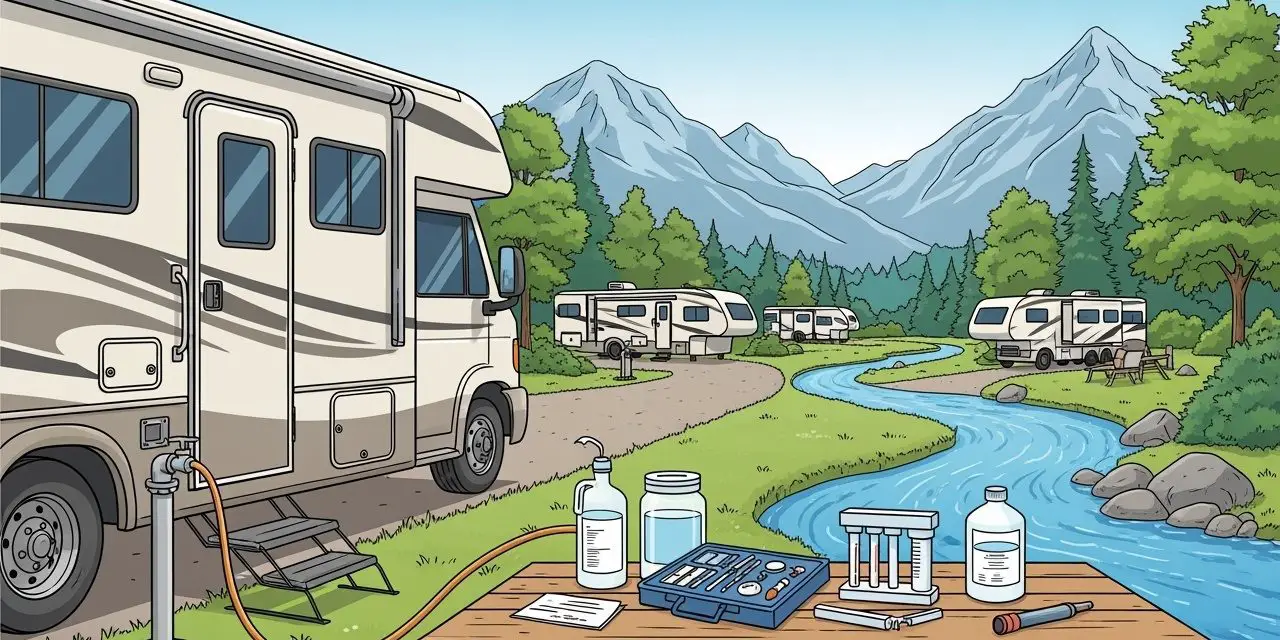
You’ve been there before – you pull up to your favorite campsite, hook up your RV to that rusty water spigot, and wonder if you’re about to give your family water that’s been filtered through a gym sock and a burnt tire.
According to recent testing data, over 40% of campgrounds report chlorine taste issues, while 35% deal with sediment problems that can make your morning coffee taste like liquid concrete.
But here’s the kicker: most RVers have no idea what’s actually flowing through their taps until it’s too late. Whether you’re dealing with municipal water that smells like a swimming pool or well water that tastes like broken dinosaur eggs, understanding campground water safety isn’t just about comfort – it’s about protecting your family’s health on the road.
1. That “Potable Water” Sign Doesn’t Mean What You Think It Does
You see that weathered “Potable Water” sign next to the campground spigot and assume you’re good to go. But here’s what most RVers don’t realize: campground water testing requirements vary dramatically by state and local jurisdiction. While some campgrounds connected to municipal systems get monthly testing, others relying on private wells might only test quarterly – or less frequently if they’re not under regulatory oversight.
The EPA can actually shut down campgrounds that don’t properly test their water supplies, but enforcement is inconsistent. Many smaller campgrounds operate under the radar, especially those with private water systems serving fewer than 25 people. These systems often fall into regulatory gray areas where testing isn’t mandated unless there’s a specific complaint or health incident.
Supporting Facts:
- Campgrounds serving 25+ people daily are classified as public water systems requiring regular testing
- Private campground wells may only require annual testing for coliform bacteria and nitrates
- Brown water can still pass state water tests if it’s not “too murky” according to current standards
Real talk: Just because it says “potable” doesn’t mean it’s pleasant. I’ve seen campground water that technically met EPA standards but looked like chocolate milk. Would you serve that to your kids at home?