Nearly 60 million Americans went camping last year, and RVs remain the single most popular way to do it [1]. That demand means the easy campgrounds fill up fast, especially the ones with wide pads and strong Wi-Fi. If you’ve typed “camping facilities near me that are RV-friendly” into a search bar and felt overwhelmed by the options, you’re not alone, and this guide breaks down exactly what to check before you hit “book.”
Finding camping facilities near me that are RV-friendly isn’t just about proximity. It’s about matching your rig’s size, hookup needs, and travel style to a site that actually works. A park that’s perfect for a pop-up camper might be a nightmare for a 38-foot fifth wheel. Below, we’ll walk through the details that separate a great stay from a frustrating one.
Key Takeaways
- Book early. RV camping demand is strong and stable, so popular parks fill months ahead [2].
- Check site specs, not just photos. Pad length, surface type, and turning radius matter more than curb appeal.
- Hookups and Wi-Fi are now baseline expectations, not bonus features, at most modern RV parks [3].
- Amenity-rich “destination” parks are growing fast, decide if you want resort extras or a simple, quiet stay [4].
- Use tech tools wisely. More campers rely on online search and AI tools to vet RV-friendly sites before booking [5].
Why “Near Me” Searches Need a Different Checklist for RVs
Tent campers and RVers search the same map, but they need completely different answers. A location that pops up as “RV-friendly” in a search result doesn’t always mean it can handle your rig’s length, weight, or power needs.
RV participation has leveled off after its pandemic surge, but it’s still heavily skewed toward experienced campers, many of them retirees and long-haul travelers who know exactly what they need from a site [1]. That means today’s RV parks are often designed with higher expectations baked in: full hookups, clean restrooms, and dependable internet are now treated as the standard, not the upgrade [3].
So when you search for camping facilities near me that are RV-friendly, filter results by more than star ratings. Look at the actual site specs listed on the booking page, cross-reference recent reviews, and call the campground office if anything is unclear. A five-minute phone call can save you from arriving at a site that’s ten feet too short.
Site Length, Width, and Surface: The Non-Negotiables
This is where most booking mistakes happen. A listing might say “RV sites available” without specifying whether that means a 25-foot trailer or a 45-foot motorhome with a towed vehicle.
Before booking, confirm these four details:
- Maximum site length, Measure your rig bumper to bumper, including any tow vehicle or towed car, and add a 5-10 foot buffer.
- Pad width, Tight sites can make slide-outs impossible to extend fully.
- Surface type, Gravel, concrete, and grass all behave differently in rain. Concrete pads handle weight best; grass sites can turn to mud after a storm.
- Turning radius, Narrow campground roads can trap longer rigs, especially in older parks never designed for today’s big fifth wheels.
Comfort features inside RVs keep growing, bigger slide-outs, residential appliances, home-like layouts, which means today’s rigs need more physical space than the fleet from ten years ago [5]. If a campground’s listing photos look dated, that’s a clue the sites may not have been updated for modern rig dimensions either.
Hookups, Power, and Dump Stations: What RV-Friendly Really Means
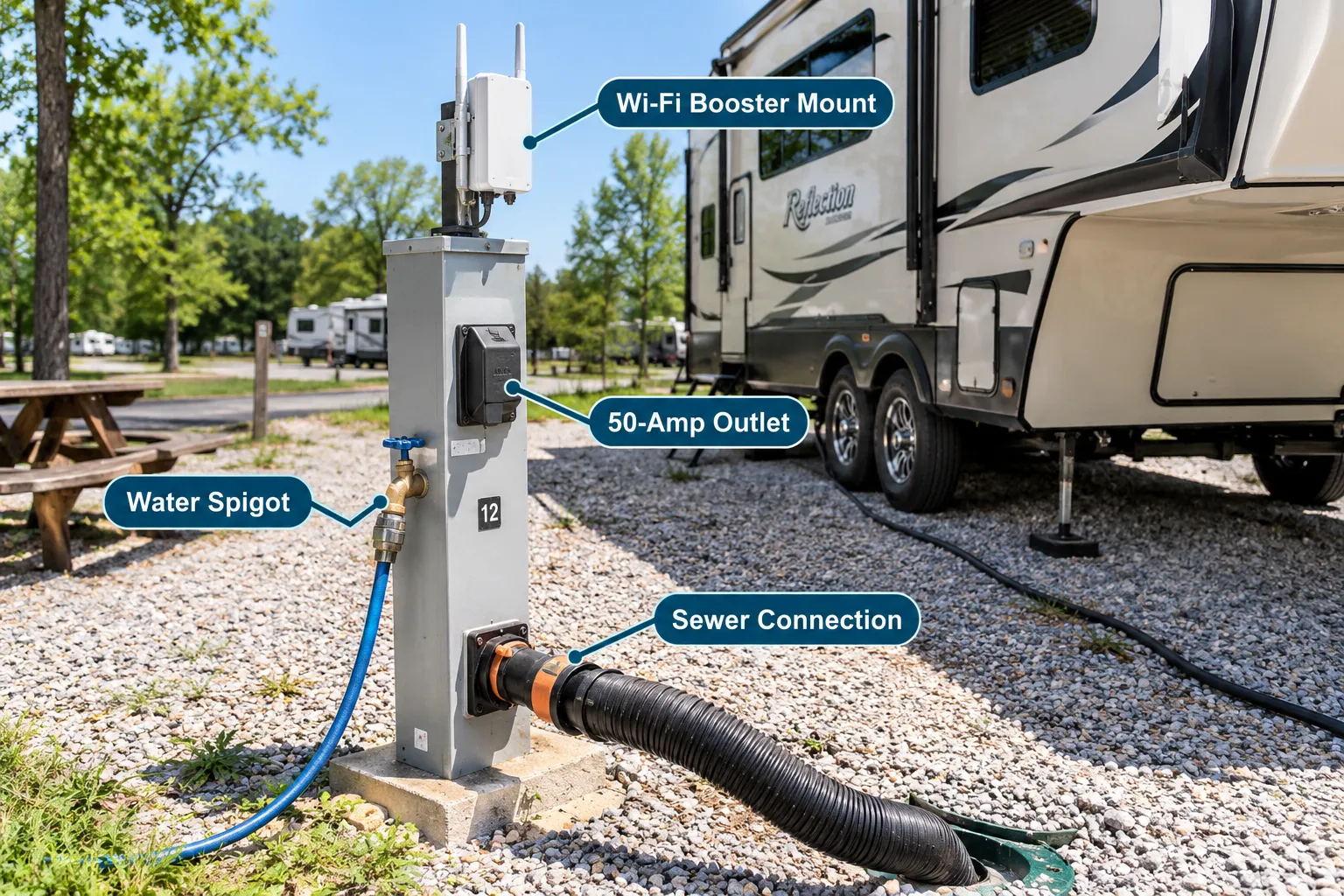
“RV-friendly” should mean full hookups: water, sewer, and electric, all at the site. But plenty of listings use the phrase loosely. Some “RV sites” only offer electric with no water or sewer, which is fine for a quick overnight but not for a week-long stay.
Ask or confirm before booking:
- Is it a full hookup site, or electric-only?
- What amperage is available, 30-amp, 50-amp, or both?
- Is there a centralized dump station on-site if your spot doesn’t have sewer?
- Is the water potable and pressure-regulated, or will you need your own regulator?
Modern campground operators are rethinking their whole site layout strategy to meet rising expectations around hookups and connectivity, especially as more first-time RVers enter the scene through rentals [3]. That “RV rental renaissance” means parks increasingly cater to beginners, which is good news if you’re new to the lifestyle, since more staff are trained to walk you through hookup basics on arrival.
If you’ve ever had a trip derailed by a hookup surprise, you know how much this step m