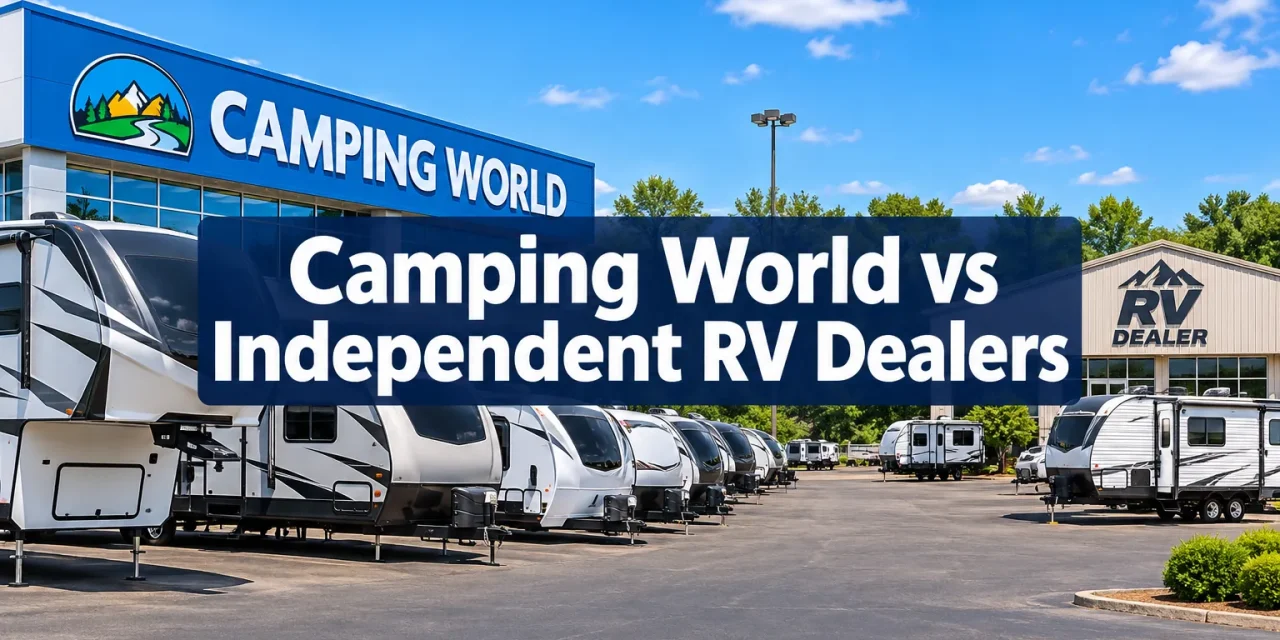
Camping World just posted a $320.1 million net loss in a single quarter, its worst since going public, while independent dealers down the street kept quietly selling campers with a handshake and a lower fee.[1][2] That contrast says a lot about where RV shopping stands right now in 2026.
If you’re trying to decide where to buy your next camper, this isn’t a simple “big store good, small store bad” decision. Both options have real strengths. The right choice depends on what you value most: price flexibility, inventory selection, service access, or warranty support.
This guide breaks down Camping World vs Independent RV Dealers: Prices, Service, Inventory, Warranties, and When Each Is Better, using current industry data so you can shop smarter, not just faster.
Key Takeaways
- Camping World offers the largest inventory and nationwide brand access, but financial pressure is squeezing margins and store counts.[3][4]
- Independent dealers often negotiate harder on price and charge fewer add-on fees, though their stock is smaller and more regional.
- Camping World’s service departments are shrinking staff even as wait times grow; independents may offer faster, more personal attention.
- Extended warranties and F&I products are a bigger profit driver at Camping World, which can raise your total out-the-door cost.[5]
- The best dealer depends on your priorities, convenience and selection versus price negotiation and hands-on service.
Pricing: Camping World vs Independent RV Dealers: Prices, Service, Inventory, Warranties, and When Each Is Better
Money talks first in any RV purchase, and right now, both sides of the market are feeling squeezed.
Camping World’s Q3 2026 results showed revenue down 12.4% year-over-year, with soft new and used RV sales pulling prices lower across the board.[2][4][6] Weak demand, high interest rates, and rising fuel costs are forcing the company to discount more aggressively just to move inventory.[4][6]
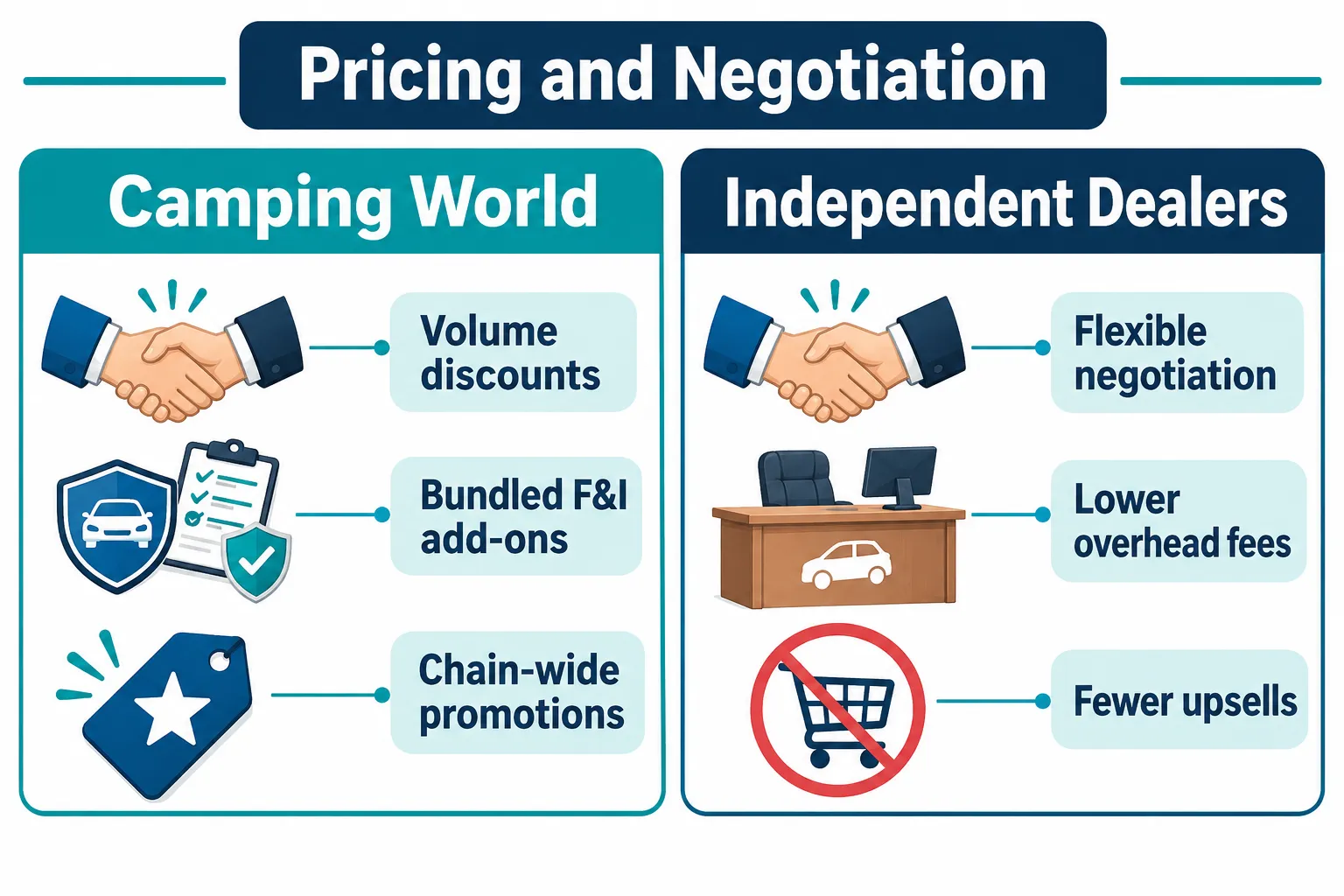
That sounds like good news for buyers, and it can be, but there’s a catch. Camping World leans heavily on finance and insurance (F&I) products to make up lost margin. In Q3 2026 alone, it took a $12.7 million unfavorable F&I reserve charge, a sign of how much weight those add-on products carry in its earnings.[5] Extended service contracts, tire protection, and gap insurance often get bundled into financed deals, quietly raising your total price even if the sticker looks competitive.
Independent dealers typically operate leaner. Fewer corporate layers mean:
- Lower documentation and prep fees
- More willingness to negotiate on walk-away deals
- Fewer pressured upsells at the finance desk
💡 Pull quote: “A lower sticker price means nothing if the finance office adds it all back.”
If you’re financing, always ask for the full out-the-door number, not just the unit price, at either type of dealer. Budgeting for the full picture matters, see our breakdown of the hidden costs of RVing for more on expenses buyers overlook.
Service and Support
Service is where many RV owners judge a dealer long after the sale. This is also where the two models diverge most sharply.
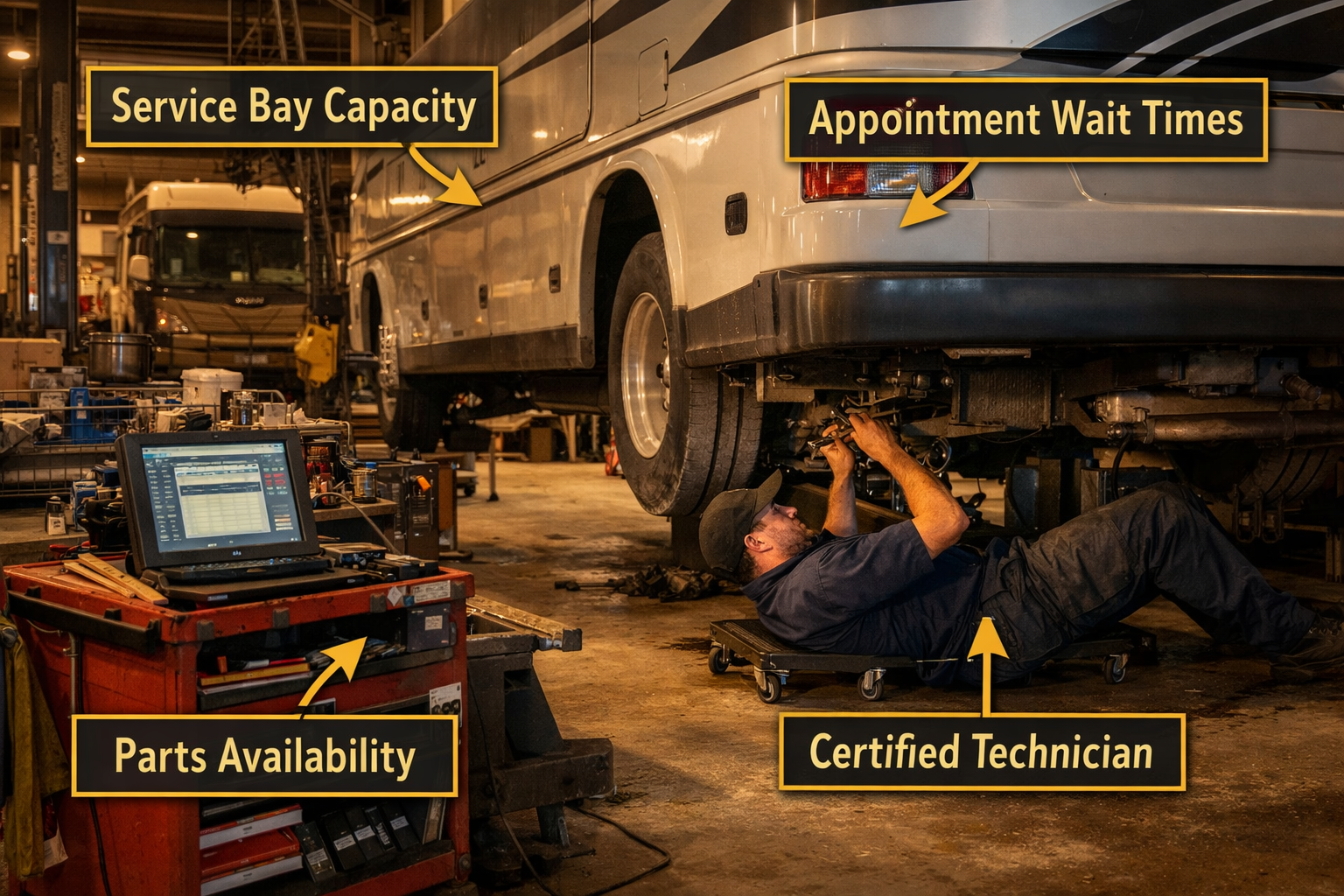
Camping World is cutting costs hard. Management has accelerated a $100 million SG&A savings plan and identified at least $50 million more in annualized savings from headcount reductions.[4] Leaner staffing can help stabilize prices, but it often means fewer service writers, longer appointment backlogs, and less one-on-one attention when your RV needs work.
Independent dealers tend to run smaller, more personal service teams. Owners often deal directly with the same technician or service manager trip after trip. That consistency builds trust, and it’s one reason many full-timers prefer a local shop they know by name.
That said, independents have limits too:
- Smaller parts inventory for less common brands
- Limited hours or seasonal closures
- Fewer certified techs for complex electrical or slide-out systems
Quick comparison:
| Factor | Camping World | Independent De |
|---|