
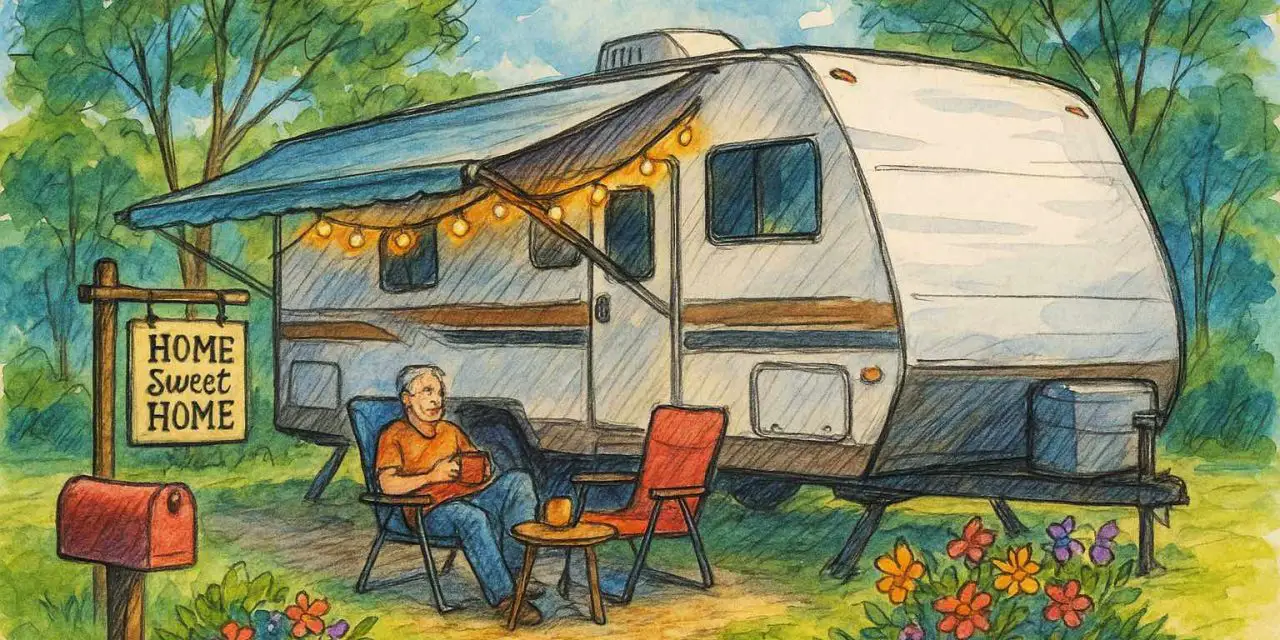
Have you ever looked at your cozy RV and wondered, “Can an RV be a permanent residence?” You’re not alone! With rising housing costs and the growing appeal of minimalist living, more Americans are asking this exact question. The simple answer is: yes, but with important catches.
Living permanently in an RV isn’t just about parking wherever you want and calling it home. There are legal hoops to jump through, zoning laws to understand, and practical challenges to overcome. But don’t worry – thousands of Americans have successfully made their RV their permanent home, and with the right knowledge, you can too.
Whether you’re dreaming of downsizing your life, escaping high rent payments, or simply craving the freedom of the open road, this guide will walk you through everything you need to know about RV permanent residency. We’ll break down the legal requirements, explore the best states for RV living, and give you the honest truth about what it’s really like to call your RV “home.”
1. The Legal Reality: What “Permanent Residence” Actually Means for RV Owners
Here’s the thing that catches most people off guard: RVs are classified as vehicles, not homes, by the U.S. Department of Housing and Urban Development (HUD). This means you can’t just register your RV as a permanent dwelling like you would a house or apartment.
However, that doesn’t mean you can’t live in your RV full-time! According to recent statistics, approximately 1 million Americans currently live in their RVs full-time with no other form of housing. The key is understanding the difference between your RV being your permanent residence and having a legal permanent address.
You’ll need to establish domicile in a state – basically, a legal “home base” where you pay taxes, vote, and receive mail. Many full-time RVers choose states like Florida, Texas, or South Dakota because they have no state income tax and RV-friendly policies. This legal address doesn’t have to be where your RV is parked, but it needs to be a real, physical address.
The process typically involves getting a driver’s license in your chosen state, registering to vote, and setting up mail forwarding services. Some states make this easier than others – Florida, for example, allows you to use a mail forwarding service address as your legal domicile.
Reality check: It’s like being a legal nomad – you need a “home” on paper even though your real home has wheels and gets 8 miles per gallon!
How to Get Mail & Change Domicile as a Full Time RVer
2. State-by-State Breakdown: Where RV Living is Actually Legal
Not all states treat RV residents equally! Some states roll out the red carpet for RV living, while others make it nearly impossible. Here’s what you need to know:
RV-Friendly States:
- California: You can stay indefinitely as long as you don’t create health hazards
- Florida: No state income tax, easy domicile establishment
- Texas: No state income tax, lots of RV parks
- Arizona: Excellent weather, large RV communities
- Nevada: No state income tax, relaxed regulations
Restrictive States:
- New York: Technically considers full-time RV living illegal in many areas
- New Jersey: Strict zoning laws make it difficult
- Massachusetts: Limited options for legal RV parking
The reality is that local zoning laws often matter more than state laws. Even in RV-friendly states, some cities and counties have restrictions. For example, you might be able to live in your RV in rural California but not in downtown San Francisco.
Important note: About 62% of RV