
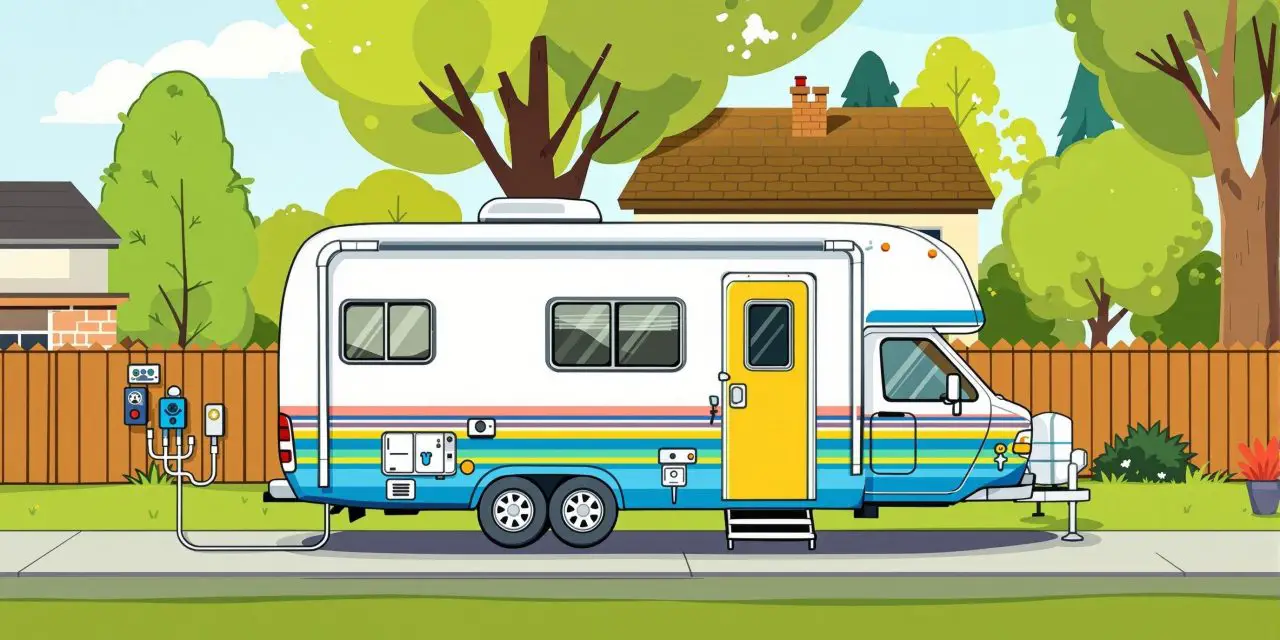
Are you wondering can an RV be an ADU? You’re not alone! With housing costs continuing to rise and more families needing flexible living solutions, many property owners are exploring creative alternatives. Recreational vehicles (RVs) as Accessory Dwelling Units (ADUs) have become an increasingly popular housing solution.
The short answer is yes, but there’s much more to the story.
According to industry data, approximately 1 million Americans live in RVs full-time, while over 11 million households own recreational vehicles. This growing trend has sparked interest in using RVs as permanent or semi-permanent housing solutions on residential properties. Understanding the legal, practical, and financial aspects can help you make an informed decision about whether an RV-ADU setup works for your situation.
1. What Exactly Is an RV-ADU and How Does It Work?
An RV-ADU is a recreational vehicle that serves as an accessory dwelling unit on a residential property. Unlike traditional ADUs that are built structures, RV-ADUs use existing recreational vehicles as secondary housing units. These setups typically require permanent utility connections including electricity, water, sewer, and sometimes natural gas.
The concept works by treating your RV as a mobile ADU that provides complete living facilities. Most successful RV-ADU arrangements include a full kitchen, bathroom, sleeping areas, and living space within the vehicle. The key difference from regular RV parking is the permanent nature of the installation and utility hookups.
State regulations vary dramatically regarding RV-ADUs. Some states have embraced ADU-friendly laws, while others maintain stricter requirements. In most jurisdictions, the RV must meet specific criteria including minimum square footage, structural integrity, and safety standards.
For legal compliance, many areas require the RV to be permanently anchored to the property and connected to municipal utilities rather than relying on tanks and generators. This distinguishes it from temporary RV parking or camping situations.
Just remember, explaining RV-ADU rules to your neighbors might be more complicated than explaining why you need three different streaming services for one TV show.
2. Legal Requirements and Zoning Laws by State
California offers some of the most RV-ADU friendly regulations in the nation. The state has implemented legislation that exempts smaller accessory dwelling units from many impact fees. California requires reasonable setbacks from property lines and allows ADUs of various sizes depending on local regulations.
Florida permits full-time RV living as long as the vehicle connects to utilities and meets local building codes. The state requires proper waste disposal systems and fire safety compliance. Many Florida counties allow RV-ADUs with appropriate permits.
Texas varies significantly by county. Some metropolitan areas have embraced ADU-friendly policies, while rural counties maintain stricter regulations. Texas generally requires proper septic or sewer connections for permanent RV installations.
Northeastern states like New York and Massachusetts have been updating their ADU laws to be more accommodating. Many states have passed legislation encouraging local municipalities to adopt ADU-friendly zoning ordinances.
| State Category | RV-ADU Status | Key Requirements | Permit Process |
|---|---|---|---|
| ADU-Friendly States | Highly Permitted | Utilities, setbacks | Streamlined |
| Moderate States | Conditionally Permitted | Building codes, utilities | Standard |
| Restrictive States | Limited Permission | Extensive requirements | Complex |
| Rural Areas | Varies Widely | Local determination | Highly Variable |
Navigating state RV-ADU laws is like trying to understand why every streaming platform has different rules for the same movie – it’s confusing, but eventually you figure out what works where.
3. Cost Analysis: RV-ADUs vs Traditional ADUs
Traditional ADU construction costs typically range from $100,000 to $400,000 depending on size, location, and finishes. In contrast, RV-ADU setups generally cost between $30,000 to $100,000 including the RV purchase and utility installations.
The initial investment breakdown for RV-ADUs includes the recreational vehicle ($20,000-$80,000), utility hookups ($5,000-$20,000), permits and inspections ($2,000-$8,000), and site preparation ($3,000-$12,000). These costs represent significant savings compared to traditional construction.
Ongoing expenses include utility costs, maintenance, insurance, and potential property tax increases. RV-ADUs typically consume 10-30% less energy than traditional ADUs due to their smaller size and efficient design.
Financing options differ significantly between the two approaches. Traditional ADUs qualify for home equity loans and construction financing, while RV-ADUs might require recreational vehicle loans or personal financing.
Rental income potential for RV-ADUs varies widely by location and amenities, typically ranging from $600-$2,000 monthly. This compares favorably to traditional ADU rental rates while requiring much lower upfront investment.
The math on RV-ADUs is like buying generic cereal instead of name brand – you get basically the same thing for way less money, and your wallet thanks you later.
4. Utility Connections and Infrastructure Requirements
Electrical connections for RV-ADUs require 30-50 amp service depending on the vehicle’s needs. Most installations need dedicated electrical panels and professional wiring to meet code requirements. The electrical system must handle air conditioning, heating, appliances, and lighting simultaneously.
Water and sewer hookups represent the most complex infrastructure challenge. Permanent plumbing connections require trenching, pipe installation, and integration with existing home systems. Many areas mandate separate water meters or sub-metering for ADU installations.
Internet and telecommunications typically require additional service lines or wireless solutions. High-speed internet has become essential for remote work situations, which many RV-ADU residents depend on for income.
Heating fuel systems often supplement electrical heating and cooking. Professional installation ensures safety compliance and proper ventilation. Some jurisdictions require natural gas conversions for permanent installations, while others allow propane systems.
The total utility installation cost typically ranges from $8,000-$25,000 depending on distance from main services and local requirements. Professional installation is almost always required for code compliance and safety.
Setting up RV utilities is like trying to plug your phone charger into a wall outlet in an old house – you know it should work, but you might need some creative adapters and maybe an electrician.
5. Size and Space Requirements for RV-ADUs
Minimum size requirements vary by jurisdiction but typically range from 300-800 square feet for ADU classi