
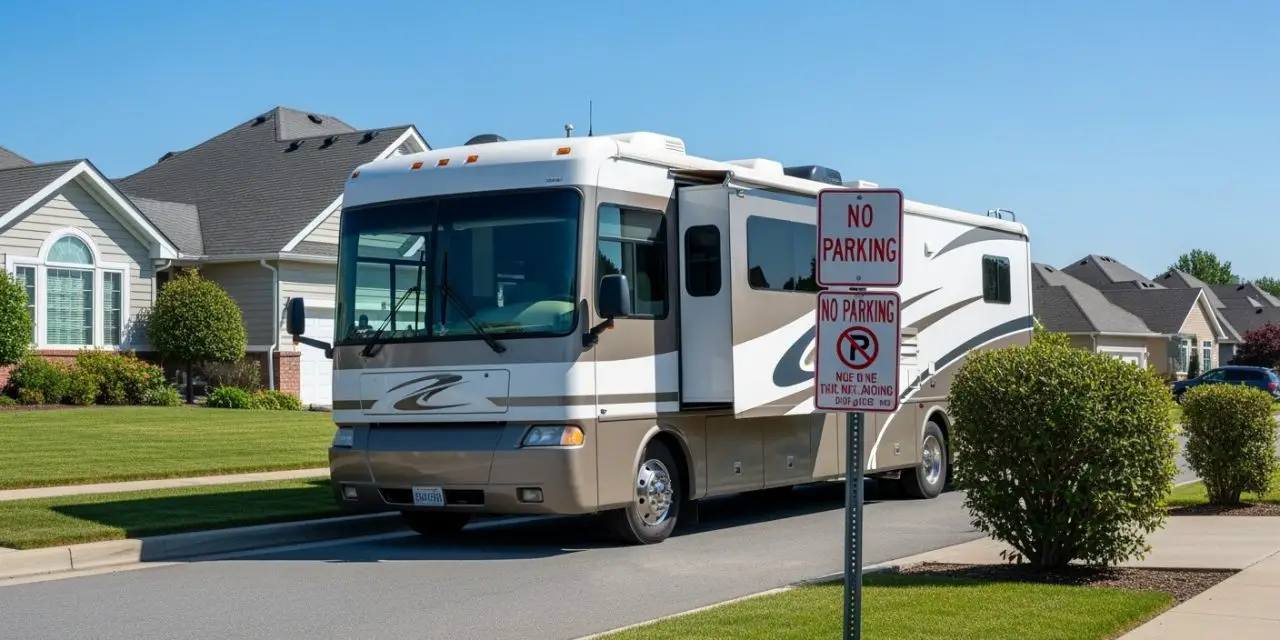
Are you wondering if you can park your RV on the street? This question keeps many RV owners awake at night, and for good reason. With over 11.2 million American households now owning RVs according to recent statistics, street parking has become a hot-button issue.
Cities across America are cracking down on RV street parking with new ordinances, hefty fines, and strict enforcement. From Los Angeles adding bans to 30 more streets in 2024 to Cheyenne passing controversial oversized vehicle restrictions, the rules are changing fast.
The short answer is complicated – it depends on your city, your RV size, and dozens of local regulations that could cost you hundreds of dollars if you get them wrong.
1. The 72-Hour Rule: America’s Most Common RV Street Parking Law
The 72-hour parking limit is the golden rule that governs most American cities. This means your RV cannot sit in the same spot on a public street for more than three consecutive days. Cities like Seattle, Los Angeles, and Greenville, North Carolina strictly enforce this regulation.
Key Statistics: • 93% of cities have some form of 72-hour parking restriction • Average fine ranges from $25 to $250 for first violations
• Seattle processes over 15,000 72-hour violations annually • California Vehicle Code 22651(k) makes this a statewide law • San Diego allows up to 3 consecutive 24-hour permits (72 hours total)
Important Details:
- Moving your RV even one parking space resets the 72-hour clock
- Some cities require you to move at least one block away
- Weekends and holidays still count toward the 72-hour limit
- Street cleaning schedules can override the 72-hour rule
RV owners often think they’re clever rotating their vehicles every few days, but cities are catching on with digital tracking and neighborhood complaints.
2. Size Matters: Length and Height Restrictions That Could Cost You
Most cities don’t treat all RVs equally – size restrictions are everywhere, and they vary dramatically by location. The magic numbers you need to know are 22 feet and 25 feet, as these are the most common cutoff points.
Common Size Limits Across America:
| City | Length Limit | Height Limit | Weight Limit |
|---|---|---|---|
| Chicago | 22 feet | 8 feet | 10,000 lbs |
| Long Beach, CA | 22 feet | 7 feet | 10,000 lbs |
| Rancho Palos Verdes | 22 feet | 8 feet | 10,000 lbs |
| Phoenix | 25 feet | 8.5 feet | No limit |
| Denver | 30 feet | 9 feet | 12,000 lbs |
Critical Facts: • 22-foot limit affects approximately 40% of travel trailers • Class A motorhomes (averaging 35+ feet) are banned in most residential areas • Height restrictions typically range from 7-9 feet • Weight limits often cap at 10,000-12,000 pounds GVWR
Measurement starts from the bumper to the tip of the hitch – don’t forget to include your bike rack or spare tire carrier!
3. The HOA Nightmare: When Your Neighborhood Association Says “No Way”
Homeowners Associations (HOAs) are often stricter than city ordinances when it comes to RV parking. If you live in an HOA community, your street parking dreams might be crushed before they even begin.
Shocking HOA Statistics: • 85% of HOAs have RV parking restrictions • Average HOA fine ranges from $50-$500 per day • Time limits typically range from 24-72 hours maximum • Some HOAs require $25-$100 permits for temporary parking • Florida’s new law (effective July 2024) limits some HOA parking restrictions
Common HOA RV Rules:
- No overnight parking between 10 PM and 6 AM
- Loading/unloading only – typically 2-4 hours maximum
- Permit required for any street parking over 24 hours
- Seasonal restrictions during holidays or events
- Complete bans on vehicles over 20-