
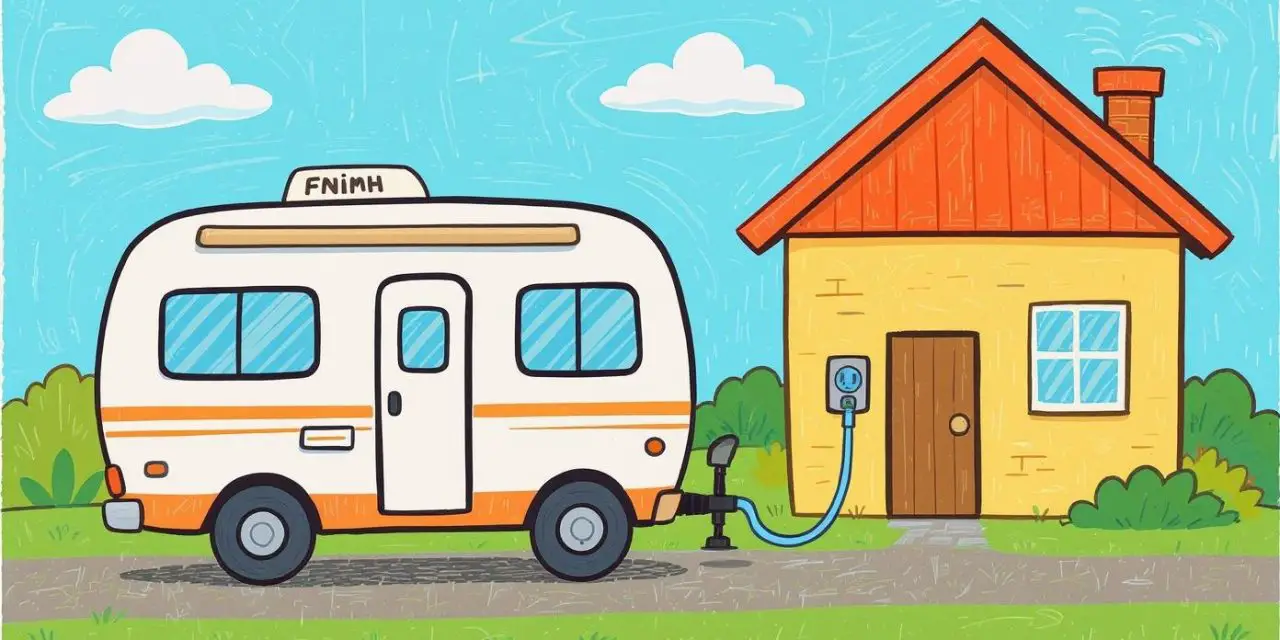
Have you ever wondered can an RV be plugged into a house outlet when you’re preparing for your next camping adventure? This question keeps many RV owners up at night, especially when they’re trying to power up their home-on-wheels before hitting the road.
The short answer is yes, but there’s so much more to this electrical puzzle than meets the eye!
Understanding how to safely connect your RV to your home’s electrical system can save you money, prevent dangerous situations, and ensure your RV is ready for any adventure. Whether you’re a weekend warrior or a full-time RVer, knowing the ins and outs of RV electrical connections is absolutely crucial for your safety and enjoyment.
1. The Truth About RV Power Requirements vs. House Outlets
Most RVs are designed to use either 30-amp or 50-amp electrical systems, which is significantly more powerful than your standard house outlet. A typical home outlet provides only 15-20 amps at 120 volts, giving you between 1,800 to 2,400 watts of power. Compare this to a 30-amp RV system that delivers 3,600 watts (30 amps × 120 volts), and you’ll quickly see the gap. 50-amp RV systems are even more powerful, providing up to 12,000 watts (50 amps × 240 volts × 2 legs).
The statistics are eye-opening: About 70% of RV parks are required to have 30-amp connections, while at least 20% must offer 50-amp service according to electrical codes. This means your RV was likely designed for much more power than your house can safely provide through a standard outlet. The power difference isn’t just about numbers – it’s about what appliances you can actually run.
When you plug your RV into a regular house outlet, you’re essentially putting your electrical system on a strict diet. Your air conditioner alone typically draws 11.5 to 23 amps, which could max out or exceed your house outlet’s capacity. Think of it like trying to fill a swimming pool with a garden hose – it might work, but it’s going to take forever and you’ll be very limited in what else you can do.
The key takeaway here is that while it’s possible to plug your RV into a house outlet, you’ll need to dramatically change how you use electricity in your RV. It’s like switching from a feast to a snack – you can survive, but you’ll need to be very careful about what you consume.
2. Essential Adapters and Equipment You’ll Need
To connect your RV to a house outlet, you’ll need what’s called a “dogbone” adapter. These adapters convert your RV’s 30-amp or 50-amp plug to fit into a standard 15-amp or 20-amp household outlet. A 30-amp to 15-amp adapter typically costs between $15-30, while more heavy-duty versions can run $40-60. The adapter essentially steps down your RV’s power connection to match your home’s electrical capacity.
Quality matters tremendously when selecting adapters. Look for adapters that are UL-listed and weatherproof, as cheap adapters can overheat and cause fires. Professional-grade adapters often include built-in circuit breakers and LED indicators to show when power is flowing safely. Statistics show that electrical fires account for about 13% of RV fires, so investing in quality equipment isn’t just smart – it’s essential for your safety.
You’ll also want to consider getting a surge protector specifically designed for RVs. These devices protect your expensive RV electronics from power spikes and can detect dangerous wiring conditions. A good RV surge protector costs $100-300, but it can save you thousands in damaged appliances. Many RV insurance companies actually recommend surge protectors and may offer discounts for using them.
The installation process is straightforward: plug the adapter into your house outlet, then plug your RV cord into the adapter. However, always check that your house outlet is properly grounded and that the circuit breaker can handle the load. It’s like connecting a fire hose to a drinking fountain – the connection might fit, but you need to be very careful about the flow.
3. What Appliances You Can (and Can’t) Run
When plugged into a house outlet, your appliance usage becomes a careful balancing act. Your RV refrigerator typically draws 2-8 amps, LED lights use about 0.5-2 amps each, and your water pump consumes 4-8 amps. These essential systems can usually run fine on house power. However, your air conditioner is completely off-limits, as it typically requires 11.5-23 amps – potentially more than your entire house outlet can provide.
Here’s a breakdown of typical RV appliance power consumption:
- Microwave: 8-13 amps
- Coffee maker: 8-12 amps
- Hair dryer: 12-15 amps
- Space heater: 7-13 amps
- Converter/charger: 2-8 amps
- TV: 1-5 amps
The golden rule is to never exceed 80% of your circuit’s capacity for continuous loads. On a 15-amp circuit, that means staying under 12 amps, and on a 20-amp circuit, keep it under 16 amps. Most experts recommend using no more than 10 amps total when plugged into a house outlet to maintain a safety margin.
You’ll need to become an electrical detective, constantly monitoring what’s running and what’s not. Many RVers keep a simple chart posted inside their RV showing the amp draw of each appliance. It’s like managing a household budget, but instead of dollars, you’re counting amps.
4. Safety Considerations and Potential Hazards
Safety should be your top priority when connecting your RV to house power. The biggest danger is overloading your home’s electrical circuit, which can cause breakers to trip repeatedly or, worse, create a fire hazard. Never use an extension cord to reach your RV – the voltage drop over long distances can damage your RV’s electrical system and create dangerous conditions.
Always inspect your house outlet before plugging in. Look for burn marks, loose connections, or damaged outlets. About 25% of electrical fires start at outlets, so this visual inspection could literally save your life. If your outlet feels warm to the touch while your RV is connected, disconnect immediately and have an electrician inspect the wiring.
Ground Fault Circuit Inte