
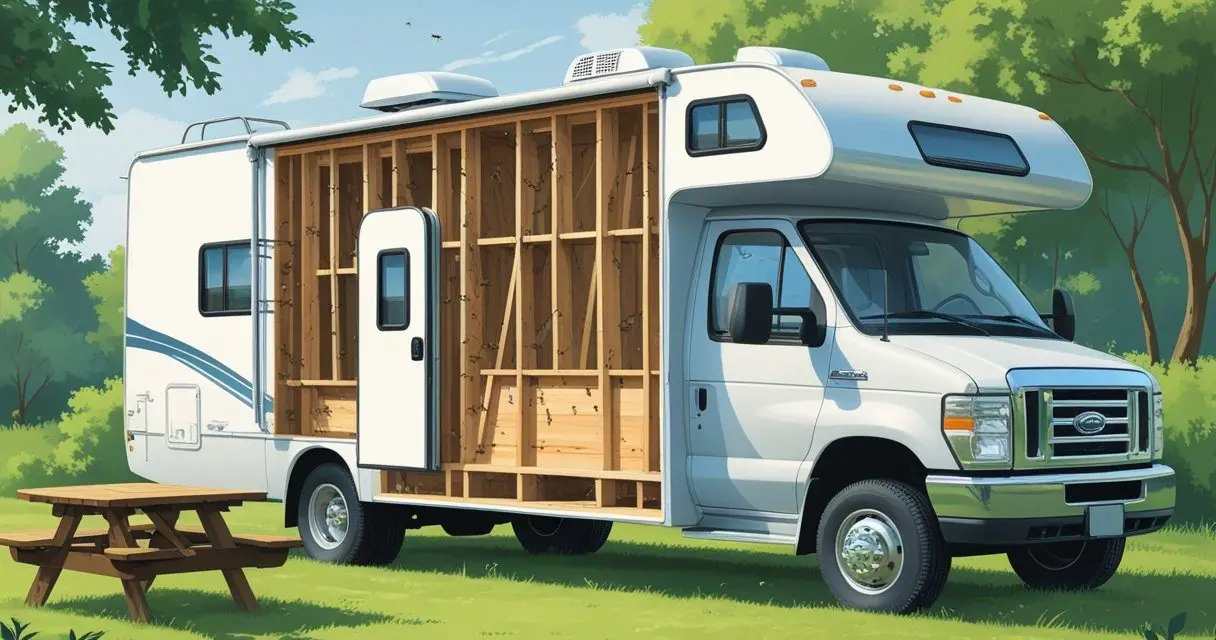
Termites aren’t just a problem for houses; your RV can also be at risk. Even though RVs are built differently than regular homes, they often contain enough wood in their floors, walls, or frames to attract these pests.
If you own or use an RV, it’s important to know that termites can infest and damage your vehicle just like they do with traditional homes. Understanding this helps you better protect your investment and avoid expensive repairs down the road.
1) Yes, RVs can get termites despite less wood in modern builds.
You might think that because modern RVs use less wood, termites won’t be a problem. But termites can still find their way into your RV. Even newer models often have wooden cabinets, floors, or parts of the framework.
Termites are drawn to wood for food, and they don’t really care whether it’s inside a big house or a motorhome. If your RV has any wood, it’s possible for termites to start an infestation.
Some termites can travel up from the ground using mud tubes, climbing support pillars and reaching wood in your RV or attached structures. This means parking your RV in certain environments, like grassy or wooded areas, could increase the risk.
Manufactured wood and pressboard are also not safe from termites. They can chew through these materials just as easily as natural wood.
It doesn’t matter if your RV’s exterior is made of fiberglass, aluminum, or something else—if there’s wood inside, termites could target it. Regularly checking wooden areas in your RV might help you catch any early signs before things get serious.
2) Termites target wooden parts of your RV like cabinets and frames.
Even if your RV looks like it’s mostly metal or fiberglass on the outside, there’s still a good chance it has wood inside. Cabinets, floors, wall framing, and storage compartments often use wood or manufactured wood. Termites are drawn to these areas because that’s what they eat.
You might not notice any issues at first since termites usually hide inside wood, making their damage hard to spot. If you look closely, you might see small holes, piles of what looks like sawdust, or even tiny mud tubes leading to the wood.
Don’t forget to check underneath your RV as well, especially if you’re parked for a while. The underside might have exposed plywood or structure that termites can get into from the ground. It’s a smart idea to do a quick check of wood cabinets, closets, and corners from time to time.
If you keep your RV in a humid area, pay extra attention. Moisture and wood together are attractive to termites. Try to keep things dry inside and repair any leaks to make your RV less appealing to these pests.
3) Look for mud tubes on the exterior walls or under the RV.
One of the most obvious signs that termites might be in or around your RV is the presence of mud tubes. These are small, pencil-sized tunnels made from soil, wood particles, and termite saliva.
Mud tubes are usually built by subterranean termites as highways between their colony and any wood they’re eating. On an RV, you might spot these tubes around the tires, along exterior walls, or underneath the chassis. They can even show up near wheel wells or under steps.
Termites use the tubes to protect themselves while traveling between their nest and food sources. You should pay extra attention to spots where wooden parts of your RV meet the ground or are hard to see, like underbelly compartments.
If you see these mud tubes, it’s a good idea to inspect other parts of your RV for further signs of termites. Catching mud tubes early can help prevent more serious damage. Don’t just brush them away—take it as a warning that termites could be active nearby.
4) Swarmers or winged termites near lights indicate infestation.
If you spot winged termites, also called swarmers, hovering around lights or windows in your RV, it’s a sign you shouldn’t ignore. These termites are actually looking for places to start new colonies, and they’re drawn to light sources at night.
Seeing swarmers indoors is a red flag. It means there’s likely an active termite colony nearby, possibly even inside your vehicle. Swarmers don’t last long out in the open, so finding dead ones near windowsills or light fixtures is another possible warning sign.
Even if you just see a few, it’s worth a closer look because they usually don’t travel far from their nest. You might want to inspect for other signs of termites like mud tubes, damaged wood, or hollow sounds when you tap structures.
If you do see winged termites in your RV, consider reaching out to a pest professional. Early attention can help prevent further damage and keep your RV in good shape.
5) Small piles of white termite droppings are a major red flag.
If you ever spot tiny, pale piles that look a bit like sawdust or ground-up pepper inside your RV, pay close attention. These small mounds are actually termite droppings, also called frass. Termites push this waste out of their tunnels, and it tends to collect right below where they’re active.
It’s easy to brush these off as ordinary dust or dirt, but finding unexplained piles like this near wooden parts is a warning sign. Drywood termites are the most likely culprits in RVs, and their frass often has a lighter color—sometimes off-white or tan—depending on what they’ve been chewing.
You’ll usually find termite droppings near window sills, corners, or under furniture, especially close to any damaged wood. Don’t ignore these little piles, because they mean termites are quietly working behind the scenes. If you see something like this, it’s a good idea to take action fast and check for more termite activity or hire a professional.