
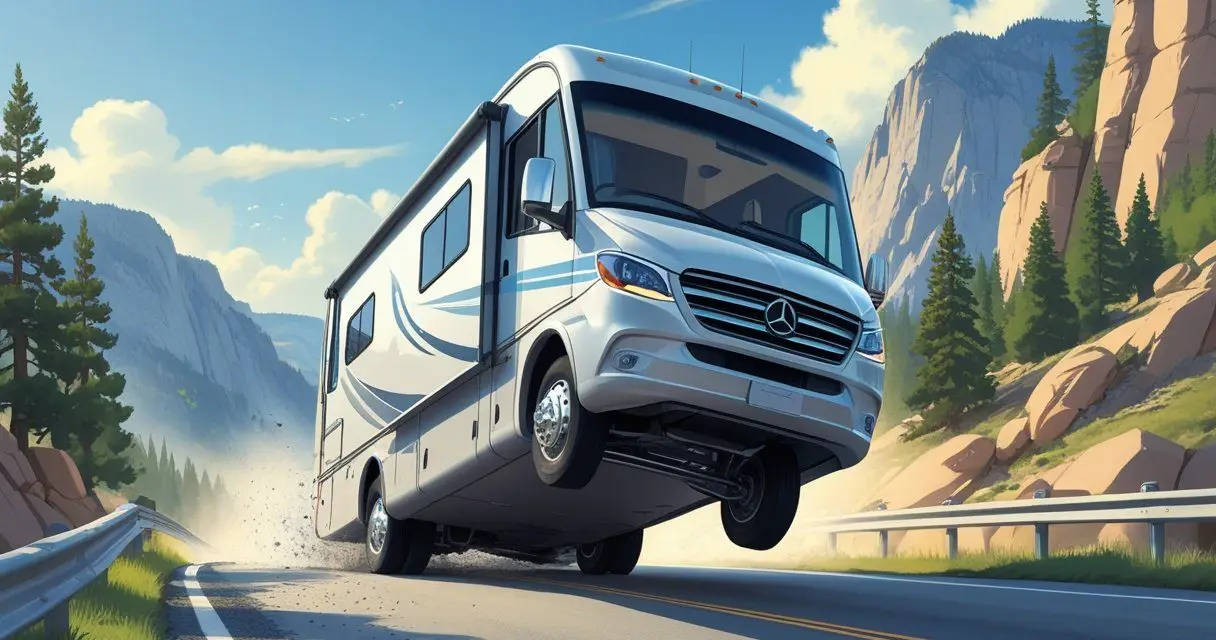
RVs are big, bold, and built for adventure—but they’re not immune to gravity. Whether you’re a weekend warrior or a full-time road tripper, knowing what can make your RV tip is crucial.
Did you know that over 70,000 people are involved in RV accidents each year in the U.S.? Most RV trips are safe, but wind, weight, and wild turns can turn your dream vacation into a wobbly nightmare.
In this article, we’ll break down the real risks, share surprising stats, and give you easy tips to keep your RV upright.
Let’s roll into the facts and answer the big question: Can an RV tip over?
1. The Real Deal: Can an RV Tip Over?
Yes, an RV can tip over! It’s rare, but it happens—especially in high winds or during sharp turns. RVs have a high center of gravity, which makes them more likely to roll over than regular cars.
- Wind speeds over 34 mph can make a travel trailer start to slide, and at 74 mph, even a big motorhome can flip.
- Over 75,000 RV accidents happen every year, with many involving rollovers or tip-overs.
- Most rollovers happen when the RV is moving, not parked.
So, if you ever wanted to test your RV’s gymnastics skills, just remember: judges don’t score high for accidental somersaults.
2. Wind: The Invisible RV Flipper
High winds are the arch-nemesis of RVs. Even parked, strong gusts can make your RV rock, but it’s while driving that things get risky.
- Sidewinds as low as 35 mph can slide an RV on pavement.
- A 27-foot travel trailer might flip at just 34 mph wind gusts.
- The taller and lighter your RV, the more it acts like a giant sail.
Windy day tip: If the trees look like they’re breakdancing, it’s time to pull over. Unless you want your RV to try out for the next “Dancing with the Stars.”
3. Speeding: The Fast Track to Tipping
Going fast in an RV isn’t just about burning extra gas—it’s a recipe for disaster.
- RVs are more likely to tip if you drive over 55 mph, especially in turns or bad weather.
- Stopping distances are much longer, and sudden swerves can send you rolling.
- Most experts recommend keeping your speed under 60 mph.
Remember: If you want to feel the wind in your hair, open a window—not the throttle.