
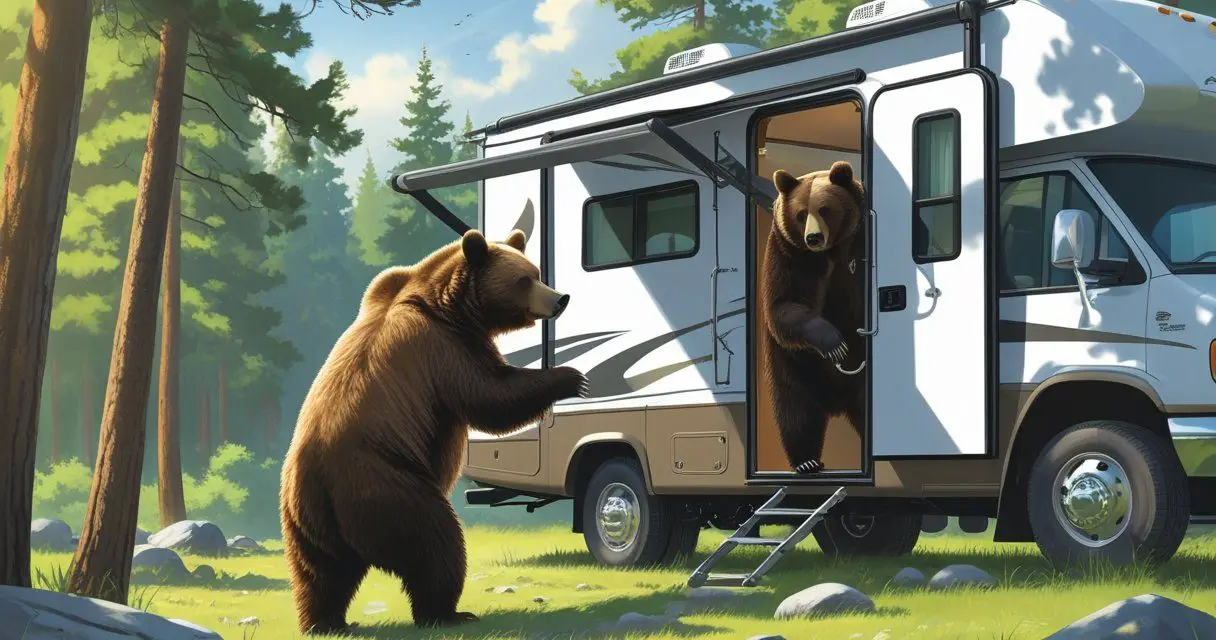
RV camping in bear country offers amazing outdoor experiences, but it raises important safety questions. Many campers wonder if their RV provides enough protection from curious or hungry bears. Yes, bears can potentially break into RVs, especially if they smell food or are determined enough to force entry through doors, windows, or vents.
Recent incidents show that bears have successfully entered RVs and caused significant damage. These powerful animals can tear through screens, break windows, and even damage doors when they detect food smells. The key factor is usually food – bears have incredible noses and can smell meals from far away.
Understanding bear behavior and taking the right steps can help RV campers stay safe. Learning how to bear-proof an RV, where to store food properly, and what to do during bear encounters makes camping much safer. Smart preparation lets families enjoy bear country while reducing risks.
Key Takeaways
- Bears can break into RVs through doors, windows, and vents when attracted by food smells
- Proper food storage and bear-proofing techniques greatly reduce the risk of bear encounters
- Knowing how to respond to bears and camping safely in bear areas helps protect campers and wildlife
Can Bears Break Into an RV?
Bears can and do break into RVs, with documented incidents showing they can damage doors, windows, and even tear through RV walls. The success depends on the bear’s determination, the RV’s construction, and whether food smells attract them.
Bear Strength and Behavior
Black bears possess incredible strength that makes RV break-ins possible. They can exert over 400 pounds of pressure per square inch with their jaws. Their claws are sharp and strong enough to tear through aluminum siding.
Bears are naturally curious animals. They investigate new smells and sounds in their territory. Food odors from cooking or stored groceries can draw them to RVs from miles away.
When bears smell food, they become very persistent. They will try multiple entry points including doors, windows, and roof vents. A hungry bear won’t give up easily once it detects food inside.
Common bear behaviors around RVs:
- Clawing at doors and windows
- Standing on hind legs to reach higher entry points
- Using their body weight to push against weak spots
- Biting and tearing at screens and soft materials
Differences Between RV Types
Travel trailers are most vulnerable to bear encounters. Their lightweight aluminum construction offers little resistance to determined bears. Side walls can be torn open relatively easily.
Motorhomes provide better protection due to thicker walls and stronger construction. Class A motorhomes are the most secure because of their solid build quality.
Pop-up campers are extremely vulnerable. Their canvas walls and flimsy zippers provide almost no protection against bears. These should never be used in active bear country.
Fifth wheels fall somewhere in the middle. They’re sturdier than travel trailers but still have weak points bears can exploit.
The age of the RV matters too. Older units often have weaker seals and worn door frames that bears can more easily breach.
Documented Bear Incidents With RVs
Recent bear attacks at Lake Tahoe show how serious RV break-ins can be. A black bear broke into a trailer and injured a camper at Eagle Point Campground. The bear was later euthanized due to its aggressive behavior toward humans.
In Florida, a deadly bear attack occurred when a bear dragged a victim from a ransacked camper. The 911 caller described the camper as “destroyed” by the bear’s actions.
Montana has seen multiple bear encounters with RVs in recent years. Park rangers report that bears learn to associate RVs with easy food sources once they successfully break in.
Statistics from park services show:
- Most RV break-ins happen at night
- Food storage violations cause 90% of incidents
- Bears often return to the same campgrounds after successful break-ins
- Repeat offender bears are typically euthanized
Yosemite National Park tracks hundreds of bear encounters annually. Many involve RVs where campers failed to properly secure food items.
Why Bears Approach RVs
Bears are naturally drawn to RVs because of their incredible sense of smell and the food sources these vehicles often contain. Understanding what attracts bears and common encounter scenarios helps RV owners stay safe in bear country.
Bears’ Acute Sense of Smell
Bears possess an extraordinary sense of smell that drives them toward RVs. Their noses contain vastly more scent receptors than humans, making their sense of smell over 300 times stronger than ours.
A bear’s sense of smell is even seven times more sensitive than a bloodhound. They can detect food odors from miles away, including scents that humans cannot even notice.
The part of a bear’s brain that processes smell is five times larger than in humans. This means they can identify specific food sources inside RVs from great distances.
Grizzly bears can smell carrion up to 20 miles upwind. They can also detect underwater carcasses, showing just how powerful their noses are.
For RV campers, this means bears can smell food, toiletries, and even cooking odors that have soaked into clothing or furniture. No amount of packaging or storage can hide these scents from a bear’s nose.
Attractants Like Food and Garbage
Food represents the main reason bears approach RVs. Bears spend their entire active season eating to prepare for winter hibernation.
Common food attractants include:
- Leftover meals and snacks
- Pet food stored inside or outside
- Cooking grease and food residue
- Scented toiletries and personal care items
- Garbage with food scraps
Bears are omnivores and will eat anything they can find. They view RVs as potential food sources, especially when they smell interesting scents.