
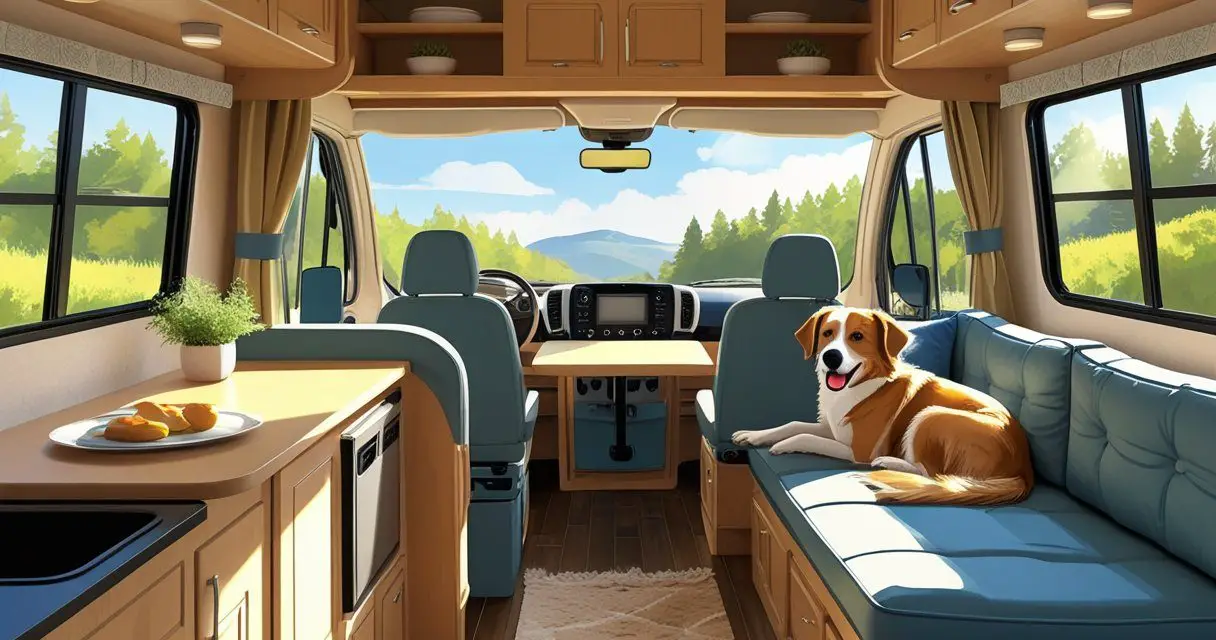
Many dog owners dream of hitting the road with their furry companions, but wonder if RV living is practical for pets. Yes, dogs can absolutely live in an RV comfortably with proper preparation and the right approach.
Thousands of full-time RVers successfully travel with their dogs, creating mobile homes that work for both humans and pets.
The key to successful RV living with dogs lies in understanding their needs and making smart adjustments to your travel routine. Dogs need their own space, consistent training, and gradual adjustment to RV life.
With the right setup, your four-legged family member can thrive on the road just as well as they do in a traditional home.
Whether you’re planning weekend camping trips or full-time RV living, traveling with your dog opens up new adventures while keeping your family together. From choosing the right RV setup to managing daily routines and safety considerations, successful RV living with dogs requires planning but offers incredible rewards for both you and your pet.
Key Takeaways
- Dogs can live comfortably in RVs with proper preparation, training, and gradual adjustment to mobile living
- Essential preparations include vet checkups, safety gear, climate control planning, and creating dedicated spaces for your dog
- Successful RV pet ownership requires following safety rules, maintaining routines, and being considerate of other travelers
Can Dogs Live in an RV Comfortably?
Dogs can adapt well to RV life when given proper space, time to adjust, and consideration for their individual personality traits. Success depends on creating dedicated areas for your pet and understanding how your dog’s behavior fits with the confined mobile lifestyle.
Adjusting Dogs to RV Life
Most dogs need time to get used to RV living. The small space and constant movement can stress some pets at first.
Start with short trips before going full-time. This helps your dog get comfortable with the RV’s sounds, smells, and motion.
Some dogs adapt in days while others need weeks.
Create familiar routines in your new space. Keep feeding times, walks, and play sessions consistent.
Dogs feel safer when they know what to expect.
Bring comfort items from home:
- Favorite blanket or bed
- Regular toys
- Food and water bowls
- Familiar-smelling items
The changing environment outside your RV can confuse dogs. New sights, sounds, and smells happen daily.
Give your dog time to sniff and explore each new location safely.
Some dogs get motion sickness during travel. Talk to your vet about medications if this happens.
Most dogs overcome this issue with time and practice.
Dog Space and Comfort Considerations
Your dog needs their own designated area in the RV. This space should be comfortable and safe during travel and rest times.
Essential space requirements:
- Sleeping area with a bed or blanket
- Food and water station
- Toy storage bin
- Safe spot during travel
Small dogs need less room but still benefit from having their own space. Large dogs require more planning for comfort in tight quarters.
Install paw-resistant screens on doors and windows. Regular screens tear easily when dogs scratch or push against them.
This prevents escapes and keeps bugs out.
Consider door ramps or steps for easy entry and exit. This helps older dogs or those with joint problems get in and out safely.
Climate control is crucial for dog comfort. Dogs can overheat quickly in small spaces.
Run air conditioning when hot and heating when cold. Never leave dogs in extreme temperatures without climate control.
Set up feeding stations that won’t tip over while driving. Raised bowls or non-slip mats prevent spills and messes.
Dog Behavior and Personality Fit
Some dog personalities work better for RV living than others. Consider your dog’s traits before making the switch.
Dogs that do well in RVs:
- Calm, adaptable personalities
- Dogs that like being close to owners
- Well-trained dogs that follow commands
- Dogs comfortable with new environments
Dogs that may struggle:
- High-energy breeds needing lots of space
- Dogs with severe anxiety issues
- Aggressive dogs that don’t socialize well
- Dogs that bark excessively at new sounds
Size matters less than personality. A well-behaved large dog often does better than a nervous small dog.
Training becomes more important in small spaces. Your dog must respond to commands quickly.
Basic commands like “stay,” “down,” and “quiet” prevent problems.
Dogs that follow their noses can get lost easily in new areas. Use exercise pens or long leashes to keep them safe while exploring.
Boredom can cause behavior problems in RVs. Provide mental stimulation with puzzle toys, chew toys, and interactive games.
Bored dogs may chew furniture or bark excessively.
Social dogs need interaction with other dogs and people. Plan stops at dog parks or pet-friendly areas for socialization.
Essential Preparations for RV Living With Dogs
Success in RV living with dogs depends on having the right equipment, safety systems, and health preparations. These three areas form the foundation for a comfortable and secure mobile lifestyle with your pet.
Must-Have RV Accessories for Dogs
Climate Control Equipment is your first priority. Install a thermostat-controlled ceiling vent fan with rain sensors.
These fans automatically maintain temperature when you’re away. Air conditioning becomes essential during hot weather.
Dogs can’t sweat like humans and overheat quickly in metal RVs.
Space Management Tools help maximize your limited square footage. A portable dog fence creates a safe outdoor area near your RV.
These fences fold flat for storage and set up quickly at each campsite.
Exercise pens work well for smaller dogs or as indoor barriers. They prevent your dog from accessing dangerous areas while driving.
Storage Solutions keep dog supplies organized. Install a dedicated toy bin that your dog can access.
Use airtight containers for dog food to prevent pests and maintain freshness.
A leash hook near the door keeps walking gear handy. Under-bed storage works well for bulky items like dog beds and blankets.
Traveling With Dogs: Safety and Security
Vehicle Safety requires proper restraint systems. Use crash-tested dog harnesses or secured carriers while driving.
Never let dogs roam freely in a moving RV.
Install safety gates to block access to the driver’s area. This prevents distractions and keeps your dog secure during sudden stops.
Temperature Monitoring prevents heat-related emergencies. Never leave dogs in an RV without climate control running.
Metal RVs heat up much faster than regular homes.
Use remote temperature monitors to check conditions from outside your RV. Set up automatic alerts if temperatures become dangerous.
Emergency Preparedness includes backup plans for equipment failure. Carry battery-powered fans for power outages.
Know the locations of 24-hour veterinary clinics along your route.