
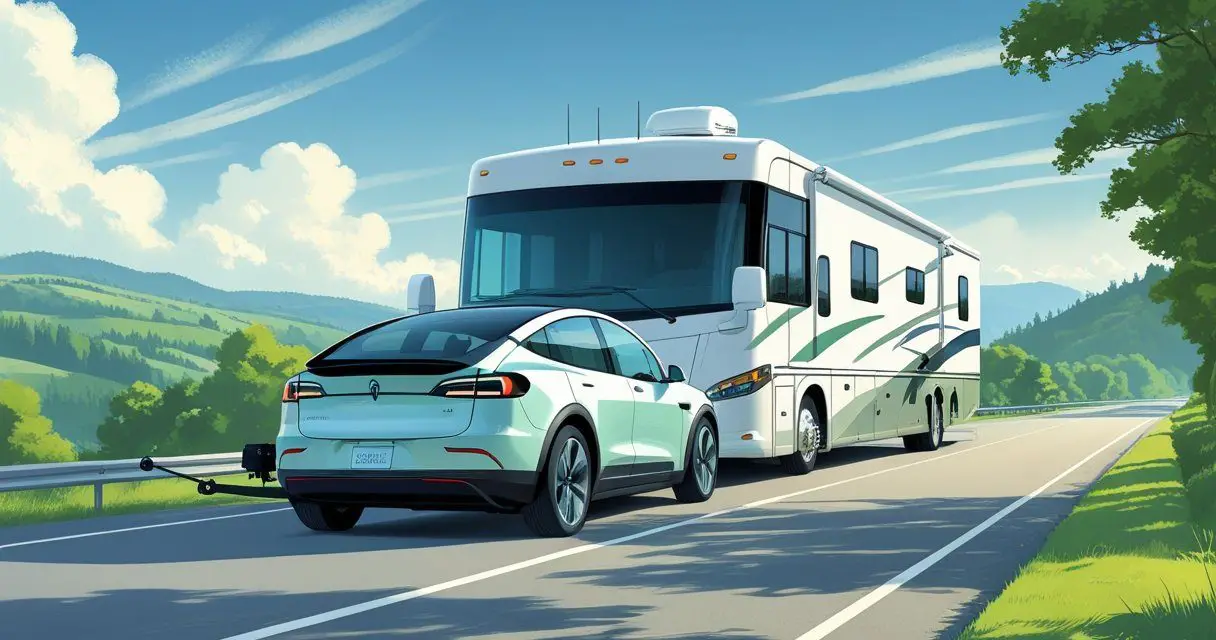
Many RV owners wonder if they can bring their electric car along on their next adventure. The rise of electric vehicles has created new questions about towing methods and safety.
Most electric cars cannot be flat towed behind an RV due to their drivetrain design, which can cause serious damage to the electric motors when all four wheels are on the ground. Unlike traditional gas vehicles, electric cars have motors directly connected to the wheels that keep spinning even when the car is in neutral.
This creates problems that don’t exist with regular cars. You still have options for bringing your electric car on RV trips.
Understanding the different towing methods and their risks will help you make the right choice for your situation. New developments in electric vehicle technology may also change what’s possible in the future.
Key Takeaways
- Electric vehicles cannot be safely flat towed because their motors stay connected to the wheels even in neutral
- Trailer towing with all four wheels off the ground is the safest method for transporting electric cars behind RVs
- Future electric vehicle designs may include features that allow for safe flat towing with charging capabilities
Understanding Towing Methods for Electric Cars
Electric vehicles require different towing approaches than gas cars due to their unique drivetrains and electrical systems. Most electric cars cannot be flat towed safely, making dolly or trailer towing the preferred methods.
Flat Towing vs. Dolly and Trailer Towing
Flat towing means pulling a vehicle with all four wheels on the ground. This is the easiest method for RV owners since you don’t need extra equipment to store.
Most electric vehicles cannot be flat towed. The electric motor stays connected to the wheels even when the car is in neutral.
This causes the motor to spin while being towed, which can damage expensive parts. Dolly towing lifts the front wheels off the ground.
You place the front wheels on a two-wheeled trailer. This method works for some electric cars but not all.
Trailer towing puts the entire electric car on a flatbed trailer. This is the safest method for electric vehicles.
All four wheels are off the ground, so no parts get damaged. Here’s how each method affects your electric car:
- Flat towing: High risk of motor damage
- Dolly towing: Medium risk, depends on car model
- Trailer towing: No risk to vehicle components
How Electric Vehicles Differ from Gas Cars When Towed
Electric cars have motors directly connected to the wheels. Gas cars have transmissions that can disconnect the engine from the wheels when in neutral.
When you put an electric car in neutral, power stops flowing to the motor. But the motor doesn’t disconnect from the wheels like a gas engine does.
The wheels keep turning the motor while being towed. Electric vehicles use regenerative braking systems.
These systems try to charge the battery when the wheels turn. During towing, this can create electrical problems or damage the charging system.
Gas cars with manual transmissions can often be flat towed safely. Their transmissions separate the engine from the wheels completely.
Electric cars don’t have this feature. The battery management system in electric cars also monitors wheel movement.
Unexpected wheel rotation during towing can confuse these systems and cause error codes.
Impact of Towing Methods on Electric Vehicle Components
Flat towing puts the most stress on electric vehicle parts. The spinning motor creates heat and wear without proper cooling.
The motor wasn’t designed to spin freely for long periods. The inverter that controls motor speed can also get damaged.
It may try to manage a motor that’s spinning without its control. This can cause electrical failures.
Battery systems face risks too. The regenerative braking system might try to charge the battery while towing.
This unexpected charging can damage battery cells or the charging system. Dolly towing reduces risks if done correctly.
You must check which wheels connect to the motor in your specific electric car model. Front-wheel drive electric cars work better with front wheels on the dolly.
Trailer towing eliminates all these risks. No vehicle components move during transport.
The electric car sits completely still on the trailer. This method costs more but protects your investment.
Always check your electric car’s manual before towing. Each model has different requirements and restrictions for safe towing.
Challenges and Risks of Towing Electric Cars Behind RVs
Electric vehicles face unique obstacles when towed behind motorhomes due to their drivetrain design and lack of true neutral gears. These technical limitations create serious risks for both the vehicle and your wallet.
Transmission and Drivetrain Limitations
Electric vehicles don’t have traditional transmissions like gas cars. Instead, their electric motors connect directly to the wheels.
When you put an electric car in “neutral,” the motor doesn’t disconnect from the wheels. Power just stops flowing to the motor, but the connection remains.
This creates a major problem during flat towing. As your motorhome pulls the electric vehicle, the wheels spin and force the motor to rotate.
This constant spinning without proper lubrication can damage the motor quickly. Key differences from gas vehicles:
- No transmission disconnect in neutral
- Motors directly connected to wheels
- Lack of mechanical separation between engine and drivetrain
Most electric vehicles use permanent magnet motors. These motors always rotate when the wheels turn, making flat towing impossible without damage.
Manufacturer Guidelines and Warranty Concerns
Car manufacturers strongly advise against flat towing electric vehicles. Most owner’s manuals clearly state that four-wheels-down towing will void your warranty.