
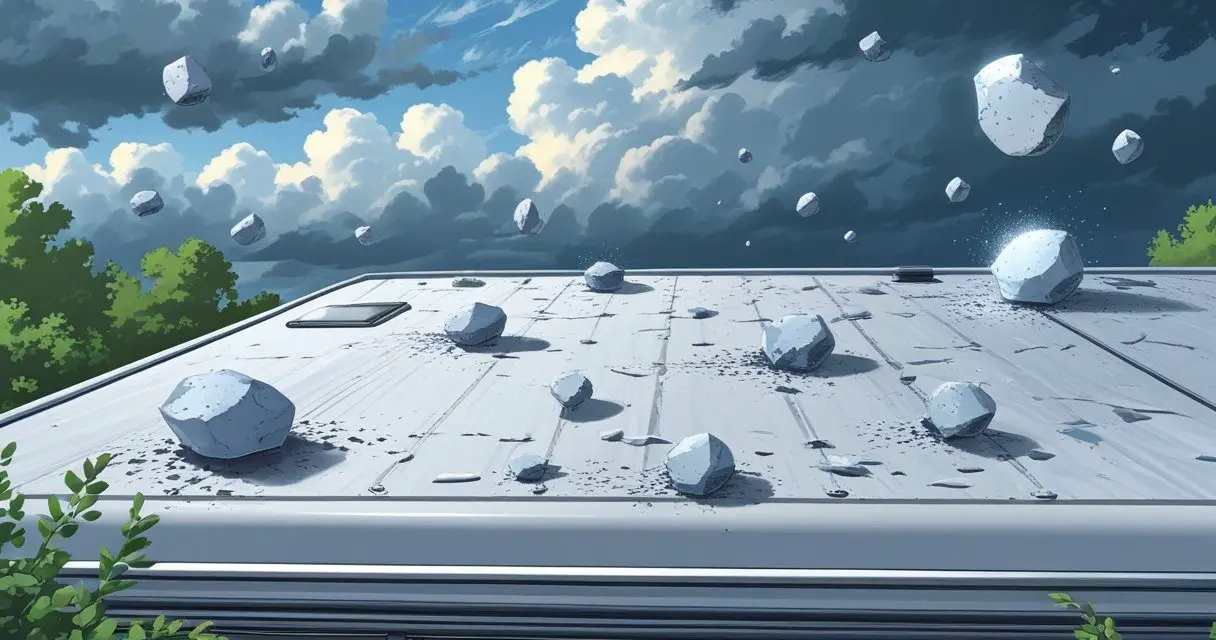
Yes, hail can absolutely damage your RV roof, and the damage can be both costly and dangerous if left untreated. Hailstones can create dents, cracks, and even holes in your RV’s roof depending on their size and the force of impact. The damage often goes beyond what you can see on the surface.
RV roofs are particularly vulnerable to hail because they’re made from materials like rubber, fiberglass, and aluminum that can be easily damaged by ice balls falling from the sky. Unlike car dents that can often be popped out, RV roof damage usually requires more complex repairs since these roofs have multiple layers including insulation and wood underneath.
Understanding how to spot hail damage early and knowing your repair options can save you thousands of dollars in water damage repairs. This guide will walk you through everything you need to know about protecting your RV from hail and dealing with damage when it happens.
Key Takeaways
- Hail creates dents, cracks, and holes in RV roofs that can lead to expensive water damage if not repaired quickly
- Different roof materials like rubber and fiberglass have varying levels of vulnerability to hail damage
- Prompt repair and proper insurance coverage are essential for protecting your investment from long-term consequences
Understanding Hail Damage to RV Roofs
Hail can cause serious damage to RV roofs depending on the size of the hailstones and the materials used in your roof. Different roofing materials react differently to hail impact, and damage can range from small dents to complete punctures that cause immediate leaks.
How Hail Impacts Different RV Roof Materials
Rubber roofs are the most common type on RVs today. EPDM and TPO rubber membranes can handle small hail well. However, larger hailstones can puncture these materials easily.
The rubber stretches when hit but may not bounce back completely. This creates weak spots that can tear later.
Fiberglass roofs are harder than rubber but more brittle. Small hail often bounces off without damage. Large hailstones can crack the surface or create spider web patterns.
These cracks let water seep through over time. Temperature changes make the cracks bigger.
Aluminum roofs dent easily from hail of any size. The dents rarely cause immediate leaks. But they can collect water and debris.
Deep dents may stretch the metal thin. This makes it more likely to develop holes later.
Metal roofs like steel handle hail better than aluminum. They still dent but usually don’t puncture. Paint damage is common and can lead to rust.
Common Signs of Hail Damage on RVs
Visible dents are the most obvious sign of hail damage to rv roofs. Look for round or oval-shaped depressions across the roof surface.
Check all roof accessories too. Vents, air conditioners, and skylights often show damage first.
Cracks or tears in rubber roofing appear as dark lines or splits. These may be hard to see at first. They often show up better when the roof is wet.
Granule loss on any textured roof surfaces indicates hail impact. You might find small pieces of roofing material on the ground around your RV.
Water stains inside your RV point to roof damage. Check ceilings and walls for brown spots or soft areas. These signs mean water is already getting through.
Damaged seals around roof fixtures are common after hailstorms. The sealant may be cracked, missing, or pulled away from vents and other openings.
Types of Roof Damage Caused by Hail
Surface damage includes dents, scratches, and small cracks that don’t go all the way through. This type of damage may not leak right away. But it weakens the roof and can cause problems later.
Puncture damage happens when large hail breaks completely through the roof. This causes immediate leaks and needs fast repair. Water damage to the inside of your RV starts quickly.
Membrane damage affects the waterproof layer of your roof. Even small holes in this layer let water through. The damage may be tiny and hard to find.
Structural damage occurs when very large hail hits hard enough to damage the roof deck underneath. This type of damage is serious and expensive to fix. It can affect the strength of your entire roof system.
Seal damage around roof fixtures is very common after hailstorms. Broken seals let water in even if the main roof surface is fine. This damage is often overlooked but causes major problems.
RV Roof Materials and Susceptibility to Hail
Different RV roof materials respond uniquely to hail impact, with some showing immediate visible damage while others develop hidden problems over time. Understanding how rubber, fiberglass, and TPO roofs handle hailstorms helps you assess damage and plan repairs.
Rubber Roof Vulnerability and Granule Loss
Rubber roofs made from EPDM material are among the most vulnerable to hail damage. The soft rubber surface dents easily when struck by even small hailstones.
Granule Loss Patterns:
- Small hail (pea-sized) removes protective granules
- Medium hail creates visible dents and tears
- Large hail can puncture the membrane completely
The granules on rubber roofs protect against UV rays and weathering. When hail removes these granules, your roof becomes more vulnerable to sun damage and cracking.
Dents in rubber roofs often appear minor at first. However, these dents collect water and debris over time. The constant pooling weakens the rubber and leads to cracks.
Common Damage Signs:
- Exposed black rubber where granules are missing
- Small tears around the impact points
- Indentations that hold standing water
Fiberglass Roof Cracking and Fractures
Fiberglass roofs handle small hail better than rubber but suffer significant damage from larger stones. The rigid material tends to crack rather than dent when struck.
Hailstones create stress fractures that may not be visible immediately. These hairline cracks expand with temperature changes and vehicle movement. Water seeps through these cracks and damages the wood underneath.