
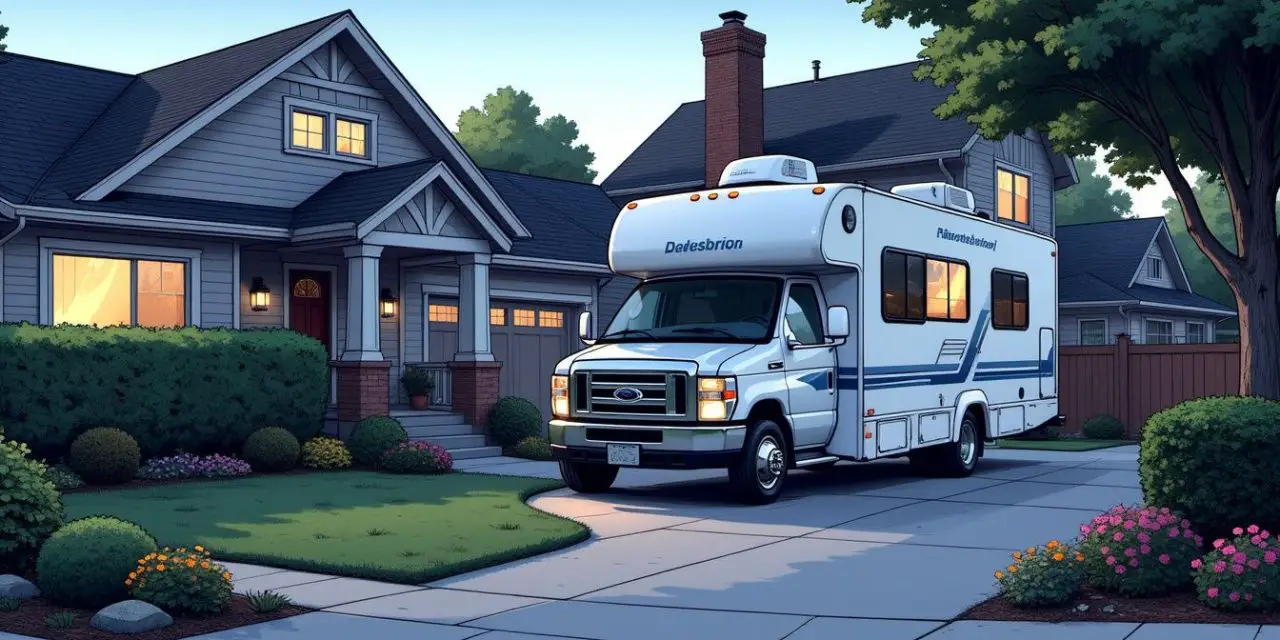
Thinking about parking your RV in your driveway? Local zoning laws and HOA rules often have strict guidelines. This guide breaks down the regulations, restrictions, and smart tips for hassle-free parking.
Keep reading to learn how to avoid fines and neighbor complaints.
Regulations for Parking an RV in Your Driveway
Local zoning laws often limit RV parking in driveways—some ban it outright, while others allow short-term stays. Check your HOA rules too, as many restrict RV size or require permits for extended parking.
Driveway surfaces must support the vehicle’s weight, and setback rules may force you to park a certain distance from sidewalks or property lines. Always verify local codes before settling on a spot.
Zoning laws and residential property limits
Zoning laws control where you can park an RV on residential property. Urban areas often have tighter rules than rural ones. Some cities require RVs to stay behind the front of the house and on paved surfaces like concrete or asphalt.
Sacramento County allows RV parking if the vehicle is operational and registered to the homeowner.
Rules vary by location. Contra Costa County demands boats and RVs be 90% hidden from public view. In Solano County, driveway parking is fine as long as the RV doesn’t block street traffic.
Elk Grove has strict spacing rules—RVs must sit 20 feet from sidewalks and 12.5 feet from corner property lines.
Local zoning laws aren’t just red tape—they’re neighborhood peacekeepers.
Homeowners associations add another layer of restrictions. Check their guidelines next.
Homeowners Association (HOA) rules
HOA rules can make or break your plans to park an RV in your driveway. Many HOAs ban visible RV parking in front or side yards. Violations may lead to warnings, fines, or even forced relocation.
Some associations allow short-term parking for trip prep—but long-term storage is usually off-limits.
HOA rules often go beyond local zoning laws. They might require RVs to stay hidden behind fences or stored in rear yards. Temporary use permits could be needed for exceptions. Shared driveways must follow both HOA and zoning rules, so check agreements with neighbors first.
Ignoring these rules risks citations or legal action.
Time restrictions and overnight parking guidelines
Many cities set strict limits on how long you can park an RV in your driveway or on the street. Sacramento, for example, bans driveway storage entirely and caps street parking at 72 hours.
Fontana allows oversized vehicles like RVs to park for 72 hours per permit, with a max of six permits per month.
Some areas require RVs to stay hitched to a tow vehicle if parked on the street—Sacramento County enforces this rule. Broken-down RVs may get a short grace period, like Fontana’s 8-hour emergency window.
Always check local zoning laws and homeowners association (HOA) rules before settling in. Moving on, size and height limits also play a big role in parking restrictions.
Common Restrictions to Consider
Local zoning laws may limit RV size or require setbacks from property lines. Some areas also ban extended stays due to neighborhood appearance rules.
Check if your HOA enforces rules on outdoor storage or utility connections for parked vehicles.
Size and height limitations
Parking your recreational vehicle at home? Check local rules first—many areas enforce strict size limits on motorhomes campers travel trailers stored outdoors In Alameda County California driveways cannot hold rigs wider than thirty feet Overhead power grids nearby trees also demand clearance so taller units risk violating safety codes
Some cities like Elk Grove ban oversized rigs blocking sightlines unless properties span two acres Fontana allows box trailers without extra permits provided both license plates show up properly Always measure before settling into long term stays near curbs sidewalks
Distance from property lines and sidewalks
Beyond size limits—where your recreational vehicle sits matters too—many cities enforce strict setback rules…
Most towns require RVs parked on driveways stay five-to-ten feet back from curbs—sidewalks included—to keep paths clear… Elk Grove takes this further; their law says motor homes must sit twenty feet away if near pedestrian walkways…
Corners have tighter limits there too—just twelve-and-a-half feet off lot edges helps drivers see around them safely… Some areas like Fontana ban rigs hanging over public pathways entirely…
Others demand units tuck behind house fronts before counting as legal placements… And forget squeezing close beside gas meters either since utilities need breathing room… Even greenery plays its role under codes similar Contra Costa County’s ninety percent screening rule tying bushes directly onto boundary spacing debates during inspections….
Visual impact and neighborhood aesthetics
Many neighbors see RVs as an eyesore when parked in driveways for long periods. To keep the peace, screening them with fences, plants, or structures helps hide them from public view.