
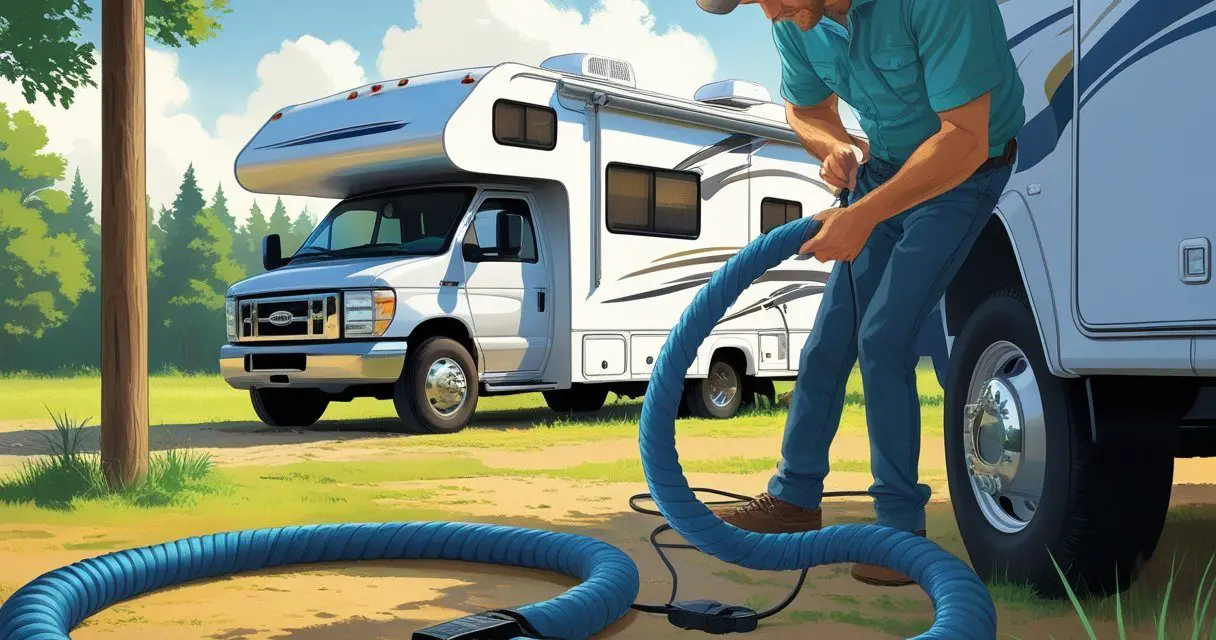
Yes, you can use an extension cord for your RV, but it’s not as simple as grabbing any cord from the garage. You must match the cord to your RV’s power needs to avoid damage, power loss, or even fire hazards.
The right cord keeps your appliances running safely and your setup worry-free.
When you connect your RV, the size, length, and type of cord all matter. Using the wrong one can lead to overheating or underpowered equipment.
Choosing the correct gauge and amperage ensures you get steady power without risking your RV’s electrical system.
By understanding what makes an extension cord safe for RV use, you can avoid common mistakes and keep your setup reliable whether you’re at home or at the campground.
Key Takeaways
- You can use an extension cord with your RV if it matches your power needs
- The right cord size and length prevent overheating and power loss
- Safe use depends on proper setup, routine checks, and avoiding common mistakes
Can I Use an Extension Cord for My RV?
You can use an extension cord with your RV, but only if it is the right type and properly rated. Using the wrong cord can lead to overheating, voltage drops, or even fire hazards.
The key factors are amperage, cord length, and build quality.
When It’s Safe to Use an Extension Cord
It is safe to use an extension cord with your RV when the cord matches the electrical service of your rig. Most RVs use either 30-amp (three-prong) or 50-amp (four-prong) plugs, so you should only use RV extension cords designed for those ratings.
Choose the shortest cord possible that still reaches the power pedestal. Cords longer than 50 feet often cause voltage drops, which can damage appliances like air conditioners or refrigerators.
Durability also matters. Look for heavy-duty RV extension cords with thick insulation and weather resistance.
Many RV cords are made with 10-gauge wire for 30 amps or 6-gauge wire for 50 amps, which can safely handle the load.
Using a surge protector between the pedestal and your cord adds another layer of safety. This protects your RV’s electrical system from power spikes or irregular voltage.
Situations Where Extension Cords Are Not Recommended
You should avoid using a standard household extension cord with your RV. These cords are usually too thin and not rated for high amperage.
They can overheat quickly, melt, or fail under the heavy draw of RV appliances. It’s also not recommended to connect multiple extension cords together.
Linking cords increases resistance and creates more opportunities for voltage drop, which can damage sensitive electronics. If the pedestal is extremely far away, it’s better to move your RV closer or use a properly rated long RV extension cord rather than chaining smaller cords.
Avoid using cords in wet or muddy areas without protection. Even though RV cords are made for outdoor use, keeping the connection points elevated reduces the risk of water exposure.
Potential Risks of Improper Use
Using the wrong extension cord can cause several problems. Overheating is one of the most common issues, especially if the cord is undersized for the amperage.
Overheated wires can melt insulation and create a fire hazard. Another risk is voltage drop.
When the cord is too long or not heavy enough, the voltage reaching your RV drops below safe levels. This can make appliances run poorly or damage motors and electronics.
Improper use can also lead to damaged plugs or outlets. Pulling on the cord instead of the plug, or using a cord with worn connectors, can loosen wiring and create dangerous arcing.
Finally, water exposure is a serious hazard. If connections sit in puddles, electricity can short out or shock anyone nearby.
Keeping cords dry and elevated prevents this risk.
Choosing the Right Extension Cord for Your RV
The extension cord you use with your RV must safely handle the electrical load, fit the correct plug type, and withstand outdoor conditions. Paying attention to amperage, wire gauge, length, and durability helps prevent overheating, voltage drop, and equipment damage.
Matching Amperage and Voltage Requirements
Your RV will either use a 30-amp or 50-amp power system. A 30-amp RV typically runs on 120 volts with a maximum of 3,600 watts, while a 50-amp RV can draw up to 12,000 watts at 240 volts.
Always choose an extension cord that matches your RV’s amperage rating. Using a cord rated for less current than your RV requires can overheat the wire and damage appliances.
A 30-amp RV extension cord usually has a NEMA TT-30 plug with three prongs. A 50-amp cord has a NEMA 14-50 plug with four prongs.
Check the label near your RV’s power inlet to confirm which type you need. If you only plan to run light loads, such as charging batteries, you may use adapters.
However, adapters reduce available power and should not replace the correct cord for regular use.
Differences Between Standard and RV Extension Cords
A household extension cord is not designed for RV power needs. Standard cords are thinner, have lower amperage ratings, and can overheat when used with high-draw appliances like air conditioners or microwaves.
An RV extension cord is built with thicker copper wiring, heavy-duty insulation, and molded plugs that fit campground pedestals. These cords are often labeled with their gauge and amperage rating for easy identification.
RV cords also include weather-resistant jackets, making them safer for outdoor use. Many feature twist-lock or snug-fitting connectors that reduce the risk of loose connections, which can cause arcing or burn marks on plugs.
Using the wrong type of cord may seem convenient, but it creates a fire hazard and shortens the life of your RV’s electrical system.
Recommended Cord Lengths and Gauge
Cord length and wire gauge directly affect performance. Longer cords increase resistance, which causes a voltage drop.
Too much voltage drop can make lights flicker or prevent appliances from starting. For a 30-amp RV, a 10-gauge cord works well up to 25–50 feet.
If you need more than 75 feet, step up to an 8-gauge cord. For a 50-amp RV, a 6-gauge cord is the standard choice, especially over longer distances.
| RV Amperage | Typical Gauge | Max Practical Length |
|---|---|---|
| 15 amps | 12–14 AWG | 50–70 ft |
| 30 amps | 10 AWG | 25–50 ft |
| 50 amps | 6–8 AWG | 25–50 ft |
Always use the shortest cord that still reaches the power source. This reduces heat buildup and keeps your RV’s electrical system stable.
Weatherproof and Outdoor-Rated Options
Because you often connect your RV outdoors, the extension cord must withstand rain, sun, and temperature changes. Look for cords rated STW or SJTW, which indicate heavy-duty, outdoor-safe insulation.
A good RV extension cord should be flexible enough to coil in cold weather but tough enough to resist cracking or abrasion. Many have molded ends with strain relief to protect the connection points.
Waterproof or twist-lock connectors add another layer of safety, especially in damp campsites. Some cords also include indicator lights to confirm power is flowing, which helps you troubleshoot quickly if there’s a problem.
Never use an indoor-only cord outside, even temporarily. Moisture and UV exposure can break down the insulation and increase the risk of electrical shock or fire.
Always confirm the cord is specifically rated for outdoor RV use.
How to Safely Connect Your RV Using an Extension Cord
You need to match the extension cord to your RV’s electrical service, use the right adapters when necessary, and keep cord length under control to avoid power loss.