
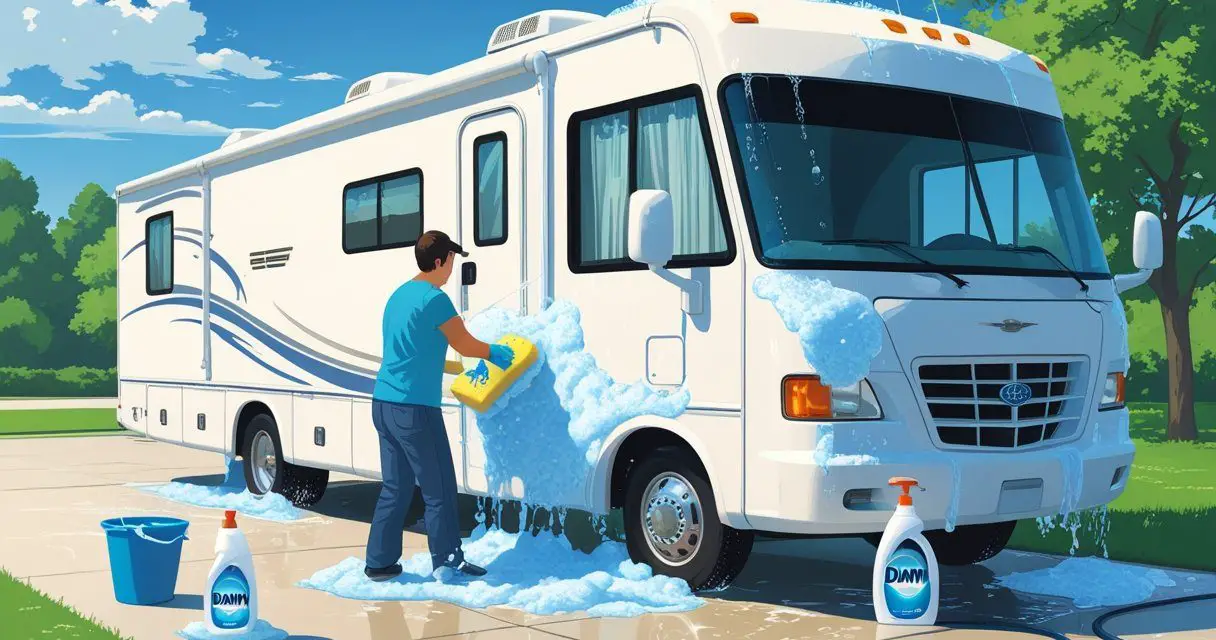
Washing your RV seems simple, but the products you choose can make a big difference. Dawn dish soap is a common go-to because it cuts grease and is gentle on many surfaces.
You can use Dawn on your RV, but it may strip wax or protective coatings on the exterior if you use it often.
That doesn’t mean you have to avoid it completely. Dawn works well in certain areas, like cleaning the roof, windows, or even helping inside with sinks and tanks.
The key is knowing when it’s safe to use and when a cleaner made for RV surfaces is the better choice.
Key Takeaways
- Dawn can be used on RVs but may remove wax or coatings.
- It works well in specific areas like roofs, tanks, and interiors.
- Choosing the right tools and cleaners helps protect your RV long-term.
Is It Safe to Wash Your RV with Dawn Dish Soap?
Dawn dish soap can help remove grease, dirt, and even tree sap, but it also has the potential to strip protective layers from your RV. How it affects your surfaces depends on the material, finish, and how often you use it.
Potential Effects on RV Surfaces
Dawn dish soap is designed to cut through grease, which makes it effective but also strong. When used on RV exteriors, it may remove not only dirt but also protective coatings.
This can leave behind a dull film or reduce the longevity of sealants. Rubber RV roofs, like EPDM or TPO, are especially sensitive to harsh or petroleum-based cleaners.
While Dawn does not contain petroleum distillates, frequent use may dry out rubber surfaces over time. Cleaning with mild, RV-safe products is often safer for long-term roof maintenance.
For fiberglass exteriors, Dawn can clean effectively but may reduce the shine if used repeatedly. Fiberglass relies on a protective gel coat, and aggressive cleaning can wear it down.
Always rinse thoroughly to prevent soap residue from drying on the surface.
Impact on Paint, Graphics, and Wax
Painted surfaces and decals require extra care. Dawn dish soap can strip wax layers that protect your paint from UV rays and weather.
Without wax, your RV’s finish may fade faster and become more prone to oxidation. Graphics and vinyl decals are also at risk.
The grease-cutting agents in dish soap may cause edges to peel or weaken adhesive over time. This is especially true if the decals are older or exposed to direct sunlight.
If you use Dawn on painted or graphic areas, apply it sparingly and rinse well. Consider reapplying wax after washing to restore protection.
Using a cleaner formulated for RV exteriors is a better option if you want to keep your paint and decals in good condition.
Manufacturer Recommendations
RV manufacturers generally recommend using cleaners made specifically for RV exteriors. These products are formulated to be safe for fiberglass, aluminum, paint, and decals without stripping protective coatings.
Using Dawn dish soap is rarely listed as an approved method. Some owner’s manuals warn against abrasive or high-alkaline cleaners, which can damage surfaces.
While Dawn is not abrasive, it still falls outside the scope of what most manufacturers suggest. Before using dish soap, check your manual or contact the dealer for guidance.
Testing a small, hidden area first can help you see if Dawn leaves residue or affects the finish. Following manufacturer advice will help you avoid costly repairs and preserve your RV’s appearance.
How to Properly Wash Your RV Exterior with Dawn Dish Soap
When you use Dawn dish soap on your RV, the key is to control the mixture, rinse carefully, and pay attention to sensitive parts like awnings and windows. Done correctly, it can help with regular RV maintenance without leaving behind residue or stripping protective coatings.
Dilution and Application Techniques
Always dilute Dawn dish soap before applying it to your RV’s exterior. A safe ratio is about one tablespoon of Dawn per gallon of water.
This keeps the solution mild enough to clean dirt and grease without removing wax or damaging decals. Use a soft sponge, microfiber cloth, or long-handled brush to spread the soapy water.
Avoid abrasive pads, which can scratch fiberglass or painted surfaces. Work in small sections so the soap does not dry before you rinse.
If you want to reduce streaking, wash from the top down. This allows the soapy water to run off evenly and helps prevent black streaks from forming later.
Best Practices for Rinsing
Rinsing is just as important as washing. Any leftover soap can leave a film on the RV’s surface.
Use a steady stream of clean water from a hose rather than a high-pressure washer, which can damage seals, decals, and caulking. Start rinsing at the roof and move downward.
This ensures dirt and soap flow off instead of drying in place. Take extra time around edges, seams, and window frames where soap tends to collect.
If water spots are a concern, dry the surface with a soft microfiber towel or a rubber squeegee. This step helps maintain the finish and reduces streaking on darker paint or glossy fiberglass.
Cleaning Awnings and Windows
Awnings often collect mildew, tree sap, and dirt. Mix a slightly stronger Dawn solution, apply it with a spray bottle or soft brush, and let it sit for 5–10 minutes before rinsing.
Always allow the awning to dry completely before rolling it back up to prevent mold growth. For windows, use a light dilution of Dawn with warm water.
Apply with a microfiber cloth, then rinse thoroughly. Avoid using abrasive scrubbers that can scratch glass or plastic.
To finish, dry the windows with a lint-free cloth for a clear, streak-free surface. This keeps visibil