
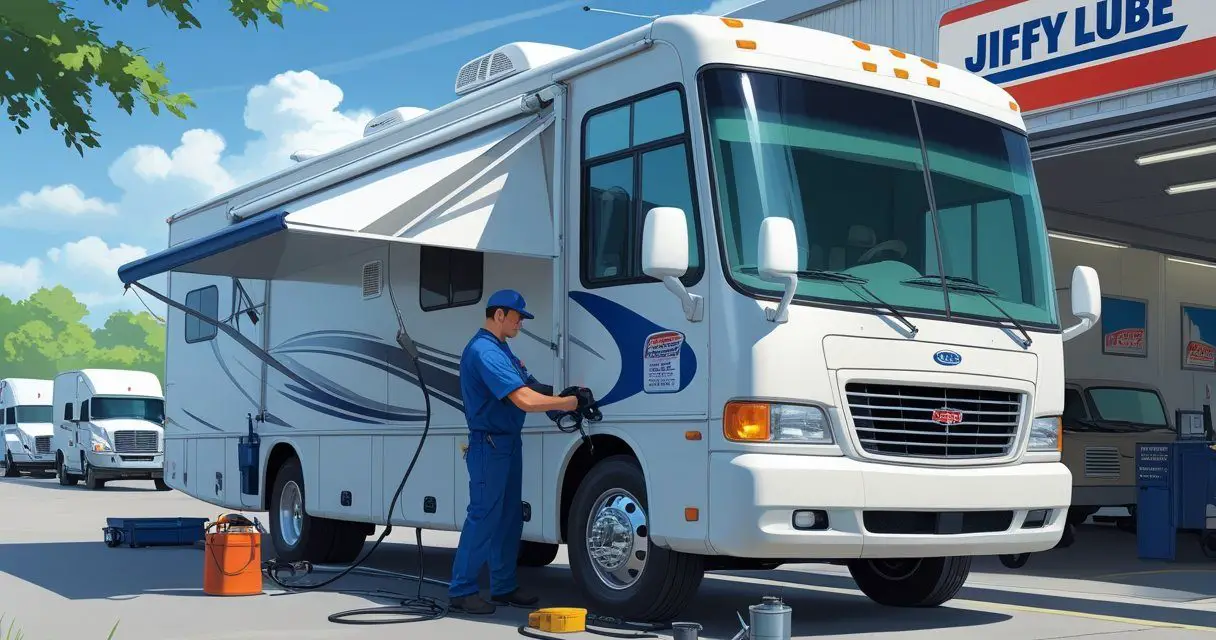
If you own an RV, you know oil changes are not as simple as pulling into the nearest quick lube shop. The size of your motorhome and the type of engine it has often determine where you can go for service.
Some Jiffy Lube locations can handle RV oil changes, but not every shop has the space, equipment, or staff trained for larger vehicles.
You’ll need to call ahead to confirm if your local Jiffy Lube can take your RV. Even if a location says yes, it’s smart to ask about bay height, weight limits, and whether they’ve serviced RVs before.
This helps you avoid wasted trips or damage from tight maneuvering.
If Jiffy Lube isn’t an option, you still have plenty of choices. Truck service centers, RV dealerships, and even mobile oil change services specialize in handling larger vehicles.
Key Takeaways
- Some quick lube shops may service RVs, but not all can handle the size
- Specialized locations often provide safer and more reliable RV oil changes
- Cost, oil type, and service frequency depend on your RV’s engine and usage
Can Jiffy Lube Change Oil on an RV?
Jiffy Lube can sometimes handle RV oil changes, but it depends on the location, the space available, and the size of your motorhome. Not every service center is equipped for large vehicles, so you need to confirm details before you drive in.
Jiffy Lube RV Service Availability
Some Jiffy Lube locations do provide oil changes for RVs, especially for smaller Class B or Class C motorhomes. These shops can often treat an RV like a larger van or truck, making the process straightforward.
However, service availability is not consistent across all franchises. Each location is independently operated, so policies and capabilities vary.
You should always call ahead and ask if the shop accepts RVs. Provide details about your motorhome, such as class type, length, and engine type (gas or diesel).
If your RV uses a diesel engine, fewer Jiffy Lube centers may be able to service it. Diesel engines often require specialized filters and larger oil capacities, which not every location stocks.
Location and Facility Requirements
The ability of a Jiffy Lube to perform an RV oil change depends on its physical setup. Many shops are designed for passenger cars and light trucks, which means they may not have the clearance or equipment for taller or heavier RVs.
Bay door height is one of the most common limiting factors. If your RV is taller than the shop’s entry clearance, it simply won’t fit.
Some locations may also lack the proper lifts or pits to handle the extra weight. Parking and maneuvering space also matter.
Tight lots or narrow entrances can make it difficult to bring in a longer RV without risk of damage. Shops that are located near highways or in areas with more commercial truck traffic are more likely to have larger bays and more experience with oversized vehicles.
Vehicle Size Limitations
Your RV’s size class plays the biggest role in whether Jiffy Lube can service it.
- Class B campervans: Usually accepted, since they are close in size to large vans.
- Class C motorhomes: Sometimes accepted, depending on length and clearance.
- Class A motorhomes: Rarely accepted, as they are too tall and heavy for most locations.
Oil capacity is another factor. Large RV engines may require 6–8 quarts or more, while some Class A diesel engines can need over 15 quarts.
Not every Jiffy Lube keeps that amount in stock. If your RV exceeds the shop’s limits, you may need to visit a truck service center or a mobile RV oil change provider instead.
Alternatives to Jiffy Lube for RV Oil Changes
You have several reliable options for an RV oil change beyond chain service shops. Larger truck facilities, RV-focused dealerships, and even doing the work yourself can often provide better solutions depending on your needs, vehicle size, and budget.
Truck Service Centers
Truck service centers are often the most practical choice for an RV oil change. These shops are built to handle heavy-duty vehicles, so they have tall bay doors, high-capacity lifts, and staff experienced with large engines.
Unlike smaller auto shops, truck centers are familiar with diesel engines and higher oil capacities. Many RVs use 6–8 quarts of oil, and Class A motorhomes may need much more.
A truck shop already stocks the right filters and oil volumes. Calling ahead is important.
Some centers focus only on commercial fleets, while others welcome RV owners. Ask about their experience with motorhomes and confirm they can accommodate your RV’s length and height.
Pros:
- Designed for heavy vehicles
- Staff trained on diesel engines
- Ample space for maneuvering
Cons:
- May cost more than local garages
- Some locations only service fleets
RV Dealerships
RV dealerships often provide oil change services in addition to sales and repairs. These facilities are familiar with the specific engines used in motorhomes and usually follow manufacturer service guidelines.
One advantage is that dealerships can perform multiple maintenance tasks at once, such as checking your transmission fluid, coolant, or filters. This makes it easier to keep all your scheduled service in one place.
However, RV dealerships sometimes charge higher labor rates. Service quality also varies, so it’s worth checking reviews or asking other RV owners about their experiences.
Some dealerships may require an appointment weeks in advance, especially during peak travel seasons.
Best for: Owners who want brand-specific service and don’t mind paying a premium for convenience and expertise.
DIY Oil Changes
If you have the right tools and space, a DIY RV oil change can save time and money. Most RVs require a large drain pan, a socket set, and the correct oil filter.
You’ll also need to buy the proper oil type—synthetic or conventional—based on your owner’s manual. Changing the oil yourself takes about 30–45 minutes if you’re prepared.
Be sure to check local rules, as some campgrounds and neighborhoods don’t allow oil changes due to spill risks. Disposing of used oil responsibly is critical.
Many auto parts stores and service centers accept old oil for free recycling.
Tips for DIY success:
- Lay down absorbent pads to catch drips
- Pre-fill the new oil filter before installing
- Track mileage and date for your next change
DIY is best if you prefer control over the process and want to ensure only quality parts and fluids go into your RV.
What to Expect During an RV Oil Change
An RV oil change involves more than draining and replacing engine oil. You can also expect checks on filters, fluid levels, and other key systems that keep your motorhome running safely.