
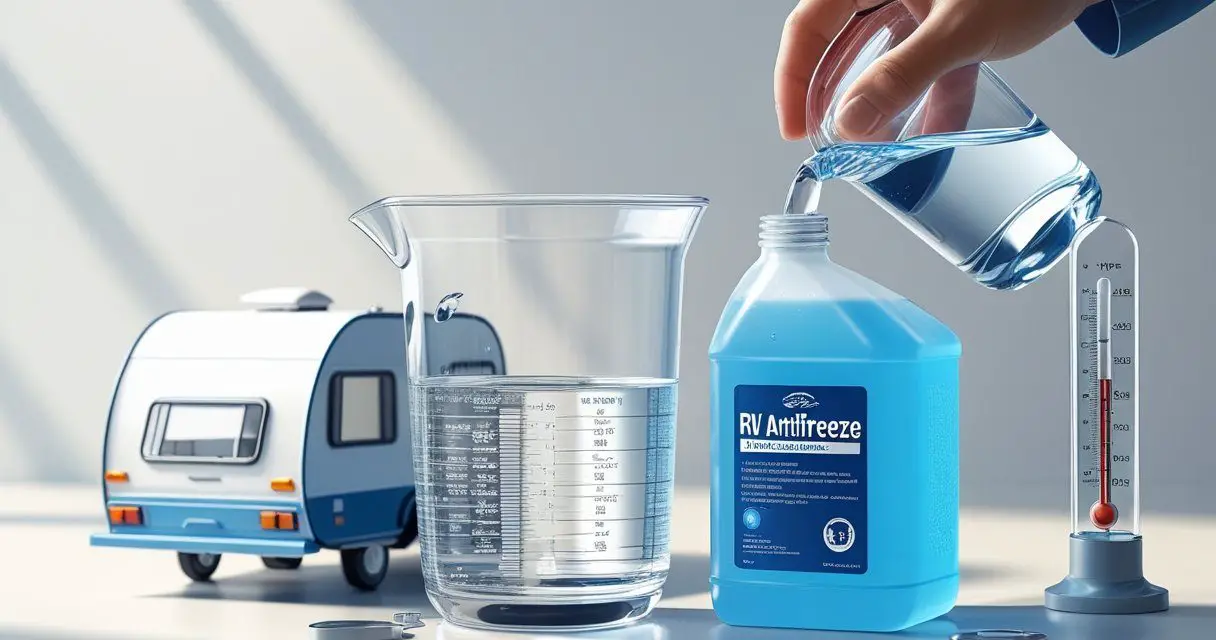
When it’s time to winterize your RV, you may wonder if you can stretch your antifreeze by mixing it with water. You should not dilute ready-to-use RV antifreeze because it will lose its ability to protect your plumbing system from freezing.
The pre-mixed formula is designed to work at full strength. Adding water raises the freezing point, leaving your pipes at risk.
There is one exception: some antifreeze is sold as a concentrate, and that type is meant to be mixed with water according to the label. The key is knowing which kind you have before pouring anything into your system.
Using the wrong mixture can cause damage that costs far more than a jug of antifreeze.
Key Takeaways
- RV antifreeze must be used as directed to protect plumbing.
- Diluting pre-mixed antifreeze weakens freeze protection.
- Correct use depends on knowing if it’s concentrate or ready-to-use.
Understanding RV Antifreeze
RV antifreeze protects your plumbing system from freezing temperatures and damage during storage. It is designed to be safe for potable water systems while still effective at lowering the freezing point of any water left in your lines.
What Is RV Antifreeze?
RV antifreeze is a liquid solution that prevents water in your RV plumbing from freezing and expanding. Unlike automotive antifreeze, it is non-toxic and safe for use in systems that carry drinking water.
You use it by pumping it through your RV’s water lines, faucets, and drains. The bright color, often pink, makes it easy to see when the system is fully filled.
RV antifreeze is not meant for your engine. It is specifically made for the freshwater and waste systems in your trailer, camper, or motorhome.
Using the wrong type can cause health risks and damage to your plumbing.
Types of RV Antifreeze
There are two main types: ethanol-based and propylene glycol-based. Both lower the freezing point of water, but they differ in how they affect your RV.
- Ethanol: Less expensive but can dry out or damage rubber seals. It has a stronger odor and taste, which may linger in your water system.
- Propylene glycol: More common and preferred. It is odorless, tasteless, and less likely to harm seals or fittings. This is often labeled as propylene glycol RV antifreeze.
Some products are sold as concentrates that you dilute with water according to instructions. Others are ready-to-use and should not be mixed further.
Always check the label to avoid reducing protection.
How RV Antifreeze Works
When water freezes, it expands and can crack pipes or fittings. RV antifreeze lowers the freezing point of any water left in the system, preventing damage.
The solution mixes with small amounts of water in your lines and still provides protection. This is why you should not dilute ready-to-use antifreeze—it already accounts for residual water.
Propylene glycol RV antifreeze also coats the inside of pipes and seals. This adds a layer of lubrication that helps prevent drying or cracking during storage.
By filling your system until the liquid runs visibly through each faucet, you ensure full coverage and freeze protection.
Can RV Antifreeze Be Diluted?
RV antifreeze is sold in both ready-to-use and concentrated forms. How you handle it depends on which type you buy.
The strength of the solution directly affects how well your plumbing is protected from freezing temperatures.
Effects of Diluting RV Antifreeze
When you dilute a ready-to-use RV antifreeze, you reduce its ability to protect your plumbing system. The labeled freeze protection, such as -50°F burst protection, only applies when the product is used at full strength.
If you add water, the antifreeze may freeze at higher temperatures. This can lead to cracked pipes, fittings, or water pumps if the liquid expands inside the system.
Some water is already left behind in your RV lines after draining. This leftover water already weakens the antifreeze slightly, so starting with a diluted product makes the risk worse.
You should only dilute antifreeze if you purchased a concentrated formula that specifically requires mixing. Otherwise, dilution lowers effectiveness and increases the chance of freeze damage.
Manufacturer Recommendations on Dilution
Most RV antifreeze sold in stores is pre-mixed and labeled as ready to use. These products should not be diluted any further.
The manufacturer guarantees freeze and burst protection only at the listed strength. Some brands also sell concentrate versions.
These require you to add a set amount of water, usually distilled water, to reach the proper ratio. The instructions on the label tell you exactly how much to mix.
Adding too much water will raise the freezing point. If you mix less water than required, the solution may become too thick for your pump to handle.
Always check the label before using any antifreeze. If it says “ready to use,” do not add water.
If it says “concentrate,” follow the mixing instructions carefully.
Testing Dilution Ratios
If you are unsure about the strength of your RV antifreeze, you can test it. A hydrometer or refractometer is commonly used to measure freeze protection levels.
These tools give you a reading of the temperature at which the solution will freeze. Testing is most useful if you mixed a concentrate or if you suspect water may have entered your system.
If you accidentally added too much water, testing lets you confirm whether the mixture is still safe. You should aim for the protection level listed on the container, such as -50°F.
If your test shows a higher freeze point, drain the system and replace it with fresh antifreeze.
By testing, you avoid guessing and ensure your RV plumbing stays protected through freezing temperatures.
Impact of Diluted RV Antifreeze on Winterization
When you dilute RV antifreeze, you lower its ability to keep water lines safe during freezing temperatures. This can lead to reduced protection for your plumbing system and increase the chance of damage.
Protection Limits in Freezing Temperatures
RV antifreeze is designed to protect your plumbing system down to a specific temperature, such as -50°F or -100°F. These ratings only apply when the antifreeze is used at full strength.
If you dilute it with water, the protection rating changes. For example:
| Antifreeze Rating | Full Strength Protection | Diluted 50% |
|---|---|---|
| -50°F | Protects to -50 |