
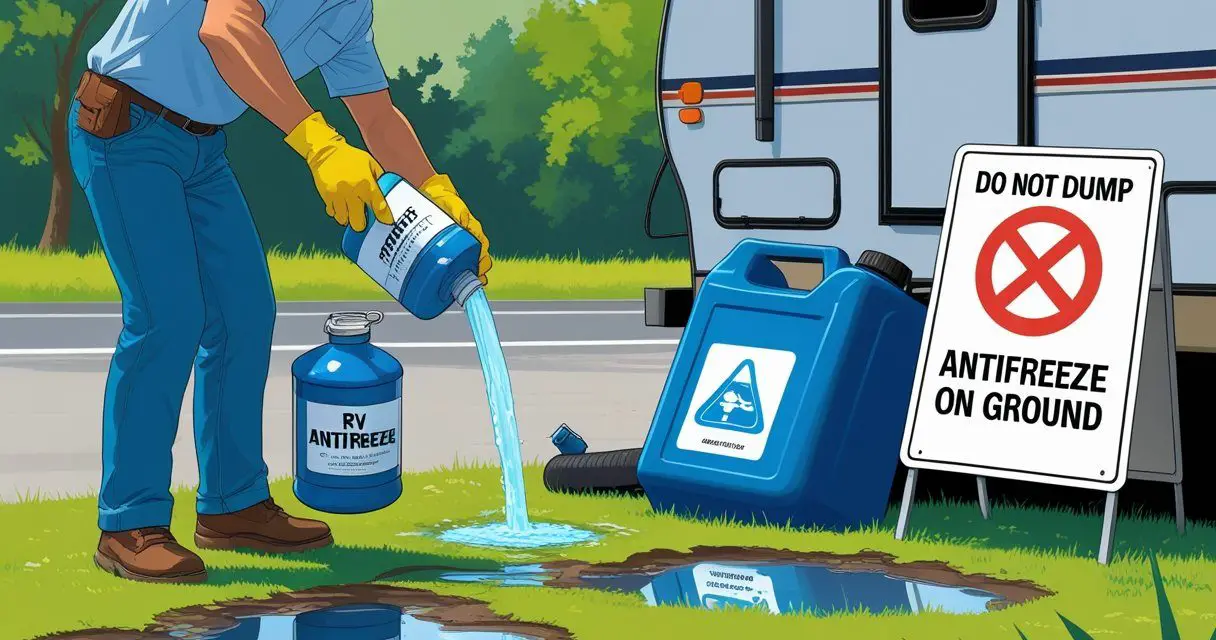
When it comes time to flush out your RV’s plumbing system, it might feel tempting to let the antifreeze drain onto the ground. You should never dump RV antifreeze on the ground because it can harm plants, animals, and even local water sources.
Even products labeled as “non-toxic” or “biodegradable” still contain chemicals that don’t belong in the soil.
You need to think about more than just convenience. Dumping antifreeze outside can damage vegetation, attract pets or wildlife who may ingest it, and create risks for groundwater contamination.
Local laws may also treat this as improper waste disposal, which could lead to fines.
The good news is that there are safe and responsible ways to get rid of RV antifreeze without hurting the environment or breaking the rules.
Key Takeaways
- Never dump RV antifreeze on the ground
- RV antifreeze can harm soil, water, and wildlife
- Use approved facilities or safe disposal methods
Can RV Antifreeze Be Dumped on the Ground?
You should not dump RV antifreeze on the ground because it can contaminate soil, harm groundwater, and create risks for people and animals. While RV antifreeze is different from automotive antifreeze, both require proper disposal through approved facilities or sewer systems to avoid environmental and legal problems.
Legal and Environmental Concerns
When you dump RV antifreeze on the ground, it can seep into soil and reach groundwater. Even non-toxic formulas, often made with propylene glycol, can disrupt ecosystems if released in large amounts.
Small spills may not seem serious, but repeated dumping increases the risk of contamination. Laws in many states prohibit releasing chemical products onto the ground.
Violations can result in fines, especially if antifreeze enters storm drains or waterways. Dumping can also create a slip hazard in public areas, which may lead to liability if someone is injured.
Antifreeze can also affect plants. Some ingredients may cause grass discoloration or damage to vegetation.
Pets and wildlife are at risk if they ingest puddles left behind. For these reasons, disposal at waste management or recycling facilities is the safer and legally compliant option.
Comparison to Automotive Antifreeze
RV antifreeze and automotive antifreeze are not the same. RV antifreeze is usually made with propylene glycol, which is considered less toxic.
Automotive antifreeze, on the other hand, often contains ethylene glycol, a chemical that is highly poisonous to humans, pets, and wildlife. Because of this difference, you may see RV antifreeze labeled as “non-toxic” or “biodegradable.”
However, that does not mean you can pour it on the ground. Even propylene glycol can pollute groundwater and harm the environment when dumped in large amounts.
Automotive antifreeze requires strict handling and must always go to a hazardous waste facility. RV antifreeze is safer but still should be disposed of through approved sewer systems, dump stations, or recycling programs.
Treat both products as chemicals that need controlled disposal.
Manufacturer and Government Guidelines
RV manufacturers and local governments provide clear instructions on how to handle antifreeze. Most recommend pouring used RV antifreeze into a residential drain, RV dump station, or municipal sewer system.
These systems are designed to process and treat the liquid safely. Auto parts stores, RV service centers, and hazardous waste collection sites may also accept RV antifreeze.
Some facilities recycle the liquid, reducing waste and preventing environmental harm. Always check with your local waste management office for approved locations.
Government agencies warn against dumping RV antifreeze on the ground, into storm drains, or into septic systems. Following these guidelines not only protects the environment but also ensures you avoid penalties for improper disposal.
Why Dumping RV Antifreeze on the Ground Is Harmful
RV antifreeze may be labeled as non-toxic or biodegradable, but it still contains chemicals that can create problems when released into the environment. It can seep into soil, affect plants, and put animals at risk if they ingest it.
Impact on Soil and Groundwater
When you pour RV antifreeze on the ground, it doesn’t stay in one place. Liquids like propylene glycol can seep through the soil and eventually reach groundwater.
This is a concern because groundwater often supplies wells and local water systems. Even though propylene glycol is less toxic than ethylene glycol (used in automotive antifreeze), dumping large amounts can still disrupt natural soil balance.
The chemical can reduce oxygen levels in water and harm microorganisms that help break down organic matter. Once in groundwater, antifreeze may spread beyond your property.
This makes cleanup difficult and increases the chance of long-term contamination. Local laws often prohibit dumping antifreeze outdoors for this reason.
Risks to Plants and Grass
RV antifreeze on the ground can damage your lawn and other vegetation. While small accidental spills may not cause noticeable harm, repeated or large amounts can stress plants.
Propylene glycol can interfere with how plants absorb water and nutrients. This may cause chlorosis (yellowing of leaves) or stunted growth.
In some cases, it can kill patches of grass or weaken roots, leaving soil exposed to erosion. Different plants react differently, but antifreeze is still a chemical that doesn’t belong in soil.
Even if it doesn’t kill grass immediately, it can build up over time and reduce soil quality.
Effects on Animals and Pets
Pets and wildlife face the greatest risk when RV antifreeze is dumped on the ground. Dogs, cats, and small animals may lick or ingest it, especially if it pools on surfaces.
Even “non-toxic” propylene glycol can cause stomach upset or more serious health issues if consumed in larger amounts. For cats, ingestion of antifreeze can be especially dangerous because their bodies process chemicals differently.
Birds and small mammals may also be affected if they drink contaminated water or eat plants exposed to antifreeze. Because animals cannot tell the difference between safe water and contaminated liquid, leaving antifreeze outside creates an unnecessary hazard.
Proper disposal helps protect both pets and wildlife from accidental poisoning.
Types of RV Antifreeze and Their Environmental Impact
RV antifreeze comes in different formulas, and each type affects the environment in a different way. The main ingredients you will see are propylene glycol, ethanol, and ethylene glycol, and knowing the differences helps you use and dispose of them safely.
Propylene Glycol-Based RV Antifreeze
Propylene glycol is the most common ingredient in RV antifreeze. It is labeled as non-toxic and is even used in some food and cosmetic products in small amounts.
Because of this, it is considered safer for your RV water system and less harmful if a small spill occurs. Even though it breaks down faster than other chemicals, you should not dump it on the ground.
It can still contaminate soil and water if released in large amounts. Plants and animals may be affected if they come into contact with it.
The best way to dispose of propylene glycol antifreeze is through a drain connected to a wastewater treatment system or at a designated RV dump station. This ensures it gets processed safely without harming the environment.
Ethanol-Based RV Antifreeze
Ethanol-based RV antifreeze is another option, but it has different risks. Ethanol is flammable, which makes it less safe to store and handle compared to propylene glycol.
It can also dry out rubber seals and gaskets in your plumbing system, which may cause damage over time. From an environmental view, ethanol evaporates more quickly than propylene glycol, but it can still contaminate soil and groundwater if dumped outside.
Its flammability also makes spills more dangerous, especially near open flames or heat sources. You should handle ethanol-based antifreeze carefully and never pour it onto the ground.
Disposal through proper waste facilities or dump stations is the safest choice.