
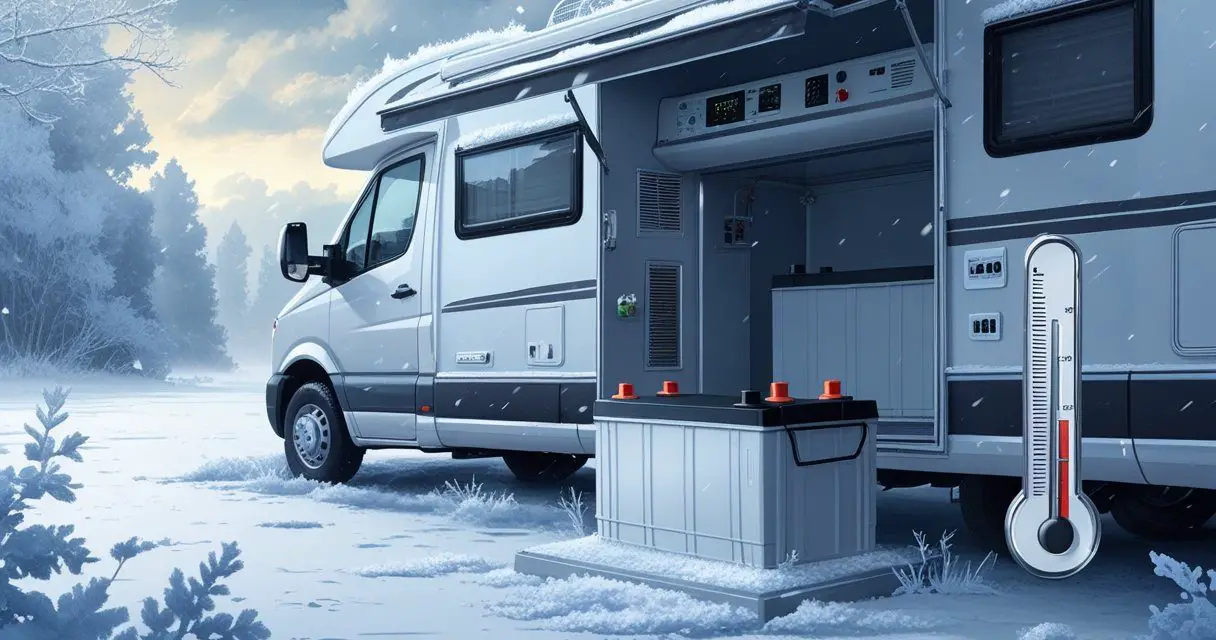
Cold weather can cause serious problems for your RV’s power system. Yes, RV batteries can freeze, especially if they are not fully charged or properly protected.
When temperatures drop, the liquid inside lead-acid batteries can solidify. This can lead to cracks, leaks, and permanent failure.
The type of battery you use, its charge level, and how you store it all play a role in whether it will freeze. A fully charged deep-cycle battery can withstand much colder conditions than one that is partially discharged.
Lithium batteries handle cold differently, but they also face risks if charged below freezing. Simple steps like keeping your battery charged, insulated, or even moving it indoors can make a big difference.
Key Takeaways
- RV batteries can freeze if not charged or protected in cold weather
- Battery type, charge level, and storage conditions affect freezing risks
- Proper charging and insulation help prevent costly winter damage
Can RV Batteries Freeze?
RV batteries can freeze in cold weather depending on their type, charge level, and exposure. When the electrolyte inside a lead-acid battery freezes, it expands and can cause permanent damage.
Lithium batteries resist freezing better, but they also face risks in low temperatures.
What Happens When RV Batteries Freeze
When a lead-acid battery freezes, the liquid electrolyte turns to ice and expands. This expansion can crack the battery case, push apart internal plates, and create leaks.
Once the case is damaged, the battery usually cannot be repaired. The freezing point depends on the state of charge.
A fully charged lead-acid battery can withstand temperatures as low as -90°F (-68°C). A battery at 40% charge may freeze at just 5°F (-15°C).
Lithium batteries behave differently. Their electrolyte has a much lower freezing point, so even at low charge they rarely freeze under normal winter conditions.
However, they should not be charged when the temperature is below 32°F (0°C). Charging in freezing conditions can cause internal damage.
How Freezing Damages Battery Performance
Freezing weakens battery performance in several ways. A cracked case or broken plates often means the battery will no longer hold a charge.
Even if the case remains intact, ice formation can reduce the surface area of the plates, lowering capacity. Once thawed, a frozen lead-acid battery may show signs like reduced voltage, faster discharge, or inability to recharge fully.
For lithium batteries, the main risk comes from charging in sub-freezing conditions. Doing so can cause lithium plating inside the cells, which permanently reduces capacity and can make the battery unsafe.
Types of RV Batteries and Freezing Risks
Different types of RV batteries respond to cold weather in different ways. How easily a battery can freeze depends on its chemistry, charge level, and design.
Knowing these differences helps you store and protect your battery during winter.
Lead-Acid Batteries vs Lithium Batteries
Lead-acid batteries, including flooded deep-cycle types, are more likely to freeze if left at a low charge. The electrolyte is mostly water, so when the charge drops, the freezing point rises.
A lead-acid battery at 40% charge may freeze around 5°F, while a fully charged one can resist freezing until about -92°F. Keeping your lead-acid battery fully charged is the most effective way to prevent freezing damage.
If the electrolyte freezes, it expands and can crack the case, causing leaks or permanent failure. Lithium batteries, such as LiFePO₄, behave differently.
They rarely freeze under normal conditions because their chemistry is more stable. A lithium battery typically won’t freeze until temperatures reach about -68°F or lower.
However, you should not charge lithium batteries below 32°F, since charging in freezing conditions can permanently damage the cells. Some lithium RV batteries include built-in heating systems that allow safe charging in cold weather.
If you camp or store your RV in freezing areas, this feature can help maintain performance.
AGM and Gel Battery Considerations
AGM (Absorbed Glass Mat) and gel batteries are sealed lead-acid designs. They use a different internal structure than flooded batteries, but they still contain electrolytes that can freeze.
An AGM or gel battery holds up better against vibration and requires less maintenance, but it does not eliminate freezing risks. Like standard lead-acid batteries, the state of charge is critical.
A fully charged AGM or gel battery can handle subzero temperatures, while a discharged one may freeze just below 20°F. Because they are sealed, these batteries are less likely to leak if the case cracks, but internal damage can still make them unusable.
Using insulated battery boxes or storing them indoors during winter can reduce the risk. You should also keep them on a trickle charger or maintainer to prevent self-discharge.
Even sealed batteries lose charge over time, and once the charge drops, the chance of freezing increases quickly.
Factors Affecting Battery Freezing
The chance of your RV battery freezing depends on both its charge level and the type of battery you use. Temperature, insulation, and how long the battery is exposed to the cold also play a role in whether damage occurs.
State of Charge and Freezing Point
The state of charge strongly affects whether a lead-acid RV battery will freeze. A fully charged lead-acid battery can withstand extremely low temperatures, while a partially discharged one can freeze at much higher temperatures.
For example, research shows:
| State of Charge | Approx. Freezing Point (°F) |
|---|---|
| 100% | -92 |
| 75% | -35 |
| 50% | -4 |
| 25% | +20 |
When charge drops, the electrolyte becomes more like water, which freezes more easily. If your battery sits at 40% or less, it can freeze even in mild winter conditions.
Keeping the battery charged with a trickle charger or solar maintainer helps prevent this problem. Even when stored, batteries naturally lose charge over time, so checking and topping them off is essential.
Impact of Temperature on Different Battery Types
Lead-acid batteries are the most common in RVs and are more prone to freezing if discharged. Their electrolyte solution expands when frozen, which can crack the case and permanently reduce battery performance.
Lithium batteries behave differently. They can handle colder temperatures without freezing until extremely low conditions, often below -60°F.
However, you should not charge lithium batteries below 32°F, since charging in freezing conditions can cause internal damage. Some lithium RV batteries include built-in heaters to manage this issue.