
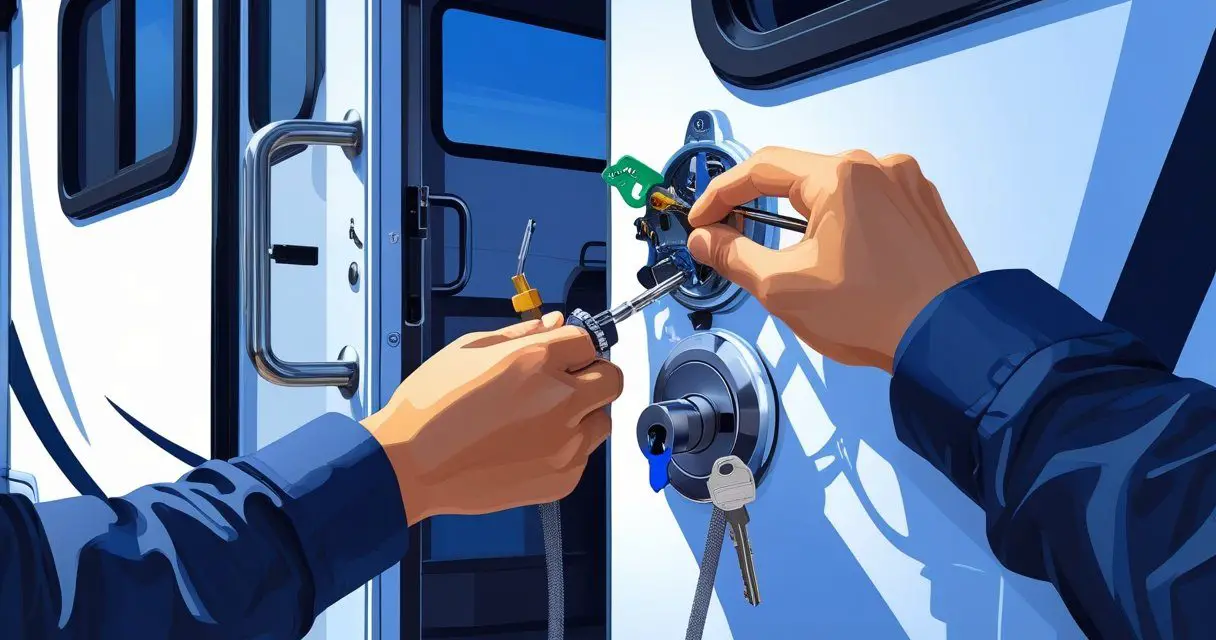
RV security matters, especially when you’re on the road or parked far from home. Lost keys, new ownership, or worn-out locks can make you wonder if changing the locks is your only option.
Yes, you can rekey RV door locks, and in many cases, it’s a straightforward way to keep your RV secure without replacing the entire lock.
Rekeying works by adjusting the pins inside the lock cylinder so the old key no longer works and a new key takes its place. Many RV locks use systems that allow rekeying with the right tools or kits, and some brands even design their locks to make this process easier.
Whether you want all your locks on one key or just need to update security, rekeying gives you flexibility. Understanding how RV locks are built and what options exist can help you decide if rekeying is the right choice.
With a little knowledge, you can save money, improve convenience, and keep control over who has access to your RV.
Key Takeaways
- RV door locks can be rekeyed instead of replaced
- Rekeying involves changing the lock pins to match a new key
- Knowing your lock type helps you choose the best security option
Can RV Door Locks Be Rekeyed?
You can rekey most RV door locks, but the process depends on the type of lock installed and whether you have the right tools. Rekeying lets you change which key works without replacing the entire lock, which can save money and improve security.
What Rekeying Means for RV Door Locks
Rekeying an RV lock means adjusting the lock cylinder so it no longer works with the old key. Instead, it responds to a new key that you set up during the process.
This is done by replacing or rearranging the pins inside the cylinder. You do not need to remove the entire door handle or replace the lock housing.
Instead, you only work with the lock cylinder and the pins. Many RV lock brands sell rekeying kits that include the tools and new keys you need.
If you own your RV, rekeying is legal and safe as long as you follow the instructions for your specific lock. If you are not comfortable doing it yourself, a locksmith or RV service center can handle the job.
Common Types of RV Door Locks
RV door locks vary by manufacturer, but the most common types include TriMark, Global Link, and Bauer. Each brand has its own rekeying system and may require a specific kit or tool.
Many RVs also use cam locks for baggage doors and storage compartments. These locks are often keyed alike with the main entry door, or they can be rekeyed to match a single key for convenience.
Some RV locks, like Global Link models, come with a rekey tool (often a small plastic fob) that makes changing cylinders simple. Others, like older TriMark locks, may require removing the lock cylinder and using replacement pins.
Knowing your lock’s brand and model is important before starting the rekey process.
Benefits of Rekeying RV Locks
Rekeying RV locks improves security by making old keys useless. If you bought a used RV, you cannot know how many copies of the original keys exist, so rekeying ensures only your new keys work.
It also adds convenience. You can rekey multiple locks, such as the main door and baggage compartments, so one key opens everything.
This reduces the need to carry several keys. Rekeying is often cheaper than replacing all locks.
A professional may charge $50–$200 per lock, but DIY kits cost less and can be reused. By rekeying, you extend the life of your existing RV locks while increasing both safety and ease of use.
How to Rekey RV Door Locks
Rekeying an RV door lock means changing the lock pins so the old key no longer works and a new key will operate the lock. This process can make your RV more secure and reduce the number of keys you need to carry.
Step-by-Step Rekeying Process
Start by removing the lock from the RV door. Most RV locks are held in place with 4–6 screws.
Once the lock is free, take out the lock cylinder, which is the part that holds the pins. Insert the old key into the cylinder and turn it slightly.
Use a plug follower tool to push the plug out while keeping the pins and springs in place. If you don’t have the old key, you can still remove the pins, but it may take more effort.
Replace the old lock pins with color-coded lock pins that match the cuts of the new key. A rekey kit usually includes a chart that shows which pins go in which slot.
Use tweezers to handle the small pins and avoid forcing them into place. After installing the new pins, test the cylinder with the new key.
Make sure the key turns smoothly before reassembling the lock and reinstalling it on the door.
Required Tools and Rekey Kits
You will need a rekey kit designed for your specific RV lock brand. These kits often include:
- Plug follower tool
- Color-coded lock pins
- Retainer ring tool
- Tweezers
- New keys
In addition, you may need a small screwdriver and replacement screws. Some RV lock manufacturers sell lock-specific kits, which are easier to use because they match the lock design.
It’s a good idea to purchase a kit ahead of time and keep it in your RV. This way, you’re prepared if you lose a key or need to rekey while traveling.
DIY vs Professional Rekeying
You can rekey your RV locks yourself if you have the right tools and patience. The process is straightforward but requires careful handling of small parts.
A rekey kit makes the job easier and ensures you have the correct pins. If the lock is damaged, or if you’re uncomfortable working with lock cylinders, you may want to hire a locksmith.
A professional can rekey multiple locks quickly and ensure all your RV doors and compartments use the same key. DIY rekeying saves money and gives you control, while professional service offers convenience and reliability.
Understanding RV Lock Components
RV locks use a few key parts that determine how secure the door is and how the key interacts with the mechanism. Two of the most important pieces are the lock cylinder and the lock pins, which work together to control access.
Lock Cylinder and Its Role
The lock cylinder is the main body of the lock where you insert your key. It sits inside the lock housing and contains the moving parts that respond to the key’s cuts.
When you turn the key inside the cylinder, it rotates a plug that either locks or unlocks the latch. The cylinder also holds the pins in place, which must align correctly for the plug to move.
Most RV door locks use pin tumbler cylinders, which are similar to residential locks. This design makes it possible to rekey the lock by changing the pins inside the cylinder without replacing the entire unit.
Because the cylinder is removable, you can access it with a rekeying kit. This allows you to