
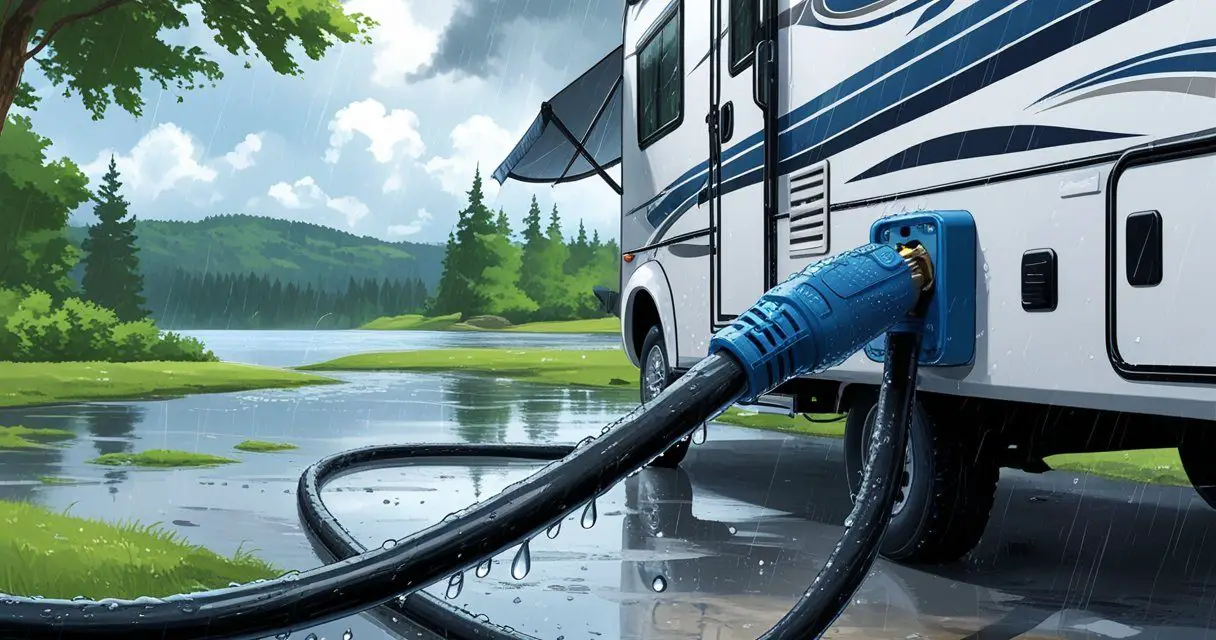
When you’re setting up your RV at a campsite, it’s easy to overlook how weather can affect your power setup. Rain, dew, or standing water might seem harmless, but they can quickly turn into a safety issue when electricity is involved.
RV extension cords should never get wet because water can cause short circuits, corrosion, or even electric shock.
You might think outdoor-rated cords are built to handle a little moisture, and while some are more resistant, they’re not waterproof. Even small cracks or loose connections can let water in, creating hidden hazards that can damage your RV’s electrical system.
Knowing how to protect your cords and what to do if they get wet keeps your setup safe and reliable.
Key Takeaways
- RV extension cords should stay dry to avoid electrical hazards.
- Moisture can damage cords and increase the risk of shock or fire.
- Proper setup and maintenance help prevent water-related issues.
Can RV Extension Cords Get Wet?
RV extension cords can handle limited exposure to moisture if they are rated for outdoor use and kept in good condition. Water can still cause damage or safety hazards when it reaches the plug ends or damaged insulation, so you need to understand how moisture affects cords and how to prevent it.
How Water Affects Extension Cords
Water and electricity are a dangerous mix. When a wet extension cord allows moisture to reach the internal wires, it can cause short circuits or electrical leakage.
This can trip breakers, damage your RV’s electrical system, or create a shock hazard. If you use a cord that is not designed for wet conditions, water can quickly enter through cracks, cuts, or loose plugs.
Even small amounts of moisture can corrode metal contacts and weaken insulation. Over time, this reduces the cord’s ability to carry current safely.
You should always unplug a wet cord before touching it. Allow it to dry fully before reuse, and inspect for soft spots or exposed wires.
If any damage is visible, replace the cord instead of trying to repair it.
Differences Between Indoor and Outdoor Extension Cords
Not all extension cords are built the same. Indoor cords are lighter, have thinner insulation, and are not safe in damp or outdoor areas.
Outdoor extension cords are thicker, have weather-resistant jackets, and often include a “W” rating printed on the cord to show they meet outdoor safety standards.
| Type | Use | Weather Resistance |
|---|---|---|
| Indoor | Inside only | None |
| Indoor/Outdoor | Light outdoor use | Limited |
| Outdoor | Full outdoor use | High |
For RVs, you should only use heavy-duty outdoor cords rated for the amperage your RV requires. Look for cords labeled SJTW or STW, which resist moisture, abrasion, and sunlight.
Using the wrong type can lead to overheating or power loss, especially in wet conditions.
Common Scenarios Where RV Cords Get Wet
Your RV extension cord can get wet in several everyday situations. Rain, dew, or snow can collect around the plug connection when parked at a campsite.
Puddles or wet grass can also expose cords lying on the ground to moisture. If you run power from an outdoor outlet, water can drip from the roof or awning onto the connection point.
Even washing your RV can splash water onto the plug ends. To reduce risk, keep connectors off the ground using a cord reel or support.
You can also use weatherproof covers or sealing boots to protect plug connections. Always plug into a GFCI outlet when operating in damp areas.
These steps help prevent electrical shock and extend the life of your RV’s power cord.
Risks and Dangers of Wet RV Extension Cords
When an RV extension cord gets wet, it can create serious electrical hazards that may harm people and equipment. Water can cause electric shock, short circuits, and corrosion that weakens the cord over time and increases the chance of fire or equipment failure.
Electrical Hazards and Shock
Water conducts electricity, so when moisture enters an extension cord, it can create a path for current to travel where it shouldn’t. This increases the risk of electric shock or even electrocution if you touch the cord or plug while it’s energized.
Even a small amount of moisture inside connectors can cause current leakage. That leakage may not trip a breaker but can still deliver a painful or dangerous shock.
Using a Ground Fault Circuit Interrupter (GFCI) outlet helps protect you by cutting power when it detects current flowing through an unintended path, such as water or a person. Always unplug a wet cord immediately and let it dry completely before reuse.
Short Circuits and Fire Hazards
Water inside a cord can cause a short circuit, where electricity flows directly between wires instead of through the intended circuit. This can generate heat, damage insulation, and lead to melted connectors or sparks.
A short circuit can also overload your RV’s electrical system or trip breakers. In severe cases, it may ignite nearby materials and start a fire hazard.
To reduce these risks, use outdoor-rated cords with heavy insulation and keep all plug connections raised off the ground. Avoid running cords through puddles or wet grass, and check for cracks in the outer jacket before every use.
Corrosion and Long-Term Damage
Even after a cord dries, moisture exposure can cause corrosion inside the plug blades and sockets. Corrosion increases electrical resistance, which makes the cord heat up during normal use and shortens its life span.
Rust or green discoloration on metal contacts is a clear sign of damage. Over time, this can lead to poor connections, intermittent power loss, and greater risk of electrical hazards.
To prevent corrosion, store cords indoors in a dry place and keep connectors covered when not in use. Regular inspection helps ensure safe and reliable operation of your RV’s electrical system.
Immediate Actions if Your RV Extension Cord Gets Wet
If your RV extension cord becomes wet, act quickly to prevent electrical shock or equipment damage. Focus on cutting off power safely, checking for visible or hidden damage, and ensuring the cord is completely dry before reuse.
Safe Disconnection Procedures
Never touch a wet cord while it’s still connected to a power source. Go to your RV’s breaker panel and switch off the circuit that powers the outlet.
If the cord is plugged into a campground power outlet, turn off the pedestal breaker before handling it. Use dry, insulated gloves or a tool with a nonconductive handle to unplug the cord.
Avoid standing in water or on damp ground durin