
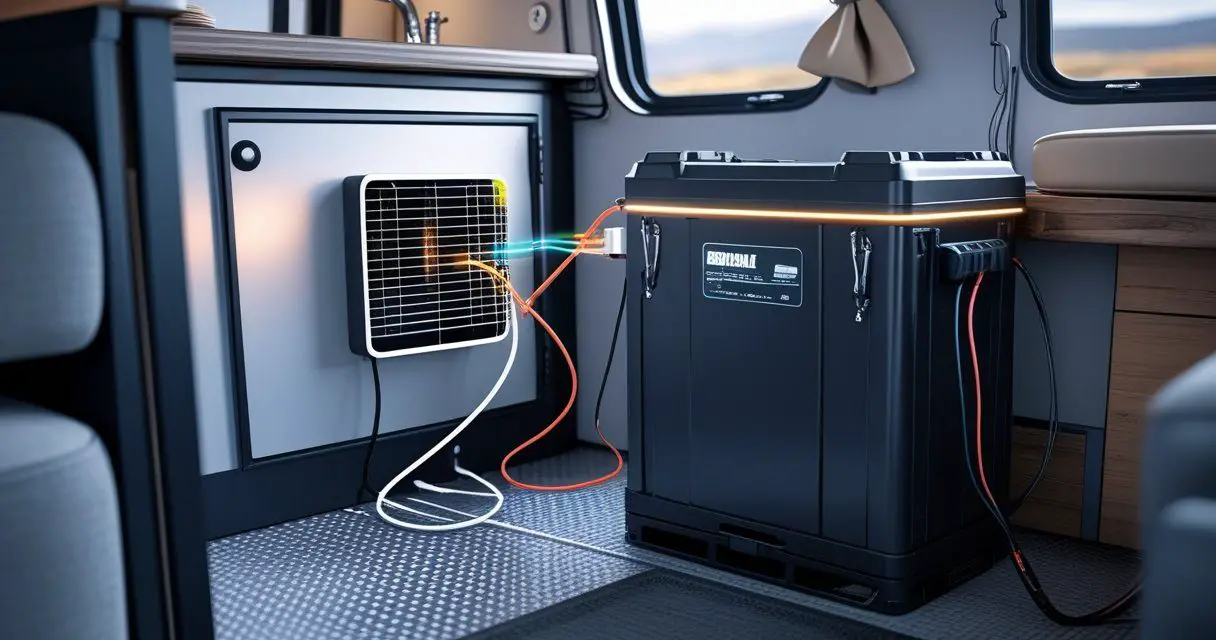
Staying warm in an RV without shore power can be tricky, especially when temperatures drop. You might wonder if your heater can run on battery power alone.
Yes, most RV heaters can run on battery power, but the runtime depends on the heater type, battery capacity, and weather conditions. Understanding how your system works helps you plan better for cold nights on the road.
Electric heaters draw a lot of power and can drain a standard RV battery in just a few hours. Propane furnaces use gas for heat and only rely on the battery to power the fan and ignition, making them far more efficient for off-grid use.
If you want to make your battery last longer, small changes like improving insulation, lowering thermostat settings, or adding solar support can help. Exploring these options ensures you stay comfortable while keeping your power supply steady through the night.
Key Takeaways
- RV heaters can run on battery power, but runtime varies by type and conditions
- Managing power use and insulation improves heating efficiency
- Backup energy sources extend comfort during off-grid camping
How RV Heaters Operate on Battery Power
Your RV heater can use battery power to run key components, but it depends on the type of system installed. Most propane furnaces need 12-volt DC power for the fan and electronics, while electric heaters rely on higher wattage that drains batteries quickly.
Types of RV Heaters and Power Requirements
RV heaters usually fall into two main categories: propane furnaces and electric heaters.
A propane furnace burns fuel for heat but still depends on your 12-volt battery to power the ignition and blower fan.
Without a charged battery, the furnace cannot start or circulate warm air. Electric heaters draw power directly from your electrical system.
Most portable electric heaters use 500 to 1,500 watts, which can deplete a standard RV battery within hours.
Because of this, electric heaters work best when you’re connected to shore power or using a generator.
| Heater Type | Power Source | Battery Dependency | Typical Runtime |
|---|---|---|---|
| Propane Furnace | Propane + 12V battery | Moderate (fan + ignition) | 8–12 hours per battery |
| Electric Heater | 120V AC or inverter | High (very short runtime) | 2–10 hours depending on capacity |
Role of the Furnace Fan in Battery Usage
The furnace fan plays a major role in how long your battery lasts. It pushes heated air through ducts and runs on 12-volt DC power.
When the thermostat triggers the furnace, the fan cycles on and off, drawing several amps each time. If your battery charge drops too low, safety switches may shut down the system to stop propane flow.
A single deep-cycle battery might power the fan for one night, but colder weather or frequent cycling shortens runtime.
You can extend battery life by adding extra batteries, upgrading to lithium-ion units, or using solar panels to recharge during the day.
Keeping your fan motor clean and the ducts clear also reduces strain on the system and lowers power draw.
Propane Versus Electric Heaters in RVs
Propane heaters are more efficient for off-grid use because they rely mainly on fuel, not electricity. They use minimal battery power for startup and air circulation, making them practical for dry camping or boondocking.
You only need to monitor propane levels and keep your 12-volt system charged. Electric heaters, in contrast, need continuous electrical supply.
Running one from batteries alone is rarely practical unless you have a large battery bank and inverter. Even then, the runtime remains short.
For most RV owners, a propane furnace supported by a healthy battery system provides the best balance between comfort, safety, and power efficiency.
Battery Capacity and Heater Runtime
Your RV heater’s runtime depends on the size and type of battery, the heater’s power draw, and environmental conditions. Understanding how these factors interact helps you plan heating use and manage power efficiently.
Factors Affecting Battery Drain
Several factors determine how quickly your RV furnace drains the battery. The most important are battery capacity, heater power draw, and system efficiency.
Battery capacity is measured in amp-hours (Ah). A 100Ah deep-cycle battery provides roughly 50 usable amp-hours since most batteries shouldn’t discharge below 50%.
The more capacity you have, the longer your heater can run before recharging. The heater’s current draw also matters.
A typical propane furnace fan uses 7–10 amps, while an electric heater may draw over 100 amps at 12 volts. High-draw devices shorten runtime significantly.
Other factors include battery age, wiring condition, and inverter losses. Old or poorly maintained batteries lose capacity and recharge less efficiently, reducing available power for heating.
Estimating Runtime for Different Battery Setups
You can estimate runtime by dividing usable battery capacity by the heater’s current draw. The formula is:
Runtime (hours) = Usable Amp-Hours ÷ Heater Amps
| Battery Setup | Usable Capacity (Ah) | Heater Draw (Amps) | Approx. Runtime |
|---|---|---|---|
| Single 100Ah AGM | 50 | 7.5 | ~6.5 hours |
| Two 100Ah AGM (200Ah total) | 100 | 7.5 | ~13 hours |
| 100Ah Lithium | 90 | 7.5 | ~12 hours |
Lithium batteries offer more usable capacity—up to 90%—and maintain voltage better under load. For extended heating, combining multiple batteries or adding solar charging can help maintain comfort without frequent generator use.
Impact of Temperature and Usage Patterns
Cold temperatures reduce battery efficiency and increase heater demand. At freezing levels, a battery’s usable capacity can drop by 20–30%.
The furnace also runs more often to maintain cabin warmth, drawing more current. Your usage habits strongly affect runtime.
Running the heater continuously drains power faster than cycling it at moderate intervals. Lowering thermostat settings or using extra insulation reduces heater workload.
Using fans, vent covers, and thermal curtains helps retain heat so your furnace cycles less often. Managing temperature settings carefully can extend usable battery time and keep your RV comfortable through the night.
Optimizing Battery Performance for Heating
Efficient heating depends on having the right power source and keeping it in good condition. The type, capacity, and care of your battery directly affect how long your RV heater can run and how well it performs in cold conditions.
Choosing the Right Battery for Your RV Heater
Selecting a suitable battery helps you maintain reliable heat when camping off-grid. Deep-cycle batteries are ideal because they deliver steady power over time.
Common options include AGM, lithium-ion, and flooded lead-acid batteries.