
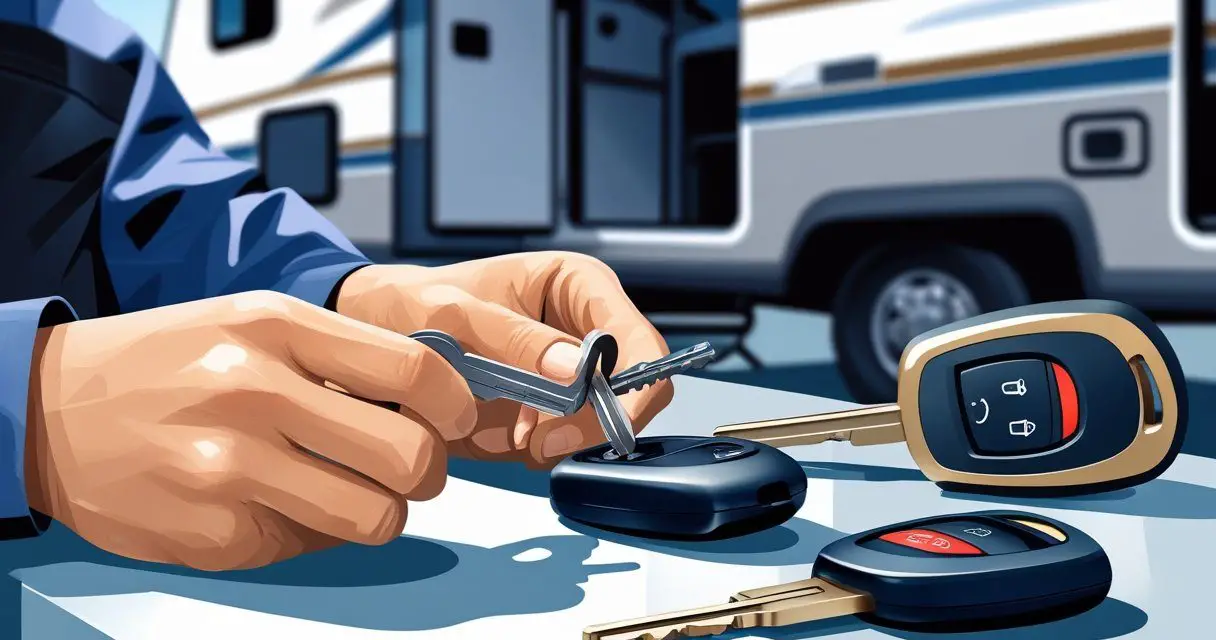
Losing your RV keys can feel like a major setback, especially when you’re far from home or ready to hit the road. The good news is that you’re not stuck.
Yes, RV keys can be replaced, and you have several reliable options depending on your lock type and situation. Whether you misplaced a standard compartment key or lost a high-tech fob, solutions exist to get you back inside quickly.
You can order pre-cut keys online using the code stamped on your lock. You can also contact a locksmith for on-site help, or reach out to your RV manufacturer or dealer for a replacement.
Each method varies in cost and speed, but all can restore access without replacing the entire lock system. Replacing your keys also gives you a chance to improve your RV’s security.
Many owners choose to rekey their locks or upgrade to keyless entry systems that reduce the chance of future lockouts.
Key Takeaways
- RV keys can be replaced through online orders, locksmiths, or dealerships.
- Knowing your key type helps you choose the best replacement option.
- Rekeying or upgrading locks can prevent future key problems.
Understanding RV Keys and Lock Types
RV keys and locks vary by brand and purpose, but most share a few common systems. Knowing which type you have helps you find the right replacement and maintain better control over your RV’s security.
Common Types of RV Keys
You’ll find several key types in RVs, each serving a different function. Entry door keys control access to the main living area, while compartment keys open storage or utility doors.
Many RVs use the CH751 key for compartments, which is widely shared among different models. This shared design makes replacements easy to find but also reduces security.
If your compartments still use CH751 locks, consider rekeying or replacing them. Some locks are keyed alike, meaning one key opens multiple doors.
Others use master keys, which dealers or service staff may have for convenience. Knowing which system your RV uses helps you decide whether to replace, rekey, or upgrade.
| Key Type | Common Use | Security Level |
|---|---|---|
| CH751 | Compartments, utility doors | Low |
| Global Link | Entry doors | Medium |
| Bauer / TriMark | Entry and baggage doors | Medium–High |
RV Lock Mechanisms
RV locks work much like home locks but are built for lighter materials. Most use pin tumbler cylinders, which rely on small pins aligning with the key’s cuts.
When the pins line up, the plug turns to unlock the latch. Cam locks are common on exterior storage doors.
They’re simple and inexpensive but not very secure. You can upgrade to slam latch or deadbolt-style locks for stronger protection.
Some modern RVs use electronic or keypad locks for convenience. These allow you to set access codes instead of carrying keys.
If you prefer traditional locks, you can still rekey them to match one key for all doors, reducing the number of keys you need to carry.
Key Codes and Identification
Each RV key often has a code stamped on the blade or lock face. Codes like CH751, G300, or HF315 identify the key pattern used.
You can use this code to order a pre-cut replacement key without needing the original. If your key is missing, check the lock cylinder or owner’s manual for a matching code.
Many RV lock brands, such as Global Link or Bauer, use standardized codes that locksmiths or online retailers can reference. Keep a record of these codes in a safe place.
Having them handy saves time if you lose a key and ensures you get the correct replacement for your RV locks and compartments.
How to Replace Lost or Damaged RV Keys
Replacing lost or damaged RV keys involves acting quickly, identifying the correct key type, and recording useful details for future replacements.
Immediate Steps After Losing RV Keys
Start by checking for spare keys. Many RV owners store extras in secure but accessible places, such as a lockbox, hidden compartment, or with a trusted friend.
If no spare is available, contact roadside assistance or a mobile locksmith. Services like AAA or Good Sam can unlock your RV or help cut a temporary key.
Avoid forcing locks open, as this can damage the door or compartment. Instead, note your RV’s make, model, and lock brand before calling for help.
These details help locksmiths identify compatible blanks or tools. If you’re parked safely, you can also remove the affected lock and bring it to a locksmith or hardware store.
This can lower service costs and speed up replacement.
Assessing the Type of Key Needed
Different RVs use different key systems. Identifying your key type determines how and where you can replace it.
Common camper and compartment keys use stamped codes like CH751 or G391. These standard keys can be ordered pre-cut online using the code.
For ignition keys, check if your RV uses a transponder chip or smart fob. These require programming tools only found at dealerships or specialized locksmiths.
Use the table below for quick reference:
| Key Type | Common Features | Replacement Source |
|---|---|---|
| Standard mechanical | Code stamped on key or lock | Online retailer or locksmith |
| Compartment key | Shared code (e.g., CH751) | RV parts store or online |
| Transponder or fob | Electronic chip | Dealer or auto locksmith |
Knowing your key type helps you choose the fastest and most cost-effective option.
Documenting Key and Lock Information
Keeping accurate records makes future replacements easier. Write down or photograph your key codes, lock brands, and RV identification number (VIN).
Store this information in a secure location, such as a password-protected note or printed copy in your glove box. If your RV manual lists key details, keep it accessible.
You can also label compartment keys with small tags to avoid confusion between storage doors and entry locks. Maintaining clear documentation helps you order replacements quickly and verify authenticity.
Replacement Options: Where and How to Get New RV Keys
Replacing lost RV keys usually involves identifying your key type and choosing the right service for your situation. You can often get new keys by contacting the manufacturer, visiting an RV dealership, or hiring a qualified locksmith with the right tools and experience.
Contacting the RV Manufacturer
If you know your RV’s Vehicle Identification Number (VIN) or key code, contacting the manufacturer can be one of the most reliable ways to get an exact replacement. Manufacturers often keep key records linked to your VIN, which helps them identify the correct key blank or lock type.
You can usually reach the man