
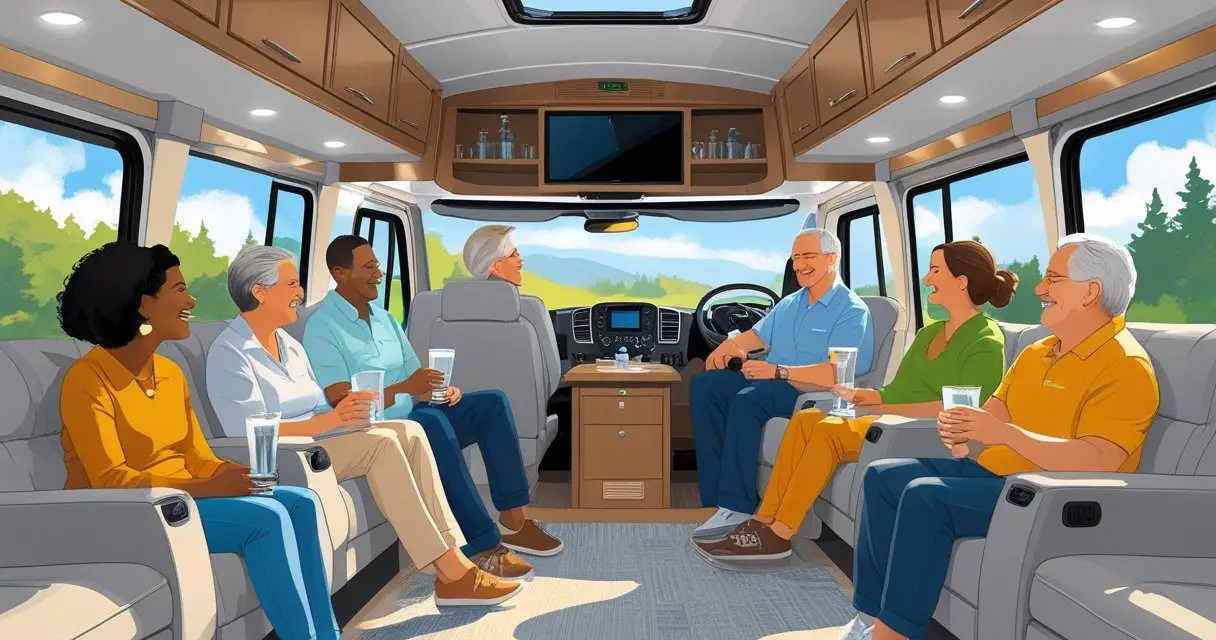
The question of whether RV passengers can drink alcohol while traveling is more complicated than a simple yes or no answer. Most states prohibit passengers from drinking alcohol in a moving RV, but several states do allow it with specific restrictions and conditions.
The rules vary significantly from state to state. It’s essential for RV travelers to research the laws in each state they plan to visit.
Unlike regular passenger vehicles, RVs present unique legal considerations due to their dual nature as both a motor vehicle and a living space. Some states recognize the “living quarters” exception, which allows passengers to consume alcohol in the main living area of an RV while it remains in motion.
These exceptions often come with strict requirements about RV size, passenger location, and distance from the driver. Open container laws, state-specific regulations, and the differences between drinking in a moving RV versus a parked one add to the complexity.
Key Takeaways
- Most states prohibit passengers from drinking alcohol in moving RVs, though some states allow it with specific restrictions
- State laws vary significantly regarding open containers and alcohol consumption in RV living quarters versus driving areas
- Violating RV alcohol laws can result in fines and legal consequences, making research of state-specific regulations essential before travel
Understanding Open Container Laws in RVs
Open container laws create confusion for RV travelers because these vehicles serve as both transportation and temporary homes. States define passenger areas differently for motorhomes, leading to varying rules about where alcohol can be present or consumed.
What Open Container Laws Mean for RVs
Open container laws prohibit unsealed alcohol containers in a vehicle’s passenger area while driving. These laws apply to any bottle, can, or container that has been opened, even if no one is actively drinking.
The challenge with RVs comes from their dual nature. Unlike regular cars, motorhomes have living spaces with kitchens, bathrooms, and sleeping areas.
Most states treat open container violations as infractions or misdemeanors. Fines typically range from $50 to $500 for first offenses.
Key points about RV open container laws:
- Violations don’t require active drinking
- Open containers within reach of occupants can trigger citations
- RVs create unique legal situations due to their living quarters
- Penalties vary but usually involve fines
The driver always faces restrictions on alcohol consumption regardless of state laws. This prohibition remains consistent across all jurisdictions.
How Open Container Laws Differ by State
States take vastly different approaches to open containers in RVs. Some allow passengers to drink in living quarters while others prohibit open alcohol anywhere in the vehicle.
States that generally allow passenger consumption in RV living areas:
- Texas
- Missouri
- Montana
- Connecticut
- Rhode Island
Mississippi stands out as the only state without general open container laws.
States with strict prohibitions:
- Alaska
- Many northeastern states
- Various other jurisdictions that don’t distinguish between cab and living areas
Some states add size requirements. Certain jurisdictions only allow open containers in motorhomes over 21 feet in length.
Florida creates additional complexity by considering vehicle size in their enforcement decisions. Smaller motorhomes face stricter rules than larger ones.
Distinctions Between Driver and Passenger Areas
The legal separation between driver cabs and living quarters determines whether open containers are permitted. States that recognize this distinction treat the living area differently from the driving compartment.
Living quarters typically include:
- Kitchen with refrigerator and sink
- Bathroom facilities
- Sleeping accommodations
- Separate seating areas
When states legally separate these areas, passengers may possess and consume alcohol in living quarters while the RV moves. Open containers must stay completely out of the driver’s cab area.
States without this distinction consider the entire RV interior as one passenger compartment. This means open container laws apply everywhere inside the vehicle.
The driver’s area always remains off-limits for open containers. This includes the driver’s seat, dashboard area, and any space within the driver’s immediate reach.
Legalities of Drinking in an RV While Moving
The laws around drinking in an RV while driving vary greatly by state and depend on whether you’re the driver or a passenger. Most states have strict rules about open containers near the driver, but some allow passengers to drink in the living areas of larger RVs.
Laws Affecting Passengers Versus Drivers
Drivers face strict alcohol prohibition while operating any RV or motorhome. No state allows drivers to consume alcohol while the vehicle is moving.
Passengers have different rules depending on the state. The driver cannot have any open containers within reach while driving.
Many states treat RV passengers differently than car passengers. The key factor is whether the alcohol is in the living quarters versus the driving area.
Open container laws usually focus on accessibility to the driver. If passengers can drink in a separate living area that’s not accessible to the driver, some states allow this.
Storage rules matter too. Unopened alcohol in refrigerators or locked cabinets is generally legal in most states while moving.
State Variations in Passenger Alcohol Consumption
Several states allow passenger drinking in RV living quarters while moving. Alaska, Connecticut, Delaware, Mississippi, and Rhode Island permit this practice with restrictions.
Texas has clear rules allowing passengers to consume alcohol in RV living quarters during travel. The living area must be separate from the driving area.
Most states prohibit all alcohol consumption in moving vehicles, including RVs. These states require all open containers to be stored away from passengers and drivers.
Penalties vary significantly by state. Some states impose fines starting at $100 for first offenses. Others may suspend driving privileges or impose jail time for violations.
Research specific state laws before traveling. What’s legal in one state may result in serious penalties in another.
Length and Design of RV: Does It Matter?
RV size affects legality in some states. Louisiana and Florida require RVs to be at least 21 feet long before passengers can drink in living areas while moving.
Living quarters must be separate from the driving area. The RV needs permanent living facilities like beds, kitchens, and bathrooms to qualify for passenger drinking exceptions.
Motorhomes versus towables have different rules. Fifth wheels and travel trailers generally cannot have passengers inside while moving, making drinking laws irrelevant.
Design features matter for compliance. RVs need clear separation between driver areas and living spaces.
The RV must function as both a vehicle and temporary home to qualify for special alcohol rules in permissive states.
State-Specific Regulations Impacting RV Passengers
States handle open container laws differently when it comes to RVs, creating a patchwork of regulations across the country. Some states allow passengers to drink in the living quarters while others ban alcohol throughout the entire vehicle.
Notable States That Allow Passenger Drinking
Texas leads the way with clear exceptions for RV passengers. The state allows alcohol consumption in the “living quarters of a motorhome, recreational vehicle, or self-contained camper.”
Passengers can drink as long as they stay outside the driving cab area. Missouri and Montana have similar laws that permit passenger drinking in RV living areas.
These states legally separate the driver’s cab from spaces with amenities like toilets, sleeping areas, and kitchens. Mississippi stands out as the only state without general open container laws.
This makes it the most permissive state for RV alcohol consumption. Connecticut and Rhode Island take a broader approach.
They allow passenger consumption in any vehicle, which extends to RVs by default.
Strict States and Complete Prohibitions
Alaska treats the entire RV as on