
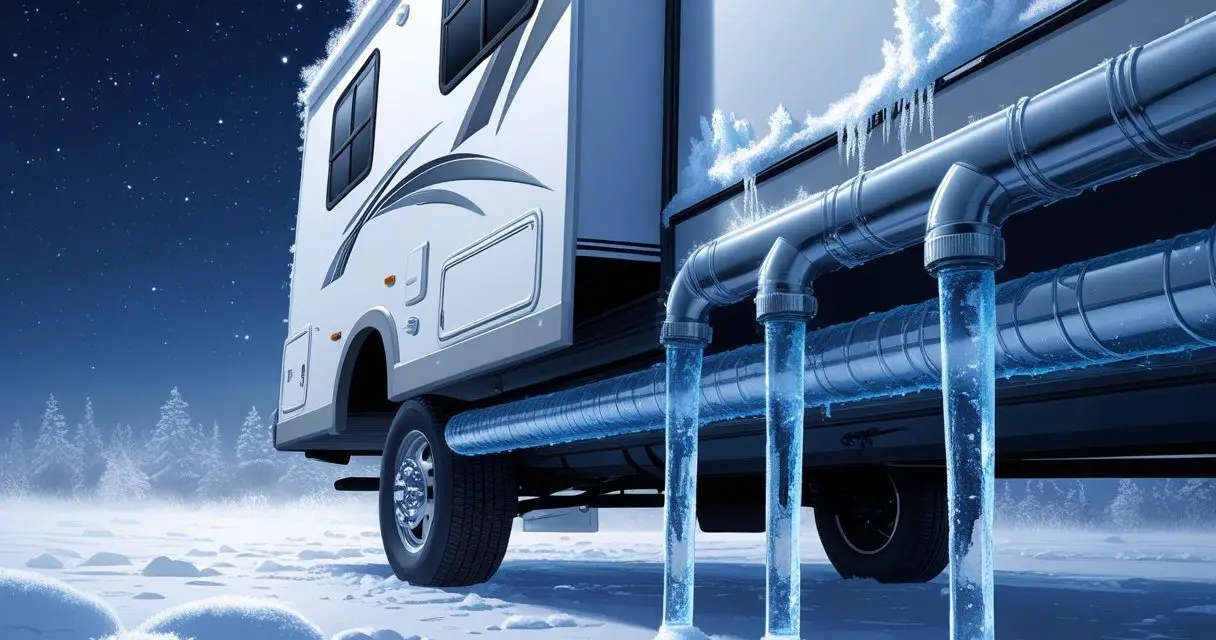
Winter camping brings unique challenges for RV owners. One of the most pressing concerns is protecting the plumbing system from cold damage.
Many campers find themselves caught off guard by sudden temperature drops. They wonder if their water lines are at risk.
Yes, RV pipes can freeze in one night if temperatures drop well below freezing, especially when they reach the teens or single digits. The risk depends on several factors including how well the RV is insulated, whether heating systems are running, and how exposed the plumbing is to cold air.
While it typically takes about 24 hours of consistent freezing temperatures to cause problems, rapid temperature drops can freeze pipes much faster.
Understanding the conditions that lead to frozen pipes helps RV owners take the right steps to protect their investment. Simple preparation can prevent thousands of dollars in repair costs and keep water flowing during cold weather adventures.
Key Takeaways
- RV pipes can freeze overnight when temperatures drop into the teens or below, especially in poorly insulated rigs
- Proper insulation, heating, and winterization techniques can prevent costly pipe damage during cold weather camping
- Taking preventive measures before temperatures drop saves money and keeps water systems working throughout winter trips
Can RV Pipes Freeze in One Night?
Yes, RV pipes can freeze in a single night when temperatures drop well below freezing. The speed of freezing depends on several factors including temperature, insulation, and wind exposure.
How Quickly RV Pipes Freeze in Cold Weather
RV pipes typically need 24 hours of consistent temperatures below 32°F to freeze completely. However, this timeframe changes dramatically in extreme cold.
When temperatures drop into the teens or single digits, frozen pipes can occur in just a few hours. The coldest part of the night usually happens just before dawn, which poses the greatest risk.
Temperature Timeline for Pipe Freeze:
- Above 32°F: No freeze risk
- 20-32°F: 12-24 hours to freeze
- 10-20°F: 6-12 hours to freeze
- Below 10°F: 2-6 hours to freeze
Most RV owners experience problems when overnight lows stay below 20°F for more than 6 hours. The water in pipes turns to ice and expands, potentially causing cracks or bursts.
Factors Influencing Overnight Freezing
Several key factors determine how quickly an RV’s pipes will freeze during cold nights.
Insulation plays the biggest role in preventing frozen rv pipes. RVs with good underbelly insulation can withstand much colder temperatures than those without protection.
Heat sources inside the RV help maintain warmer temperatures around internal plumbing. Running a furnace or space heater keeps the interior warm and protects pipes.
Wind exposure speeds up the freezing process significantly. Wind chill makes temperatures feel much colder and removes heat from exposed areas faster.
Pipe location matters greatly. Pipes in heated areas freeze slower than those in unheated compartments or external connections.
The RV’s construction affects freeze resistance. Four-season RVs handle cold weather better than standard recreational vehicles.
Risk Areas in RV Plumbing During Cold Spells
Certain parts of an RV’s plumbing system freeze faster than others during overnight cold snaps.
External water connections pose the highest risk. Garden hoses and city water hookups freeze first because they have no protection from cold weather.
Underbelly plumbing in the RV freezes quickly without proper skirting or insulation. These areas get direct exposure to wind and cold air.
Water tanks in unheated compartments can freeze overnight in extreme cold. Fresh water, gray water, and black water tanks all face this risk.
Pipes near exterior walls freeze faster than those in interior locations. These pipes lose heat through the RV’s walls and windows.
Water heater connections often freeze because they sit in unheated compartments. The water lines leading to and from the heater are vulnerable spots.
Owners should focus protection efforts on these high-risk areas first.
What Temperatures Cause RV Pipes to Freeze?
RV pipes start freezing at 32 degrees Fahrenheit, but the time it takes depends on how long temperatures stay below freezing and other factors like wind and exposure.
Most RV pipes need 24 hours of consistent freezing temperatures to freeze completely, though severe conditions can speed this process.
Critical Temperature Thresholds for Freezing
The freezing point for RV pipes begins at 32 degrees Fahrenheit. Water inside the pipes starts turning to ice at this temperature.
Most RV pipes and tanks need 24 hours of consistent temperatures at or below 32°F to freeze completely. A few hours below freezing typically won’t cause major problems for most RVs.
However, temperatures in the teens create much faster freezing. When temperatures drop to the teens, RV pipes can freeze in just a few hours instead of a full day.
The coldest part of the night usually happens just before dawn. This period only lasts 2-3 hours in most cases.
Short cold snaps like this rarely cause pipe freeze in well-protected RVs.
Sustained cold matters more than brief temperature drops. Pipes need extended exposure to freezing temperatures before ice forms throughout the system.
Effect of Wind Chill and Exposure
Wind chill makes RV pipes freeze much faster than still air at the same temperature. Cold wind under the RV removes heat from exposed pipes and tanks.
Exposed underbellies create the biggest risk for frozen pipes. RVs without proper skirting or insulation lose heat quickly in windy conditions.
Water lines running along the exterior walls freeze first. These pipes get direct exposure to cold air and wind.
Interior pipes stay warmer longer because they benefit from the heated cabin space.
Elevation also affects freezing speed. Higher altitudes have colder temperatures and more wind exposure.
Mountain camping increases the risk of pipe freeze even at milder temperatures.
Travel trailer owners face higher risks than motorhome owners. Travel trailers often have less insulation and more exposed plumbing underneath.
Case Scenarios: Mild vs. Severe Cold
Mild cold scenarios involve temperatures between 25-32°F for short periods. One night at 28°F typically won’t freeze well-insulated RV pipes.
Interior heat and basic insulation provide enough protection.
RV owners can usually handle overnight lows in the upper 20s without major concerns. Opening