
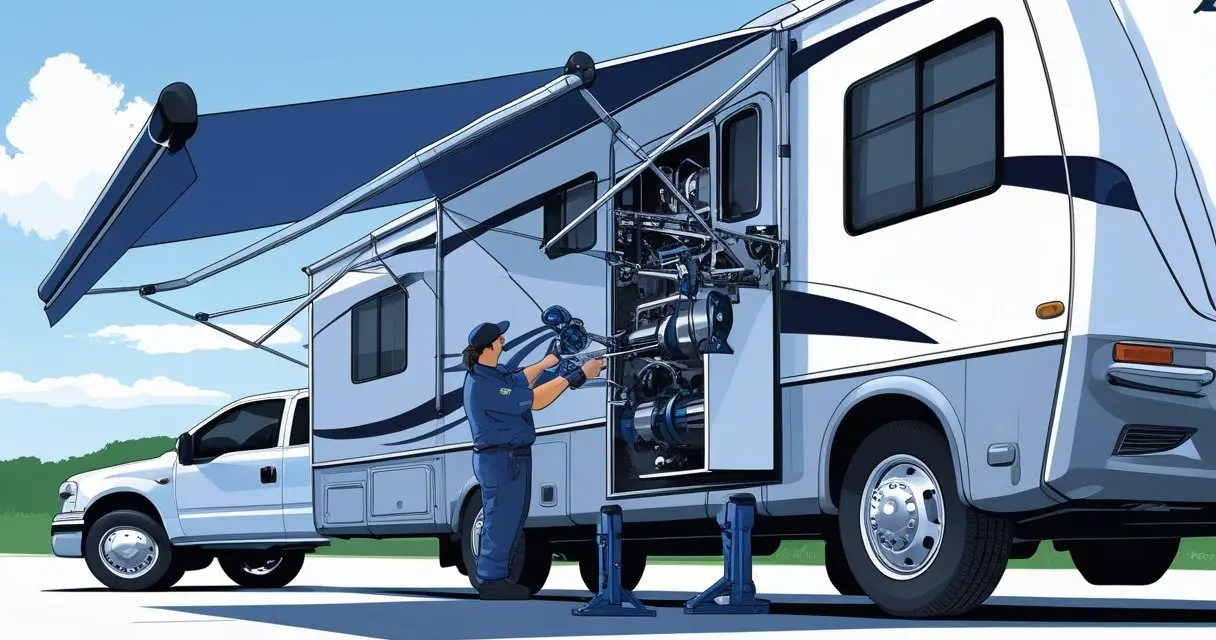
Yes, RV slide outs can be adjusted using basic tools and following proper safety procedures. Most RV owners can make these adjustments themselves with the right knowledge and equipment.
The process involves checking alignment, tightening bolts, adjusting cables, and ensuring smooth operation of the slide out mechanism.
RV slide outs add valuable living space but can develop problems over time. They may become misaligned, stick during operation, or fail to seal properly.
These issues can lead to water damage, uneven wear, and costly repairs if left untreated. The adjustment process varies depending on whether the slide out uses electric, hydraulic, or cable systems.
Key Takeaways
- RV slide outs can be adjusted by owners using common tools like wrenches, levels, and screwdrivers
- Regular maintenance and lubrication prevent most slide out problems and extend system life
- Proper adjustment ensures smooth operation and prevents water damage from poor sealing
Understanding RV Slide Outs
RV slide outs are movable room extensions that expand living space when parked. They use different mechanical systems to operate smoothly and safely.
These systems provide extra room for dining, sleeping, and storage. They maintain the RV’s road-worthy dimensions during travel.
What Is a Slide-Out?
A slide-out is a section of an RV’s interior that extends outward from the main body to create additional living space. The slide-out moves on rails or tracks built into the RV’s frame.
Most slide outs extend 2 to 4 feet beyond the RV’s original walls. They contain furniture, appliances, or open floor space that becomes accessible when extended.
Key components include:
- The slide-out room or box
- Operating mechanism (motor, cables, or hydraulics)
- Support rails and tracks
- Weather sealing system
- Control switches or panels
The slide-out retracts completely when preparing to travel. This keeps the RV within legal width limits for highway driving.
Benefits and Purpose of RV Slide Outs
Slide outs transform cramped RV interiors into spacious living areas. A 30-foot RV can gain 60 to 80 square feet of extra space with just one slide-out.
The extra room makes daily activities more comfortable. Families can move around freely without bumping into each other or furniture.
Primary benefits include:
- Expanded dining areas – Room for larger tables and seating
- Bigger bedrooms – Space to walk around beds
- Kitchen workspace – Counter space and storage access
- Living room comfort – Space for recliners and entertainment centers
Multiple slide outs can nearly double an RV’s interior space. This makes full-time RV living much more practical and enjoyable.
Common Types of Slide-Out Mechanisms
RV manufacturers use three main slide-out system types, each with different operating methods and adjustment points.
Through-frame slides use mechanical gears and motors mounted underneath the RV. The motor turns gears that move the slide-out on heavy-duty rails.
These systems are very reliable but require regular greasing.
Cable slides operate with steel cables and pulleys inside the RV. Motors wind the cables to extend or retract the room.
The cables must maintain equal tension to prevent binding or tilting.
Hydraulic slides use fluid pressure to power rams that push the room in and out. A pump and reservoir supply pressurized fluid to the cylinders.
These systems move smoothly but need proper fluid levels and seal maintenance.
Each slide-out mechanism requires different tools and techniques for adjustments and repairs.
Can RV Slide Outs Be Adjusted?
Yes, RV slide outs can be adjusted, but the process requires careful attention to manufacturer specifications and safety procedures. Most adjustments involve minor tweaks to alignment, while major repairs should be handled by professionals.
When Adjustment Is Necessary
RV owners need to adjust slide out systems when several warning signs appear. Uneven gaps around the slide-out edges indicate alignment problems that require immediate attention.
Difficulty extending or retracting the slide-out signals potential track or motor issues. Strange noises during operation often point to loose components or insufficient lubrication.
Common adjustment triggers include:
- Water leaks around seals
- Visible sagging or tilting
- Binding during movement
- Loose screws from road vibration
Ground conditions also affect slide-out performance. Parking on uneven surfaces can strain the slide-out mechanism and create alignment issues over time.
Electric slide-outs may develop motor problems, while hydraulic systems can experience pressure irregularities. Manual tip-out models in older RVs often need cable adjustments due to stretching.
Manufacturer Guidelines and Recommendations
Each RV manufacturer provides specific instructions for their slide-out systems. These guidelines vary significantly between electric, hydraulic, and manual tip-out models.
The owner’s manual contains crucial information about adjustment procedures and safety precautions. Following these instructions prevents warranty violations and ensures proper operation.
Key manufacturer recommendations:
- Use only approved lubricants for tracks
- Check motor connections regularly
- Maintain proper hydraulic fluid levels
- Inspect seals and gaskets monthly
Most manufacturers recommend professional service for major adjustments. DIY repairs should focus on basic maintenance like tightening loose screws and cleaning tracks.
Some systems include adjustment points that owners can safely modify. Others require specialized tools and expertise that only certified technicians possess.
Potential Risks of Poor Adjustment
Improper slide-out adjustments can cause expensive damage to the RV’s structure and mechanisms. Water damage represents the most serious risk when seals fail due to misalignment.
Poor adjustments strain motors and hydraulic pumps, leading to premature failure. Bent tracks or damaged rollers require costly replacements that could have been prevented.
Major risks include:
- Complete system failure
- Structural damage to RV walls
- Electrical system damage
- Safety hazards during operation
Attempting complex adjustments without proper knowledge can worsen existing problems. Over-tightening cables or incorrectly positioning components may render the slide-out inoperable.
Professional repairs become more expensive when DIY adjustments go wrong. Simple maintenance tasks can quickly escalate into major overhauls requiring specialized parts and labor.