

RV travel brings the comfort of a full kitchen on the road. Many travelers wonder if they can use it while the vehicle is moving.
Cooking in an RV while driving is technically possible but not recommended due to serious safety risks, including fire hazards from propane use, potential burns from hot liquids and foods shifting during vehicle movement, and driver distraction. Most safety experts and RV manufacturers advise against this practice.
The laws around cooking while driving vary by state, with some prohibiting the use of open flames or certain appliances in moving vehicles. Beyond legal concerns, the practical challenges are significant.
Items can slide off counters, hot pots can spill, and the constant motion makes it difficult to safely handle cooking tasks. Even securing equipment properly does not eliminate all risks.
RV owners still have many options for enjoying meals on the road. Understanding which appliances are safer to use, what types of foods work best for travel cooking, and what alternatives exist can help travelers plan meals effectively.
This guide covers the safety considerations, legal restrictions, and practical solutions for eating well during RV trips.
Key Takeaways
- Cooking while an RV is in motion poses safety and fire risks and is not advisable
- State laws vary on cooking while driving, with some prohibiting open flames or propane use
- Pre-cooked meals, roadside facilities, and stationary cooking at stops offer safer alternatives
Is It Legal and Safe to Cook in an RV While Driving?
The legality of cooking while driving an RV varies by state. Safety concerns make it a risky practice regardless of where you travel.
Most states don’t have specific laws against cooking in a moving RV, but the activity can violate distracted driving laws and create serious hazards.
Legal Restrictions in Different States
Most states don’t have laws that specifically ban cooking in an RV while driving. However, many states prohibit activities that distract the driver or create unsafe conditions.
If cooking causes the driver to lose focus or passengers to move around unsafely, law enforcement can issue citations. Some states restrict propane use while driving through tunnels, over bridges, or on certain roads.
These restrictions apply to all RV types. Drivers need to research local laws before traveling, as regulations change from one state to another.
Key legal considerations include:
- Distracted driving laws that can apply if cooking interferes with safe operation
- Propane restrictions in tunnels and on specific roadways
- Seatbelt laws that require passengers to remain seated
- Local ordinances about vehicle safety equipment
Safety Risks and Accident Hazards
Cooking while driving an RV creates multiple safety hazards. Hot liquids and foods can spill during sudden stops or turns, causing burns to passengers.
Sharp utensils become dangerous projectiles when the vehicle hits bumps or makes quick movements. Propane appliances pose the most serious risk.
RV manufacturers and safety experts agree that drivers should never use propane while the vehicle is moving. Road vibrations can loosen connections and create leaks.
An unattended flame can start a fire if the RV stops suddenly or hits rough road conditions. Standing to cook while the RV moves increases fall risks.
Passengers need to wear seatbelts, but cooking requires standing and moving around the cabin. This creates a dangerous situation during any unexpected maneuver.
Insurance and Liability Considerations
Many RV insurance policies don’t cover accidents or injuries that happen while cooking in motion. Insurance companies view cooking while driving as a preventable risk that policyholders should avoid.
Claims for burns, fires, or injuries from cooking equipment may be denied if the incident occurred while the RV was moving. Drivers should review their insurance policies carefully.
Some policies explicitly exclude coverage for incidents related to cooking while driving. Others may reduce payouts or increase premiums after a cooking-related claim.
Liability extends to injuries that passengers suffer. If someone gets hurt because the driver allowed cooking while moving, the driver may face personal liability beyond what insurance covers.
Types of RVs and Their Cooking Capabilities
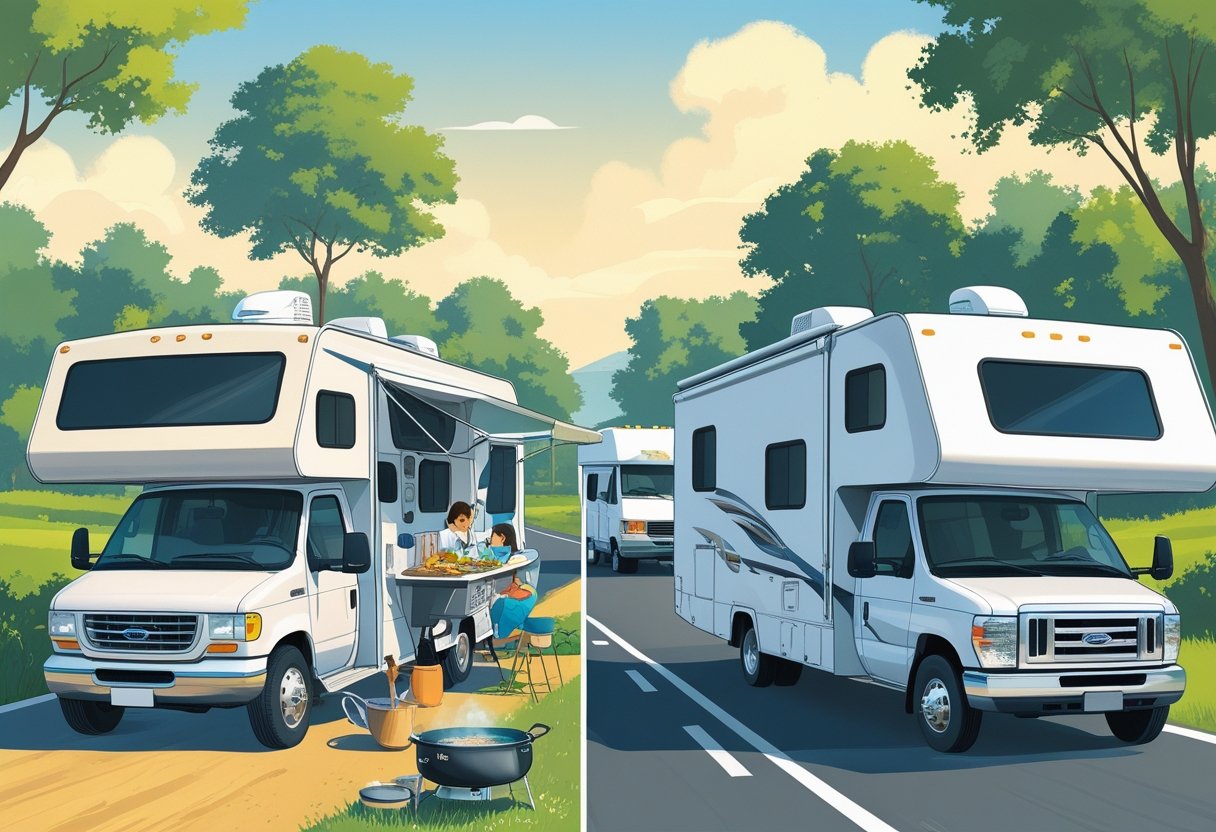
Different RV types offer varying levels of kitchen functionality and space for meal preparation. The type of RV directly impacts what cooking options are available and how safely someone can prepare food while the vehicle is in motion.
Motorhomes vs. Travel Trailers
Motorhomes come in three classes: Class A, B, and C. All motorhomes allow passengers to move around inside while driving, though this doesn’t make cooking safe during travel.
Class A motorhomes typically have the largest kitchens with full-size appliances. Class B vans offer compact kitchens with smaller cooking surfaces.
Class C motorhomes fall between the two with mid-sized kitchen setups. Travel trailers and fifth wheels cannot be occupied while moving.
It’s illegal for anyone to be inside these pull-behind campers during travel. This means cooking while driving is not possible in travel trailers.
The main difference for cooking purposes is that motorhome kitchens remain accessible to belted passengers. However, safety experts recommend against using cooking appliances while any RV is in motion due to fire hazards and the risk of burns from hot liquids or foods shifting unexpectedly.
Built-In RV Kitchen Features
Most RV kitchens include a propane stove with two to four burners. The rv kitchen typically contains an rv refrigerator that runs on propane or electricity.
Many rigs also have a microwave and a small oven. Common features include:
- Propane cooktop or range
- Refrigerator (propane/electric)
- Sink with running water
- Microwave oven
- Storage cabinets
- Small countertop space
Larger motorhomes may have residential-style appliances. Smaller units often use compact versions of standard kitchen equipment.
The rv refrigerator usually stays on during travel to keep food fresh. However, many RV manufacturers recommend turning off propane appliances, including stoves, while driving to prevent gas leaks and fire risks.