

RV owners often wonder about the rules for enjoying a cold drink while their vehicle is stationary. When an RV is parked, drinking alcohol inside is generally legal, but the specific rules depend heavily on where the RV is located.
The key factor is not whether the RV is parked, but rather where it sits when parked.
The legal status of drinking in a parked RV shifts from vehicle open container laws to rules about public consumption and property regulations. In designated campgrounds, drinking is usually allowed inside the RV.
On public streets or rest stops, local laws may prohibit alcohol consumption even inside a parked vehicle. On private property with permission, RV owners typically face no restrictions.
State laws vary widely, and local ordinances add another layer of complexity. This guide breaks down the specific regulations that apply to different parking situations.
Key Takeaways
- Drinking in a parked RV is legal in most campgrounds but often prohibited on public streets and rest stops
- The location where the RV is parked determines which laws apply, not just whether the vehicle is stationary
- State and local regulations differ significantly, so checking specific rules for each destination prevents legal issues
Legal Definition of Drinking in a Parked RV
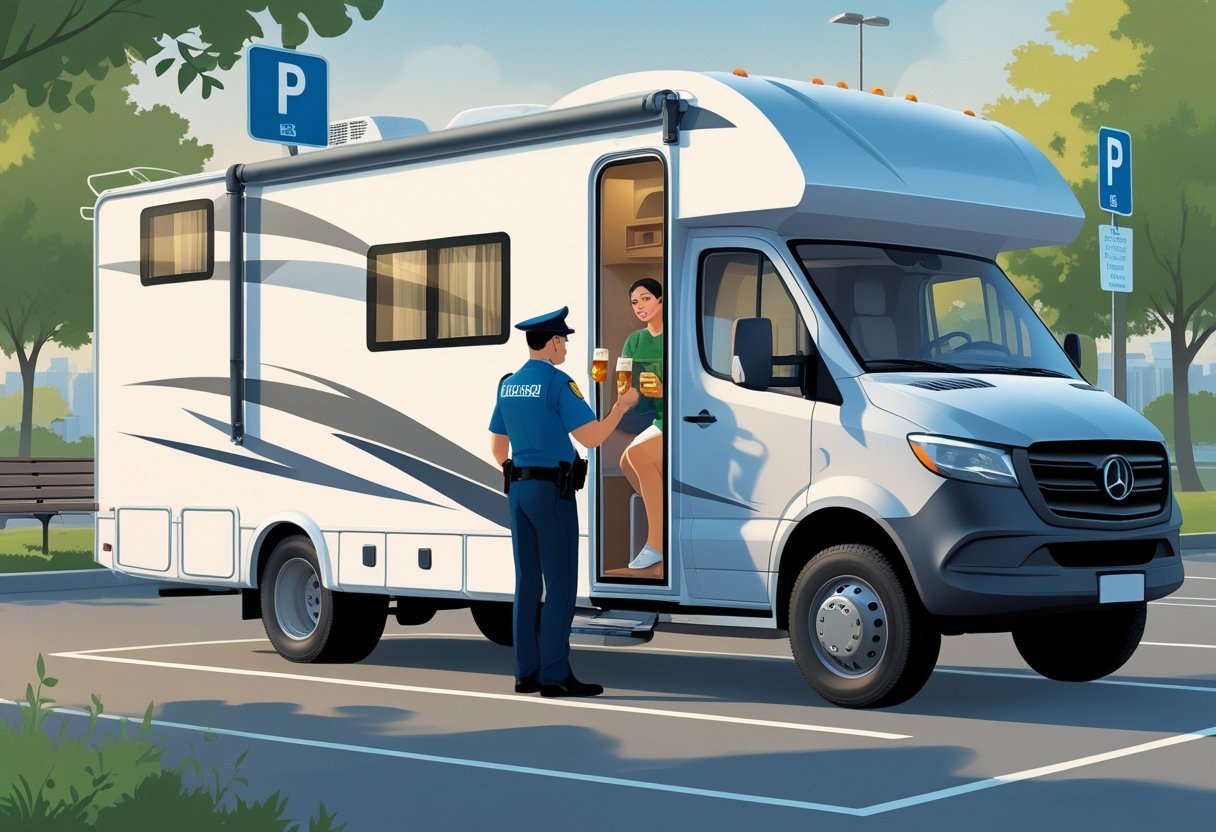
The legal definition of drinking in a parked RV depends on whether the vehicle is moving or stationary and where it sits. Laws treat parked RVs differently than moving ones, and location plays a major role in determining what’s legal.
Distinction Between Parked and Moving RVs
Open container laws apply differently when an RV stops moving. While the vehicle is in motion, most states enforce strict rules about where alcohol can be located inside the RV.
The driver cannot drink alcohol or have open containers within reach under any circumstances. Once parked, the legal framework shifts.
Many jurisdictions stop treating the RV as a motor vehicle and start viewing it more like a temporary home. This change in status affects how open container laws apply to the occupants inside.
The driver still faces restrictions even when parked. In states like California, drivers cannot consume alcohol while behind the wheel regardless of whether the RV is moving or stationary.
Passengers face fewer restrictions once the vehicle is fully parked and stationary.
Impact of Location: Private Land vs. Public Spaces
Location determines whether drinking in a parked RV is legal. Private property with the owner’s permission generally allows alcohol consumption inside an RV.
This includes driveways, private campsites, and businesses that permit overnight parking. Public property creates more legal complications.
Parking on public streets, rest stops, or public parking lots and drinking inside the RV often violates local ordinances. These laws prohibit public consumption of alcohol, and sitting inside an RV on public land doesn’t always provide legal protection.
Designated campgrounds fall into a middle category. Most private, state, and national park campgrounds allow alcohol consumption inside RVs, but individual facilities can set their own rules.
Some parks ban alcohol entirely or limit where people can drink it.
Legal Status of RV as a Residence While Parked
Laws in both the U.S. and Canada recognize a parked RV as a residence rather than a vehicle. This residential status matters because it removes the RV from standard vehicle regulations and applies property-based rules instead.
The residential classification isn’t automatic. Parking briefly on the roadside doesn’t convert an RV into a residence under the law.
State codes often specify that the RV must be properly parked and set up at an appropriate location. This residential status affects how RV open container laws work.
Once the RV qualifies as a residence, typical open container restrictions for vehicles no longer apply in the same way. The rules shift to local regulations about alcohol consumption in residences and public intoxication laws that apply regardless of location.
Open Container Laws and Parked RVs
Open container laws regulate where alcoholic beverages can be stored and consumed in vehicles, including RVs. When an RV is parked, these laws shift from traffic regulations to property-based restrictions that depend on location and local ordinances.
Overview of RV Open Container Laws
Open container laws make it illegal to have unsealed alcohol containers in the passenger area of a motor vehicle. Most states enforce these rules, though the specific details vary widely across the country.
RVs receive special treatment under many state laws because they have separate living quarters. This “living quarters exception” allows open containers in the back portion of an RV, away from the driver’s area.
The exception does not apply everywhere, and some states set specific requirements for it to work. For example, Florida and Louisiana require an RV to be over 21 feet long for the living quarters exception to apply.
When valid, the exception lets passengers keep open alcohol containers in the living area while keeping them out of the driver’s reach. Penalties for violations range from $100 fines in North Carolina to $250 or more in California for first offenses.
Applicability to Parked Versus Moving RVs
The rules change significantly when an RV stops moving. Open container laws focus mainly on vehicles in motion to prevent driver impairment and maintain road safety.
Once parked, an RV functions more like a temporary residence than a vehicle. The legal focus shifts from traffic laws to property regulations and public consumption rules.
This means the location where the RV is parked matters more than whether containers are open inside. Most campgrounds allow alcohol consumption inside parked RVs, though individual facilities may have their own restrictions.
Some parks prohibit alcohol completely or limit drinking to specific areas. Public property locations like rest stops and street parking usually maintain stricter rules against alcohol consumption, even inside a parked vehicle.
State Variations in Enforcement
No federal law standardizes alcohol rules for RVs across all states. Each state creates its own open container laws, and local jurisdictions add their own ordinances on top of state rules.
Some states enforce strict prohibitions on any open containers in vehicles, regardless of whether they are moving or parked on public property. Other states take a more lenient approach, especially when RVs are parked in designated campi