
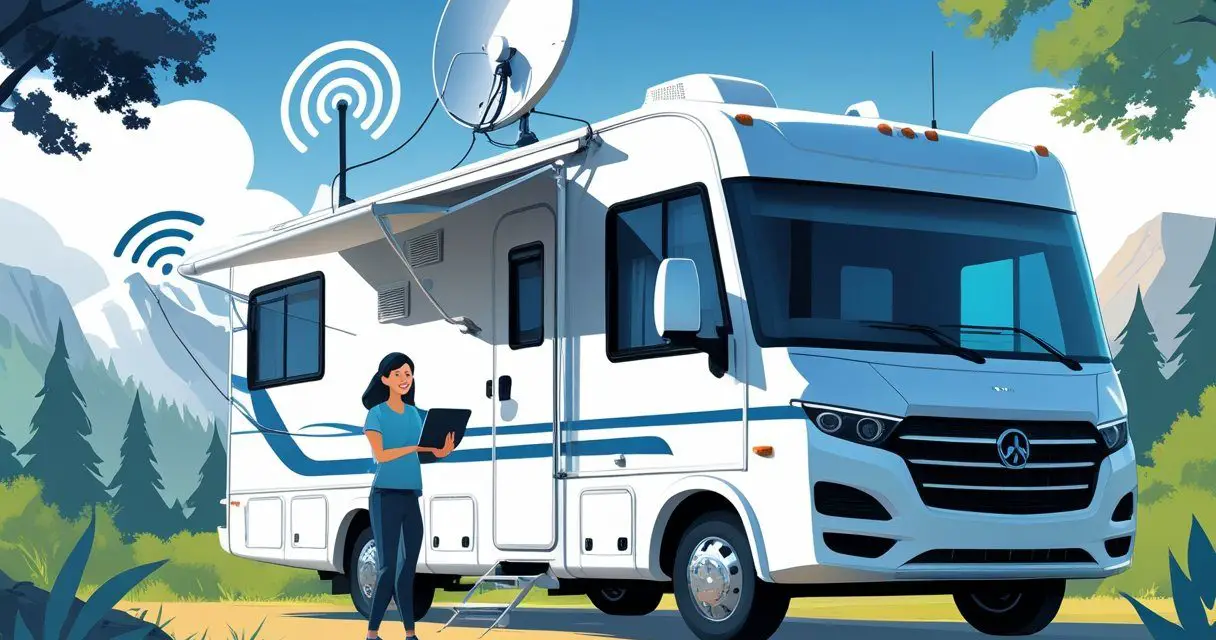
Yes, you can get high-speed internet in an RV through cellular data plans, satellite services like Starlink, or mobile hotspots. The days of being completely disconnected on the road are over.
Modern RV travelers can work remotely, stream movies, and stay in touch with family using a variety of internet solutions.
The best option depends on where you travel and how you use the internet. Cellular hotspots work well near cities and highways.
Satellite internet covers remote areas where cell towers don’t reach. Many full-time RVers use both to stay connected everywhere they go.
Cost and power usage matter too. Some setups cost a few hundred dollars while others run several thousand.
The right choice matches your travel style, budget, and internet needs.
Key Takeaways
- RVers can access high-speed internet through cellular hotspots, satellite services, or a combination of both
- Cellular data works best near populated areas while satellite internet like Starlink covers remote locations
- The ideal setup depends on travel patterns, budget, power availability, and whether internet is needed for work or casual use
Overview of RV High Speed Internet Access
High speed internet in an RV works differently than traditional home connections, with speed standards and reliability varying based on technology and location.
RV travelers can access multiple internet options, each with unique benefits and limitations.
Defining High Speed Internet for RVs
High speed internet for RVs typically means download speeds of at least 25 Mbps, though this varies based on the technology used.
Mobile hotspots and cellular connections usually deliver 4G speeds between 28 and 35 Mbps in most areas. Satellite internet through services like Starlink Roam can reach up to 300 Mbps.
The definition differs from home internet standards. RV internet options focus on portability rather than the fastest possible speeds.
A connection that handles video streaming, web browsing, and video calls counts as high speed for most travelers.
Speed also depends on whether the RV is moving or stationary. In-motion internet typically runs slower than when parked.
Remote locations generally see reduced speeds compared to urban areas with strong cellular coverage.
Why Reliable Internet Matters for RV Living
Many RV travelers work remotely and need consistent internet for their jobs.
Video conferences, file uploads, and cloud-based applications require stable connections.
Entertainment needs also drive demand for quality RV internet. Streaming services require at least 5 Mbps for HD video and 25 Mbps for 4K content.
Multiple devices using the connection simultaneously need even higher speeds.
Emergency communication and navigation rely on internet access. RV travelers use online tools for weather updates, route planning, and campground reservations.
Internet access connects travelers to family and provides access to important services while on the road.
Factors That Impact Internet Speed on the Road
Geographic location affects internet performance more than any other factor.
Urban areas offer strong cellular signals and faster speeds, while rural zones and national parks have limited coverage.
Mountains, valleys, and forests block wireless signals and reduce connection quality.
Network congestion impacts speeds at busy campgrounds. When many users share the same cellular tower or campground Wi-Fi, speeds drop significantly.
Peak usage times in the evening see the slowest performance.
The technology chosen determines baseline speeds. Satellite internet works in remote areas but costs more.
Mobile hotspots depend on cellular coverage. Wi-Fi extenders only boost existing signals from campgrounds or public locations.
Weather conditions can interfere with satellite connections, while cellular performance stays more consistent.
Cellular Data and Mobile Hotspots
Cellular data through mobile hotspots remains the most popular internet solution for RV travelers who stick to highways and populated areas.
The major carriers offer plans with high-speed data before throttling kicks in, and setup requires minimal equipment compared to satellite options.
How Mobile Hotspots Work in an RV
A mobile hotspot converts cellular signals into a Wi-Fi network that multiple devices can connect to simultaneously.
RVers can use their smartphone’s built-in hotspot feature, purchase a dedicated hotspot device, or install a mobile router designed for RV use.
Dedicated hotspot devices cost between $200 and $400 and often provide stronger connections than phone hotspots.
Mobile routers like Pepwave or Cradlepoint models range from $500 to $700 but support multiple SIM cards from different carriers.
This dual-carrier setup helps maintain connectivity when one network has weak coverage.
Cellular boosters amplify weak signals in remote areas. Models like weBoost Drive Reach RV cost $500 to $800 but can make the difference between no service and usable speeds.
These boosters require mounting an external antenna on the RV roof and connecting it to an interior unit.
Choosing the Right Cellular Data Provider
Verizon, AT&T, and T-Mobile dominate the RV internet market with different coverage strengths.
Verizon typically offers the best coverage in rural areas, while T-Mobile often provides better speeds in cities at lower prices.
AT&T falls somewhere in the middle for both coverage and cost.
Coverage maps help identify which carrier works best for planned travel routes.
Many RVers maintain plans with two carriers to ensure backup connectivity.
Some mobile routers accept multiple SIM cards and automatically switch between networks based on signal strength.
Plan costs in 2025 range from $40 to $100 per month depending on the carri