
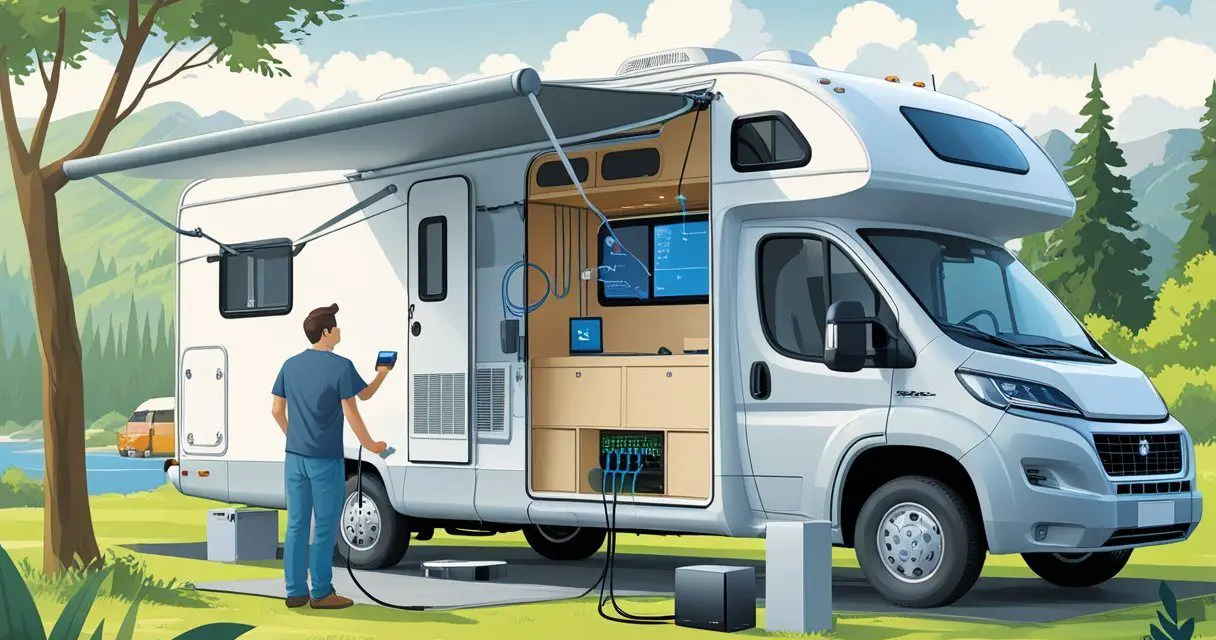
Living on the road doesn’t mean giving up a stable internet connection. Many RV travelers wonder if they can set up the same type of internet they have at home.
Yes, you can get wired internet in an RV, and many RV parks and campgrounds offer Ethernet connections or cable internet hookups that let you plug in directly for a fast and reliable connection. This option works well for people who need steady speeds for work or streaming.
Wired internet isn’t available everywhere you park, though. Some locations offer it as part of their amenities, while others don’t have the infrastructure at all.
Understanding how wired connections work in an RV and what alternatives exist helps travelers make smart choices about staying online. Different methods fit different travel styles and budgets.
The right internet setup depends on where you go, how much data you use, and what you’re willing to spend. Some RVers stick with one method, while others use a mix of options based on their location.
Key Takeaways
- Wired internet is available at some RV parks through Ethernet or cable connections, offering fast and reliable speeds
- Wireless options like cellular data and satellite internet provide coverage in areas without wired infrastructure
- The best internet solution depends on your travel patterns, data needs, and budget for equipment and monthly costs
Understanding Wired Internet in an RV
Wired internet in an RV connects through physical cables rather than wireless signals. RV parks and campgrounds may offer ethernet ports or cable internet access, though availability varies significantly by location.
What Wired Internet Options Are Available
RV parks with wired connections typically provide ethernet ports at individual sites. These ports connect directly to a router or device using an ethernet cable.
The setup works similar to home internet but requires the RV to stay stationary at the campsite. Cable internet represents another wired option at some upscale RV resorts.
This service uses coaxial cables and requires a cable modem to establish the connection. The modem converts the cable signal into usable internet access for devices.
Some RVers create their own wired setup inside the RV. They install routers that connect to the park’s network through an external ethernet connection.
This allows multiple devices to access the internet through both wired and wireless connections inside the vehicle. The quality of wired connections depends entirely on the RV park’s infrastructure.
Premium resorts often invest in faster, more reliable systems. Budget campgrounds may offer slower speeds or unreliable service.
Limitations of Wired Connectivity on the Road
Wired internet in an RV restricts mobility since the connection requires a physical cable. RVers cannot access the internet while driving or when parked in locations without wired infrastructure.
Most campgrounds don’t offer wired connections at all. The search for RV parks with ethernet or cable access significantly limits destination choices.
Rural areas and national forest campgrounds rarely provide these services. The connection only works at the specific site where the cable reaches.
Moving the RV even a few feet can disconnect the service. This lack of flexibility contrasts sharply with cellular or satellite options that travel with the vehicle.
Comparing Wired and Wireless Internet for RVs
Speed and reliability differ between connection types. Wired connections at well-equipped RV parks often deliver faster speeds than campground WiFi.
However, cellular data networks frequently match or exceed wired speeds in areas with strong coverage. Cost considerations vary by method.
Many RV parks include wired access in the site fee, making it economical. Cellular plans range from $20 to $100 monthly, while satellite services cost $50 to $200 or more per month.
Coverage and availability favor wireless options. Cellular networks reach most populated areas across the country.
Satellite internet works in remote locations where other methods fail. Wired connections remain limited to specific campgrounds.
Setup requirements are simpler for wireless solutions. Cellular hotspots and WiFi need minimal equipment.
Wired connections require cables, compatible ports at the campground, and sometimes additional routers or modems.
Wireless Alternatives to Wired Internet
RV travelers have several wireless internet options that don’t require physical cables. Mobile hotspots use cellular networks, satellite systems beam internet from space, and campground connections offer convenient Wi-Fi access at many locations.
Mobile Hotspots and Cellular Data
Mobile hotspots convert cellular data into a WiFi network that multiple devices can use. These compact devices work with major carriers like Verizon, T-Mobile, and AT&T.
A dedicated mobile hotspot offers better performance than phone tethering. Devices like the T-Mobile Inseego 5G MiFi M2000 support up to 30 connected devices.
The NETGEAR AC797 provides speeds up to 400 Mbps on 4G networks. Cellular data plans vary widely in cost and data limits.
Some carriers offer unlimited data plans specifically for mobile hotspots. Others cap usage at 50GB or 100GB per month.
Key considerations for mobile hotspots:
- Coverage depends on the cellular network in each area
- 5G speeds are faster but not available everywhere
- Battery life ranges from 8 to 11 hours on most devices
- Unlocked devices let users switch between carriers
Satellite Internet Services
Satellite internet reaches remote locations where cellular signals fail. Services like Starlink and HughesNet use dish antennas to communicate with orbiting satellites.
Starlink offers the newest technology with faster speeds and lower latency than older satellite options. The system requires mounting a dish on the RV roof.
HughesNet provides reliable service with nearly 30 years of experience in the satellite industry. Setup requires clear sky visibility without tree cover or mountain obstructions.
Weather conditions can affect signal quality. Rain and heavy cloud cover sometimes disrupt connections.
Satellite internet drawbacks include:
- Higher upfront equipment costs ($500-$2,500)
- Monthly service fees ($100-$150+)
- Manual or auto-pointing dish alignment needed
- Performance varies with weather and landscape
Campground Wi-Fi and Public Wi-Fi Networks
Many RV parks and campgrounds provide free or paid Wi-Fi to guests. The quality of these wifi networks varies significantly between locations.
Campground wi-fi often struggles with bandwidth when many users connect simultaneously. Sites farther from the router receive weaker signals.
A WiFi extender can boost weak