
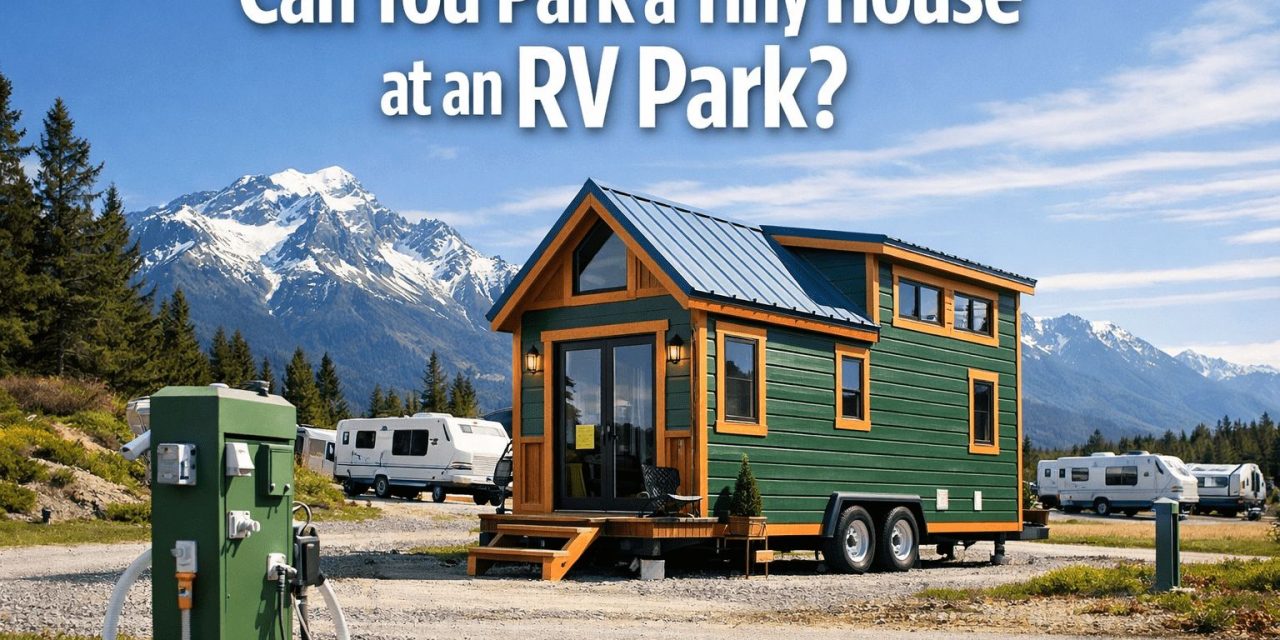
You’ve built or purchased your dream tiny house on wheels, and now you’re wondering where you can legally park it. The question “can you park a tiny house at an rv park?” has a surprisingly complex answer that depends on state laws, local regulations, park policies, and how your tiny home is classified.
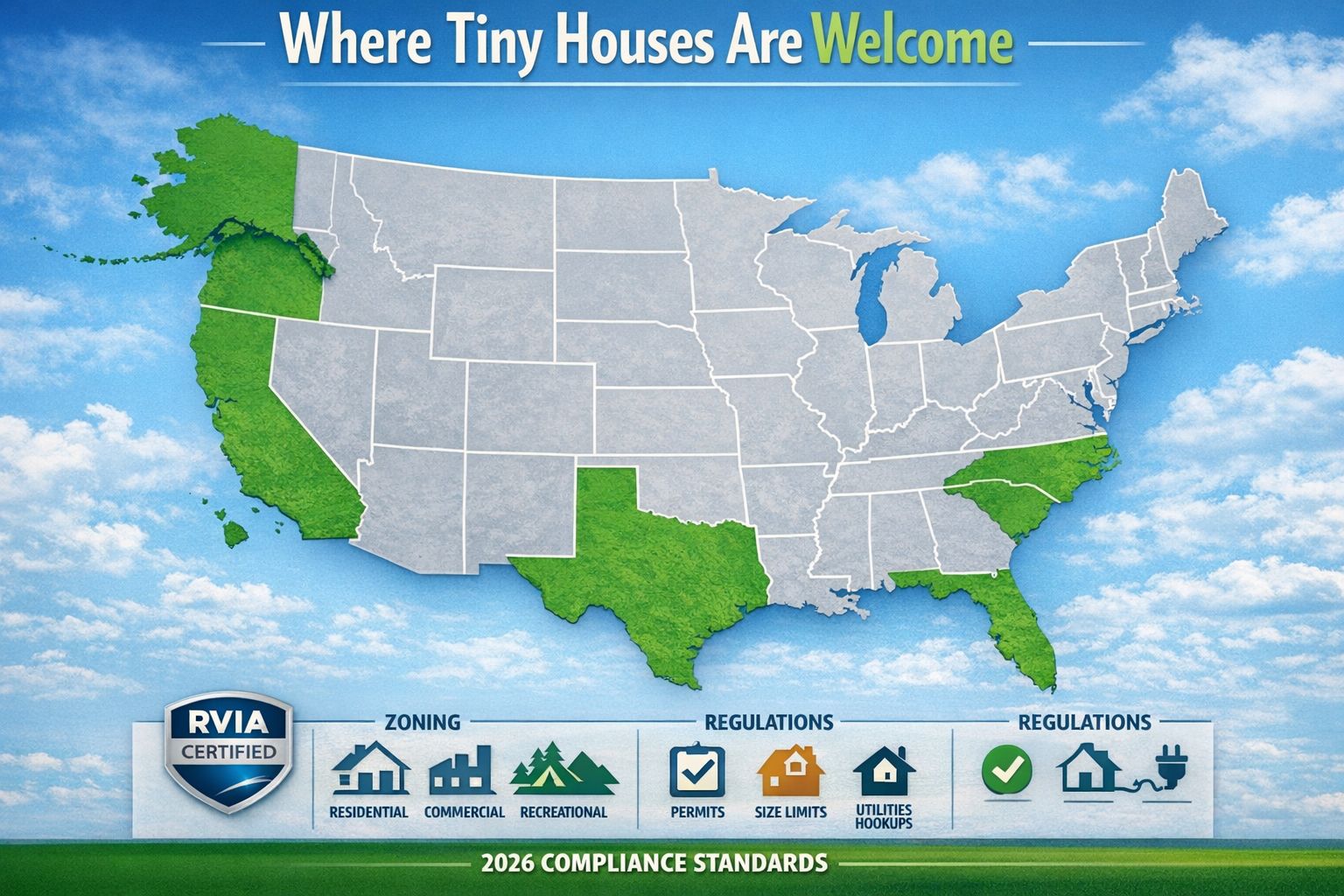
Yes, you can park a tiny house at many RV parks in 2026, but only if your tiny home meets specific requirements. Most tiny houses on wheels are legally categorized as RVs, which means they must comply with local RV parking regulations that vary significantly by county and municipality.[1] Six states—Alaska, California, Florida, Texas, Oregon, and Tennessee—explicitly allow tiny homes in RV parks, though many require registration as residential dwellings to avoid enforcement action.[1]
Key Takeaways
- Most tiny houses on wheels qualify as RVs and can park at RV parks that accept them, but certification and local zoning matter significantly
- Six states explicitly permit tiny house parking in RV parks: Alaska, California, Florida, Texas, Oregon, and Tennessee
- RVIA certification opens more doors but is only available for manufactured tiny homes from certified companies, not owner-built structures
- Full-time living legality depends on local zoning codes, not just park policies—always verify municipal regulations before committing
- Written rental agreements are essential to protect both residents and landowners regarding utilities, duration, and responsibilities
What Makes a Tiny House Eligible for RV Park Parking?
A tiny house becomes eligible for RV park parking when it meets specific size, weight, certification, and hookup standards that align with recreational vehicle regulations. The primary requirement is that your tiny home must be built on a trailer chassis and remain mobile, which distinguishes it from permanent structures.[2]
Essential eligibility criteria include:
- Width limitations: Maximum 8.5 feet wide to comply with road transportation laws without special permits
- Length restrictions: Most RV parks cap length at 40 feet, though some allow up to 45 feet
- Weight considerations: Must not exceed the towing capacity of standard vehicles (typically under 10,000 pounds for most parks)
- Utility hookups: Must have standard RV connections for water, electric (30 or 50 amp), and sewer
- Road-ready condition: Wheels, axles, and trailer components must remain functional and attached
- Safety compliance: Working lights, reflectors, and proper tie-downs for highway travel
Choose RVIA certification if you want maximum acceptance at established RV parks. This certification from the Recreation Vehicle Industry Association enables parking in certain RV parks, but it’s only available for manufactured tiny homes from certified companies—not owner-built homes—and typically permits only short-term occupancy.[1][2]
A common mistake is assuming all tiny houses automatically qualify as RVs. If your tiny home exceeds standard dimensions, lacks proper hookups, or has been modified in ways that compromise road safety, many RV parks will refuse entry regardless of state laws.
Can You Park a Tiny House at an RV Park Long-Term?
Long-term parking of a tiny house at an RV park is possible but heavily regulated, with duration limits varying dramatically between public parks, private campgrounds, and individual state regulations. Full-time living legality is controlled by local zoning codes, requiring review of city and county land-use regulations, ADU ordinances, and RV parking