

You’ve planned the perfect RV adventure, mapped out scenic routes, and found the ideal rental—only to discover you don’t have a credit card. Does this mean your road trip dreams are over? Not necessarily! While can you rent an RV without a credit card is a common concern among travelers, the answer isn’t a simple yes or no. The payment landscape for RV rentals has evolved, and understanding your options can help you hit the road with confidence. 🚐
Key Takeaways
- Most major RV rental companies require a credit card for security deposits and hold policies, similar to hotel bookings[4]
- Debit cards are accepted by some companies but typically come with larger deposit requirements and longer hold times[2]
- Cash and virtual credit cards (like Apple Pay) are generally not accepted by traditional rental companies[4]
- Peer-to-peer rental platforms like RVshare, RVnGO, and Outdoorsy may offer more flexible payment options through private owners[1][3]
- Individual rental policies vary significantly, making it essential to contact companies directly before booking
Understanding RV Rental Payment Requirements
Why Do RV Companies Prefer Credit Cards?
RV rental companies aren’t trying to make life difficult—they have legitimate business reasons for preferring credit cards. These vehicles represent significant investments, often worth $50,000 to $300,000, and companies need financial protection against potential damage, theft, or late returns.
Credit cards offer rental companies:
- Built-in fraud protection
- Ability to place holds without withdrawing funds
- Extended liability coverage in many cases
- Easier dispute resolution processes
Most major RV rental providers require a valid credit card to be kept on file during your rental period, functioning similarly to hotel booking practices[4]. This card serves as security rather than just a payment method.
Can You Rent an RV Without a Credit Card? Traditional Rental Companies
The Credit Card Standard
The short answer is that traditional RV rental companies typically require credit cards. Companies like Escape Camper Vans explicitly state they require a credit card and do not accept debit cards or virtual credit cards such as Apple Pay[4].
This policy isn’t universal across all providers, but it’s the industry standard for several reasons:
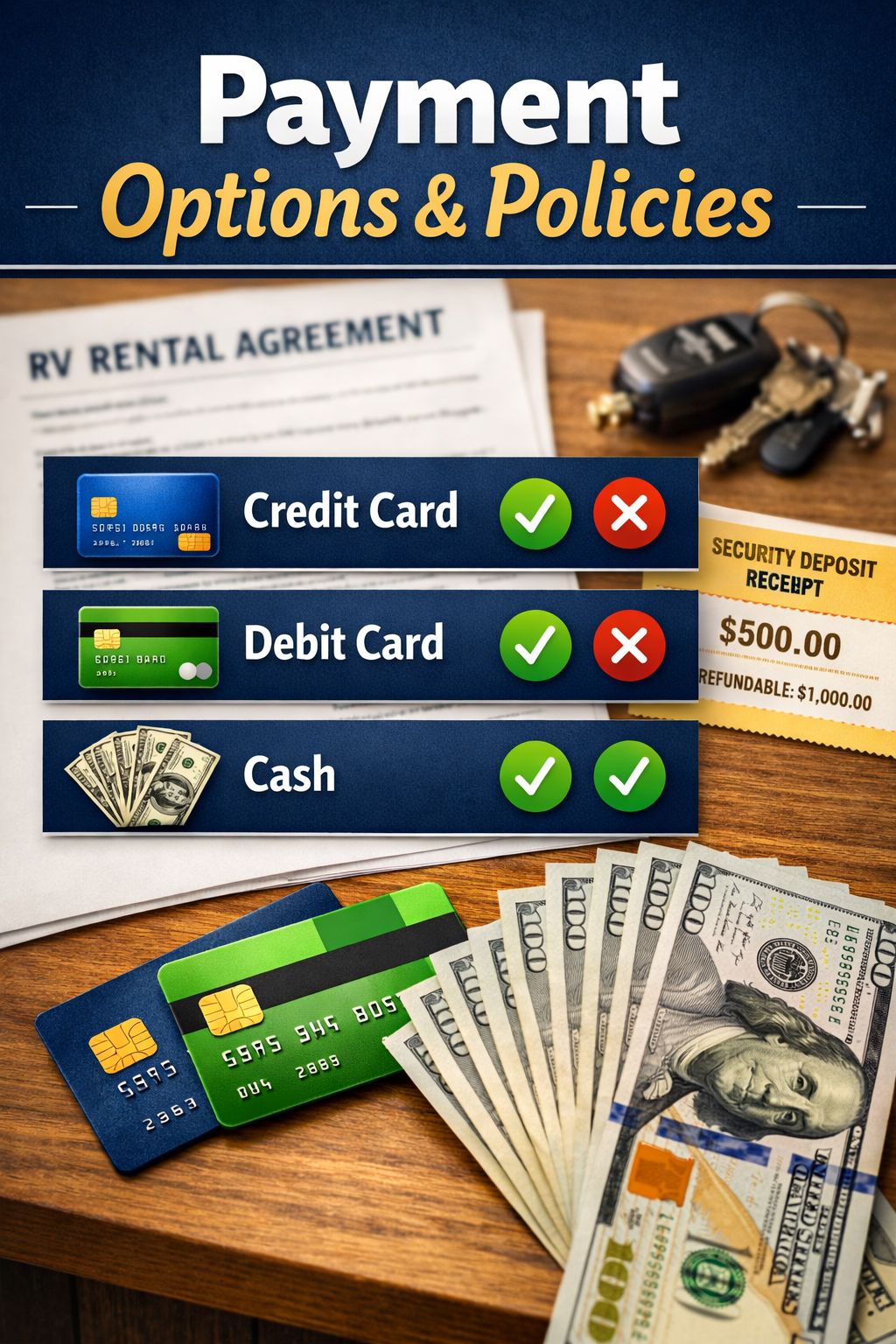
| Payment Method | Typically Accepted? | Common Restrictions |
|---|---|---|
| Credit Card | ✅ Yes | Must be in renter’s name |
| Debit Card | ⚠️ Sometimes | Larger deposits, longer holds[2] |
| Cash | ❌ No | Not accepted by major providers[4] |
| Virtual Cards | ❌ No | Apple Pay, Google Pay rejected[4] |
When Debit Cards Are Accepted
Some RV rental companies do accept debit cards, but with significant caveats. When debit cards are permitted, companies typically withhold larger sums as deposits, and these funds may not reappear in your account until the vehicle is returned in the same condition[2].
Important considerations with debit cards:
- 💰 Deposits can range from $500 to $2,500 or more
- ⏰ Funds remain frozen for 7-14 business days after return
- 📋 Additional documentation may be required
- 🚫 Some vehicle classes may be excluded
This can create cash flow challenges, especially for longer trips where you need access to your funds for gas, campground fees, and other travel expenses.
Alternative Options: Can You Rent an RV Without a Credit Card Through Peer-to-Peer Platforms?
The Rise of Private RV Rentals
If traditional rental companies won’t work with your payment situation, peer-to-peer rental platforms offer promising alternatives. Platforms like RVnGO, RVshare, and Outdoorsy connect travelers directly with private RV owners[1][3], creating opportunities for more flexible arrangements.
“Peer-to-peer platforms have revolutionized RV rentals by connecting travelers directly with owners, often allowing for more personalized payment arrangements.”
How Private Rentals Differ
Private rental platforms operate differently than corporate rental fleets. While the platform itself may have payment processing requirements, individual owners sometimes have flexibility in their policies[2].