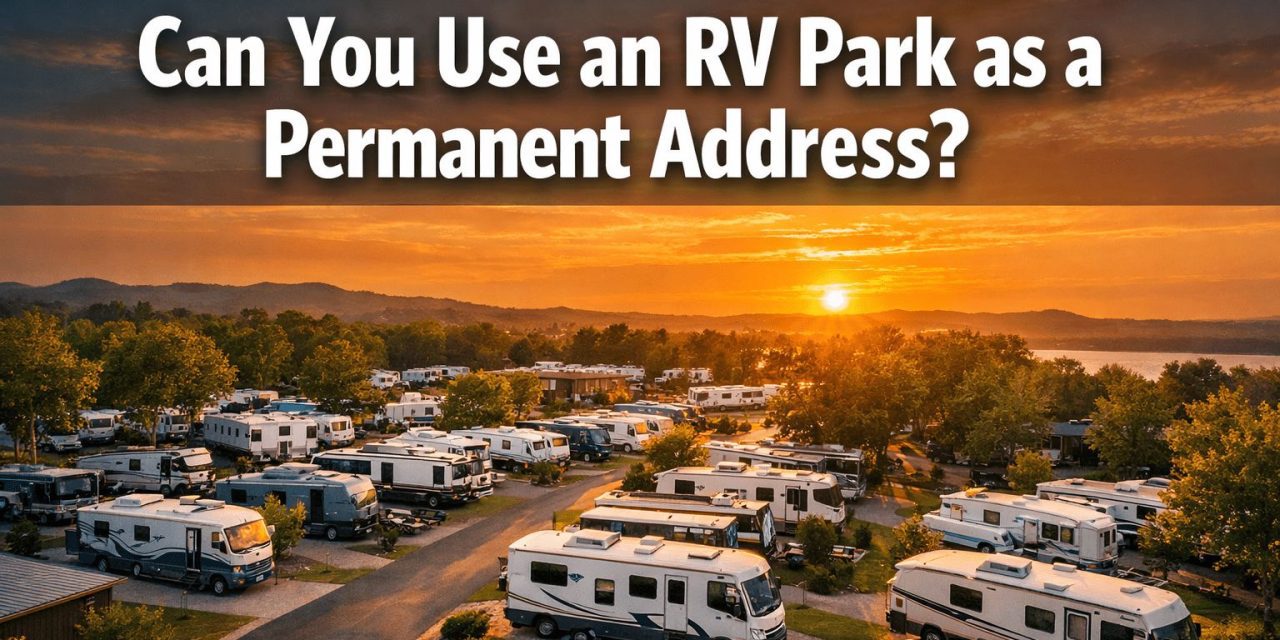
Dreaming of life on the open road — waking up to mountain views one week and ocean breezes the next? Millions of Americans are doing exactly that. But before you unhook from the grid for good, there’s one big question every full-time RVer has to face: can you use an RV park as a permanent address? The short answer might surprise you, and getting it wrong can cause serious headaches with your driver’s license, insurance, taxes, and more. 🚐
Key Takeaways
- RV parks are generally NOT recognized as legal permanent addresses by state DMVs, voter registration offices, or insurance companies. [1]
- Mail forwarding services provide the physical street address most full-time RVers need for legal residency. [2]
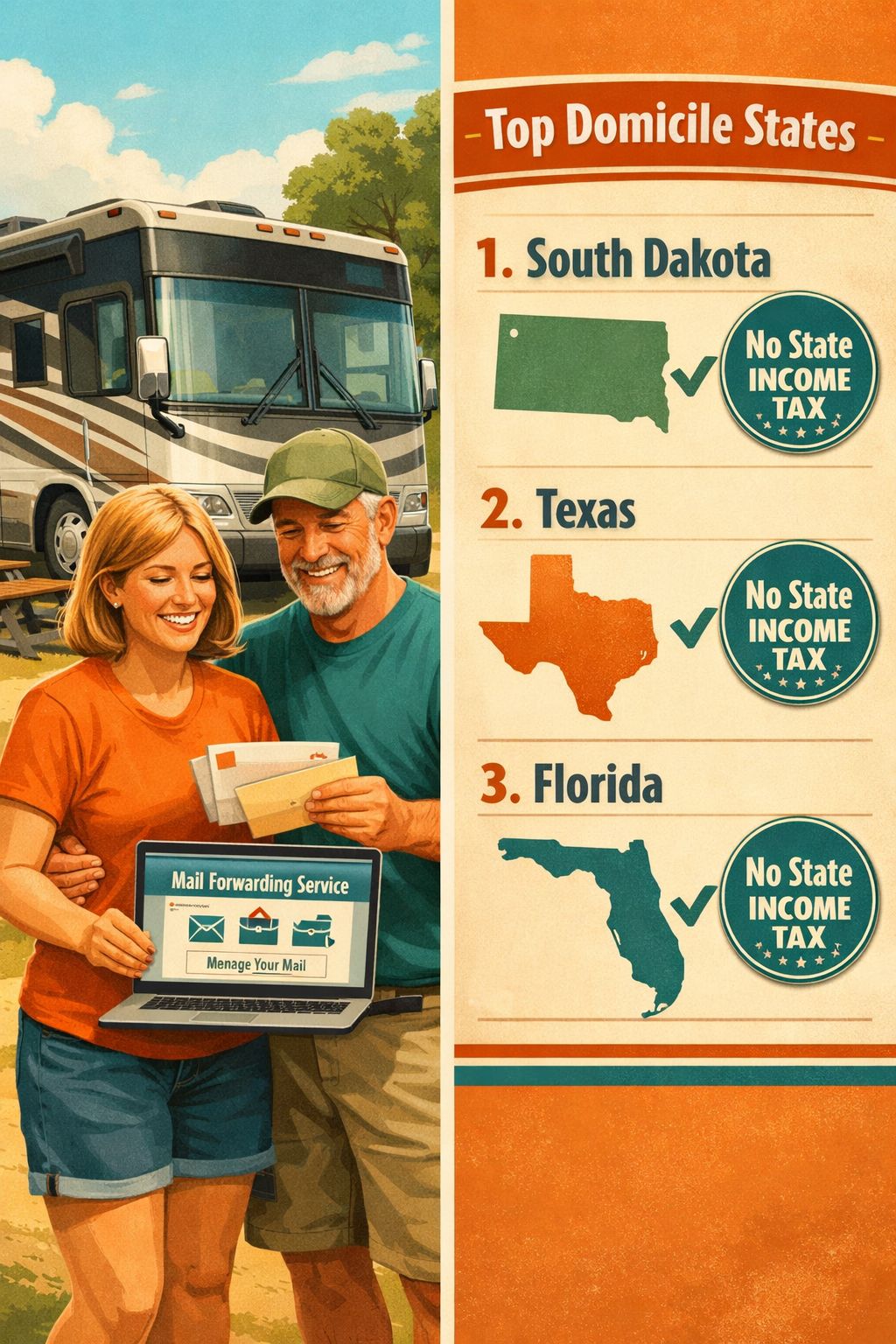
- South Dakota, Texas, and Florida are the top three states for establishing RV domicile due to tax benefits and simple requirements. [2]
- As of 2026, several states including Florida, California, Texas, and Arizona have added new domicile verification rules for RV registration. [6]
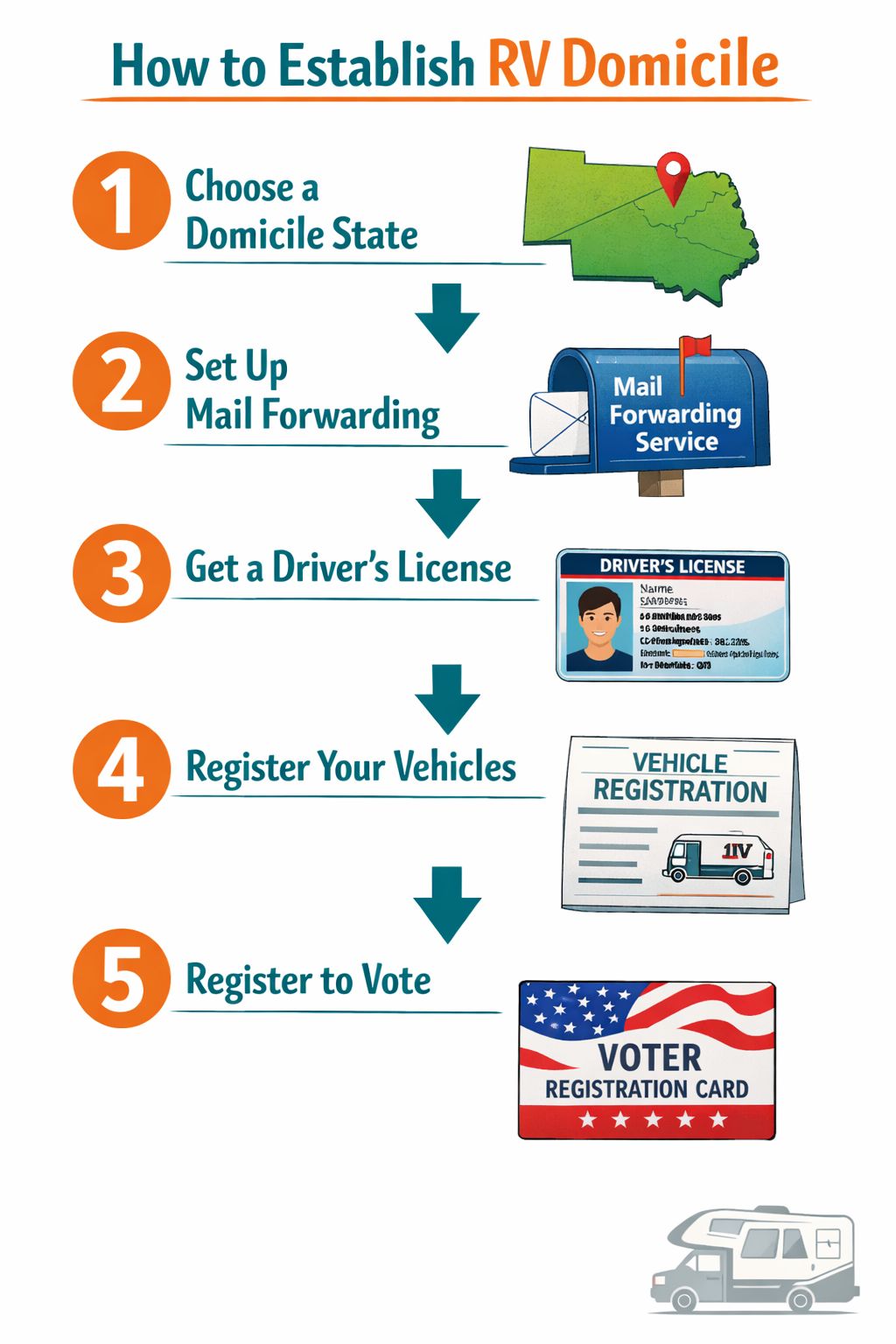
- A multi-step process — including getting a physical address, updating your driver’s license, and registering to vote — is required to legally establish your domicile. [5]
Can You Use an RV Park as a Permanent Address? The Legal Reality
Here’s the truth that catches many new full-timers off guard: most RV parks do not qualify as legal permanent addresses under state law. [1] Even if a park advertises itself as “permanent residency friendly,” that marketing language does not change the legal requirements set by your state’s DMV, voter registration office, or insurance provider. [1]
Why RV Parks Don’t Count as a Legal Address
State agencies require a fixed, physical street address to issue a driver’s license, register a vehicle, set up insurance, or register to vote. RV park addresses are considered transient or temporary lodging locations — not residential addresses. [2]
Here’s what won’t work as a legal permanent address:
- ❌ An RV park lot address
- ❌ A P.O. box
- ❌ A friend or family member’s address (without proper legal steps)
- ❌ A campground site number
💬 “P.O. boxes are explicitly rejected by DMVs, voter registration offices, and insurance companies — a physical street address is non-negotiable.” [2]
Using a friend’s or relative’s address might seem like an easy workaround, but it can expose both parties to legal liability, including tax complications and fraud concerns. [4] That’s why most experienced full-timers skip this option entirely.
What About Registering Your RV as a Domicile?
Some RVers explore registering their RV itself as a domicile — essentially making the vehicle their legal home base. This is technically possible in certain states, but it still requires establishing physical presence in that state and meeting documentation requirements. [3] It’s a more complex route and not the right fit for everyone.
How Can You Use an RV Park as a Permanent Address — The Right Way?
So if the RV park address itself won’t work, what does? The answer most full-time RVers rely on is a commercial mail forwarding service. These services give you a real, physical street address (not a P.O. box) in your chosen state. [2] That address becomes your legal domicile — the state you officially “live in” for all legal purposes.
Step-by-Step: Establishing Your RV Domicile