
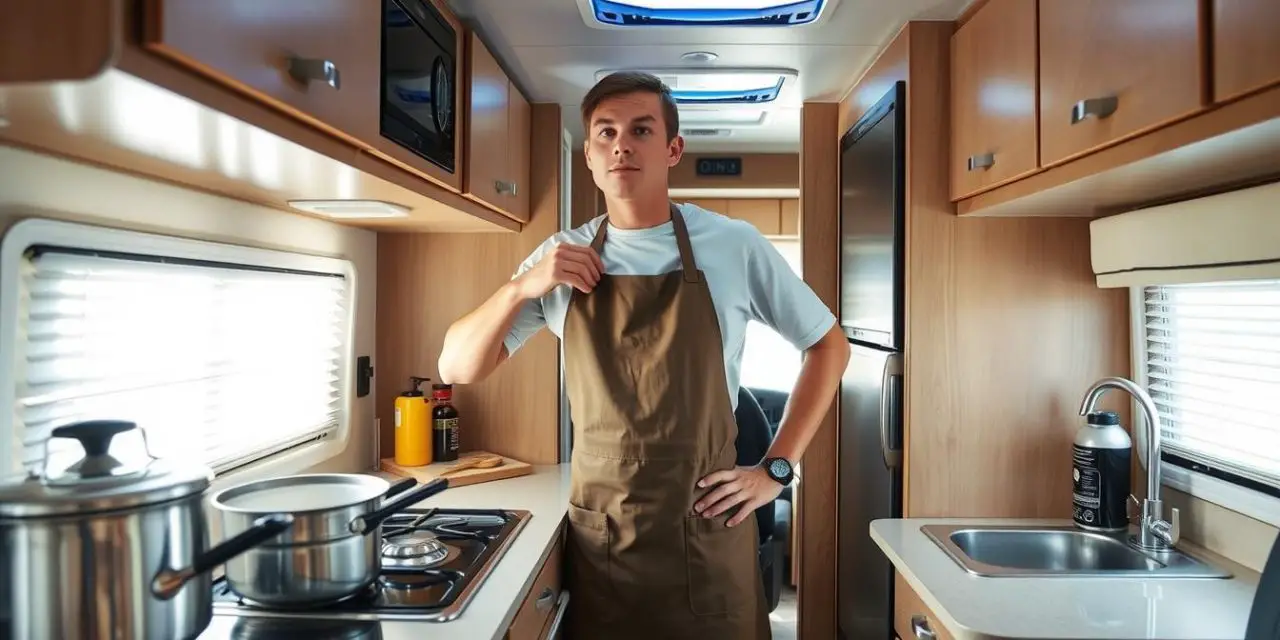
This comprehensive guide will explore the possibilities, challenges, and safety considerations of cooking while your RV is in motion. We’ll cover everything from the types of appliances that can be used safely, practical meal planning strategies, and even share some road-friendly recipes that won’t leave your RV looking like a food tornado hit it when you reach your destination.
Safety First: Can You Really Cook While Moving?
Safety should always be your primary concern when considering cooking in a moving RV
The short answer is: yes, you can cook in a moving RV but it is NOT ADVISABLE. There are significant limitations and safety considerations. Most importantly, you should never use propane appliances while your RV is in motion. This isn’t just a suggestion—it’s a critical safety rule that could prevent dangerous situations.
Propane Safety: A Non-Negotiable Rule
RV manufacturers and safety experts universally recommend turning off propane systems while driving. Why? Several important reasons:
- Risk of leaks during travel due to road vibrations loosening connections
- Potential for unattended flames to cause fires if the vehicle hits a bump or makes a sudden stop
- Many states and campgrounds prohibit traveling with propane on for safety reasons
- In case of an accident, active propane systems significantly increase fire hazards
Vehicle Motion Challenges
Even with electric appliances, cooking in a moving vehicle presents unique challenges:
- Sudden stops, turns, and bumps can cause spills of hot foods and liquids
- Knives and other sharp utensils become dangerous projectiles if not secured
- Standing and moving around while the RV is in motion is inherently dangerous
- Distractions from cooking could compromise the driver’s attention
Legal and Insurance Considerations
Before attempting to cook while moving, consider these important legal factors:
- Many RV insurance policies may not cover incidents that occur while cooking in motion
- Some states have laws against passengers moving freely in motorhomes while in transit
- Propane use while driving is restricted in many tunnels, bridges, and certain roads
Safe Cooking Options for Moving RVs
If you’ve weighed the risks and still want to prepare some food while on the move, here are the safest options:
12V and Battery-Powered Appliances
These are your safest bet for cooking in a moving RV:
- 12V Slow Cookers: These plug into your vehicle’s 12V outlet and cook food slowly and safely while you drive. They typically use less power than other appliances and keep contents from splashing due to their covered design.
- Electric Pressure Cookers: Models like the Instant Pot have locking lids that prevent spills. When plugged into an inverter, they can safely cook meals while you’re on the road.
- 12V Lunch Box Ovens: These compact devices can warm pre-cooked meals without requiring much attention.
- Electric Kettles: For simple hot water needs for coffee, tea, or instant meals.
- Thermos Cooking: Not an appliance per se, but pre-heating food in a high-quality thermos before departure allows it to continue cooking while you drive.
- Battery-Powered Blenders: Perfect for making smoothies and cold drinks without needing external power.
Inverter Considerations
If you plan to use 110V appliances while driving, you’ll need a good inverter:
- Ensure your inverter can handle the wattage of your cooking appliances
- Pure sine wave inverters are best for sensitive electronics
- Consider your battery capacity – cooking appliances can drain batteries quickly
- Some RVs come with built-in inverters; check specifications before adding more equipment
Strategic Meal Planning for Travel Days
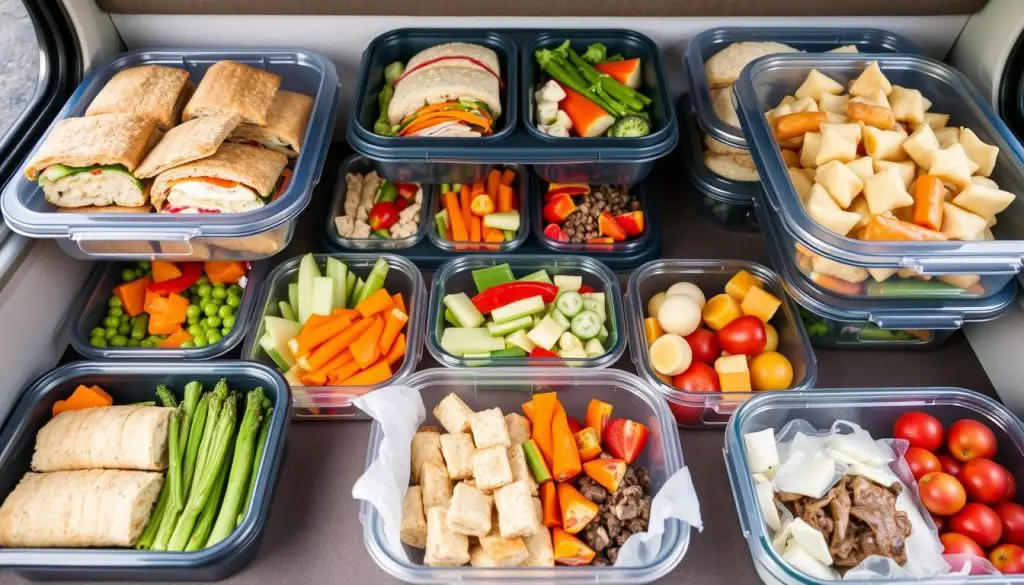
Proper meal planning makes cooking in a moving RV much more manageable
The key to successful meals on travel days is planning ahead. Here’s how to approach meal planning specifically for days when you’ll be on the move:
Pre-Trip Preparation
- Pre-cook and portion meals that can be easily reheated
- Chop vegetables and prepare ingredients before hitting the road
- Marinate proteins the night before for quick cooking later
- Prepare cold meals like sandwiches, wraps, and salads in advance
- Use mason jars to pre-portion ingredients for one-pot meals
Food Storage Solutions
Proper storage is crucial for safe cooking in a moving RV:
- Use containers with secure, leak-proof lids
- Invest in non-slip mats for countertops and refrigerator shelves
- Store liquids in squeeze bottles to prevent spills
- Use tension rods in the refrigerator to keep items from shifting
- Consider vacuum-sealed bags for marinated foods
Essential Equipment for Cooking in a Moving RV
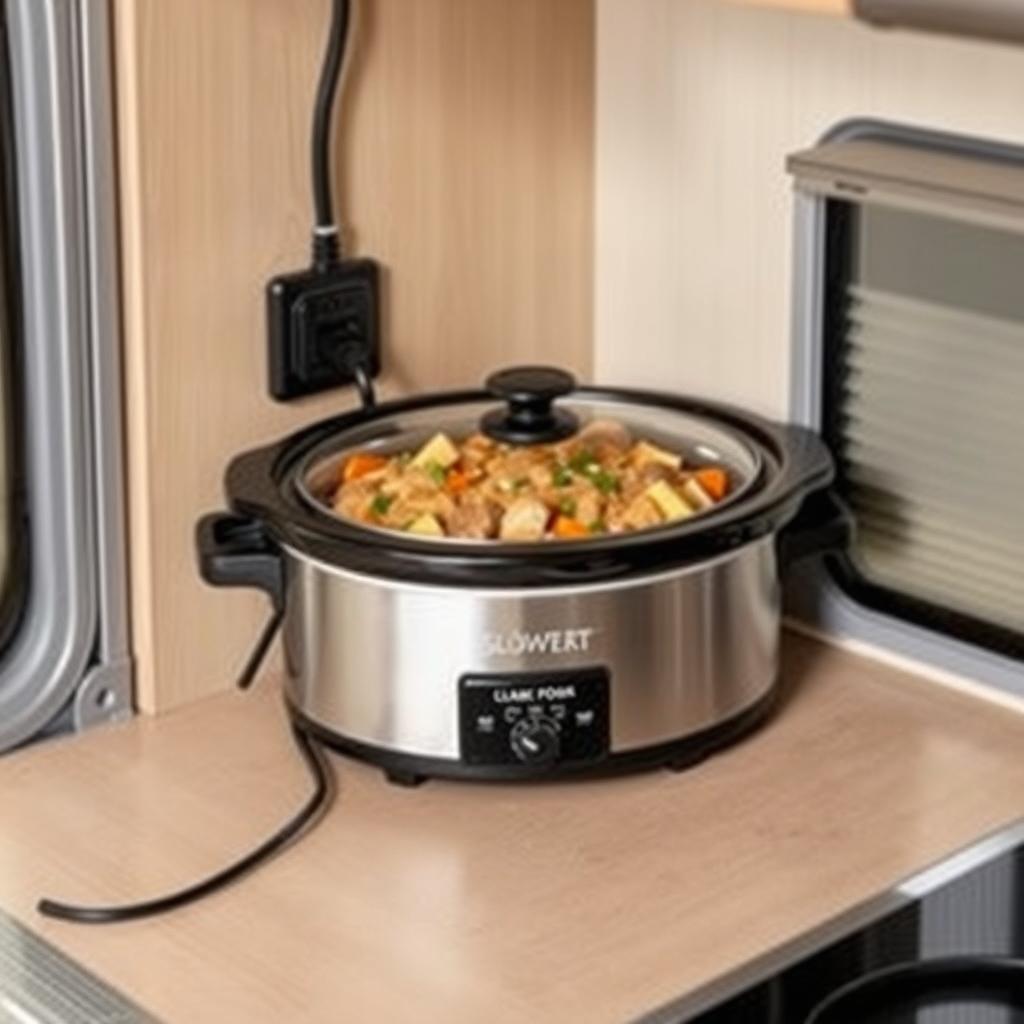
12V Slow Cooker
The safest option for hot meals on the go. These plug directly into your vehicle’s 12V o